What Is Ovulation? Signs, Symptoms, Timing & Pregnancy Chances
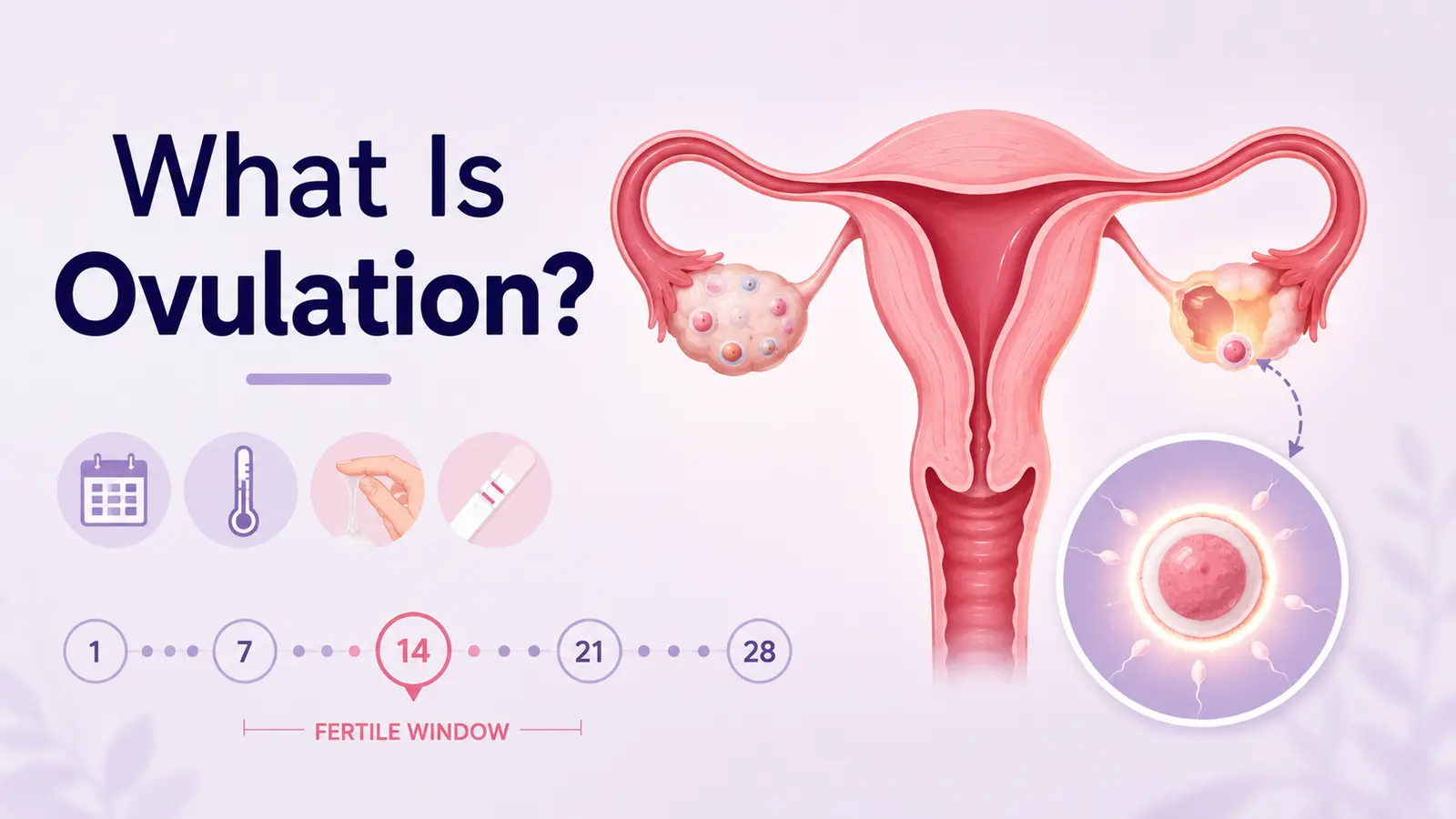
Ovulation is the release of an egg from an ovary during the menstrual cycle. After the egg is released, it can travel through a fallopian tube, where it may be fertilized by sperm if sperm are present. (NHS — Periods and fertility in the menstrual cycle) Ovulation is an important part of the menstrual cycle […]
Contents
Ovulation is the release of an egg from an ovary during the menstrual cycle. After the egg is released, it can travel through a fallopian tube, where it may be fertilized by sperm if sperm are present. (NHS — Periods and fertility in the menstrual cycle)
Ovulation is an important part of the menstrual cycle because pregnancy is most likely around the time an egg is released.
But ovulation doesn’t necessarily happen on the same day every month. The timing can vary from person to person and from one cycle to another.
You may notice signs such as clear, slippery cervical mucus, mild pelvic pain, breast tenderness or changes in your body temperature, although not everyone experiences noticeable symptoms.
In this guide, we’ll explain what ovulation is, when it happens, how to recognize possible signs, what the fertile window means, how ovulation relates to pregnancy and how you can track it.
Quick answer: Ovulation is when an ovary releases an egg. It usually happens around 10 to 16 days before the next period, although the exact timing varies.
Table of Contents
- What Is Ovulation?
- What Happens During Ovulation?
- When Does Ovulation Happen?
- What Is the Fertile Window?
- 9 Signs of Ovulation
- Ovulation Discharge: What Does It Look Like?
- What Is Ovulation Pain?
- Can You Get Pregnant During Ovulation?
- Can You Get Pregnant Before Ovulation?
- Can You Get Pregnant After Ovulation?
- Can You Ovulate Without Symptoms?
- How to Track Ovulation
- Ovulation Tests and LH
- Does Everyone Ovulate Every Month?
- What Can Affect Ovulation?
- When Should You See a Doctor?
- Frequently Asked Questions
- The Bottom Line
What Happens During Ovulation?
Ovulation is controlled by hormones that regulate the menstrual cycle.
During the first part of the cycle, hormones help an egg-containing follicle develop in an ovary. A rise in luteinizing hormone (LH) then triggers the release of the mature egg.
MedlinePlus explains that LH rises shortly before ovulation and helps trigger the release of an egg from the ovary.
After release, the egg enters a fallopian tube.
If sperm fertilizes the egg, pregnancy can begin. If fertilization doesn’t occur, the egg eventually breaks down and the menstrual cycle continues.
The menstrual cycle then moves toward the next period. (MedlinePlus — Ovulation)
When Does Ovulation Happen?
There is no single ovulation day that applies to everyone.
A common misconception is that everyone ovulates on day 14.
That can be approximately true for some people with a regular 28-day cycle, but it isn’t a universal rule.
The NHS explains that ovulation commonly occurs around 10 to 16 days before the next period.
For example, if someone has a regular 28-day cycle, ovulation may occur around the middle of the cycle.
But someone with a shorter or longer cycle may ovulate at a different time.
Why is the next period more useful than “day 14”?
The time between ovulation and the next period is often more consistent than simply counting from the first day of the previous period.
That’s why estimating ovulation solely from a calendar can be inaccurate, particularly when cycles are irregular.
What Is the Fertile Window?
The fertile window is the period of the menstrual cycle when pregnancy is most likely to occur.
It includes the days leading up to ovulation and around the time of ovulation.
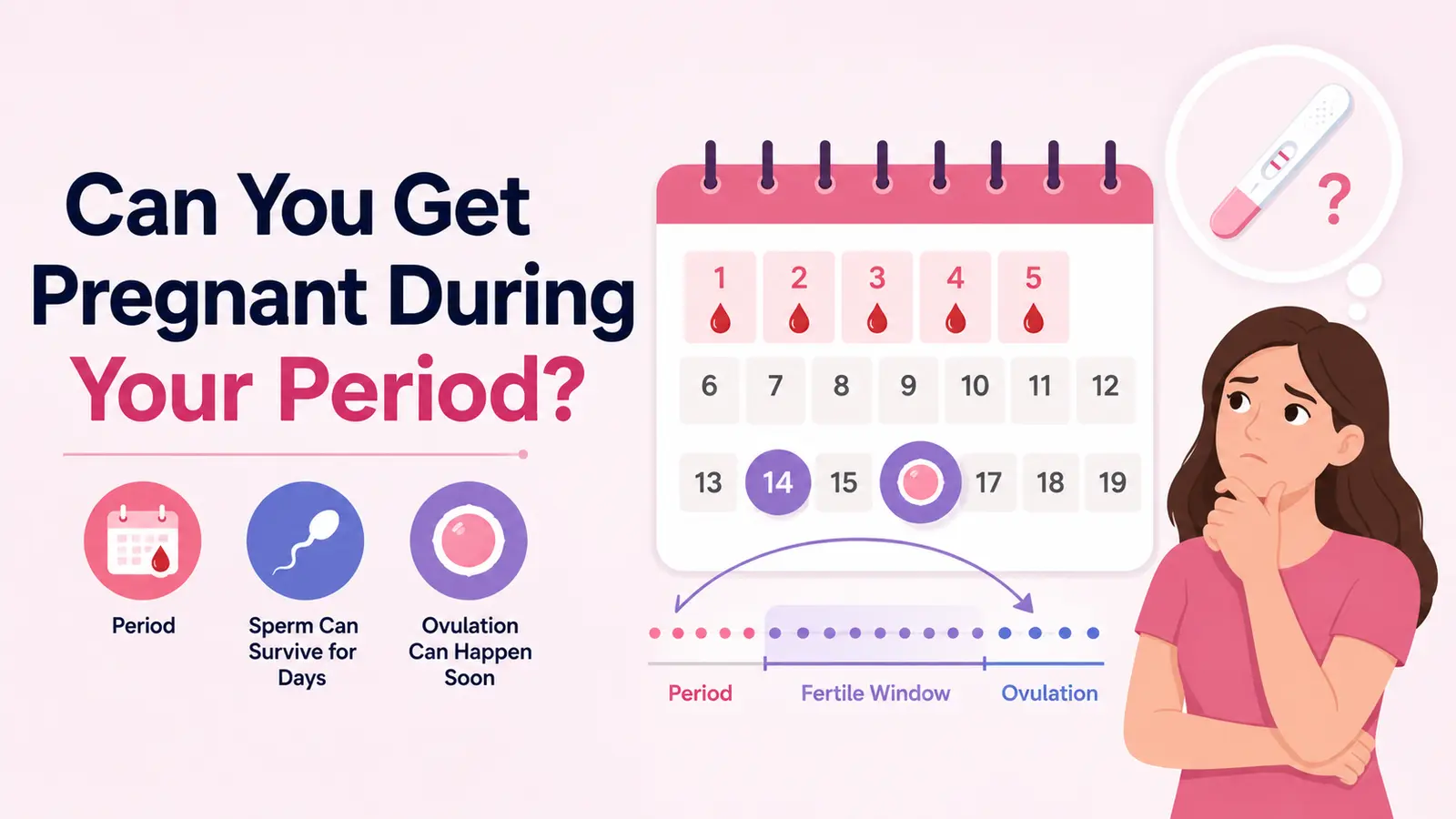
This is because sperm can survive inside the female reproductive tract for several days, while the egg remains available for fertilization for a much shorter period after ovulation.
MedlinePlus states that sperm can survive for less than five days, while a released egg generally survives for less than 24 hours.
This means pregnancy can happen from sex before ovulation, not only on the day the egg is released.
WHO’s family-planning guidance also describes the most fertile period as the several days before and around ovulation.
Important
If you’re trying to avoid pregnancy, don’t assume that a calendar estimate of ovulation is enough to guarantee that sex is safe.
If you’re trying to become pregnant, understanding your fertile window can help you identify the days when conception is more likely.
9 Signs of Ovulation
Not everyone notices ovulation.
Some people experience several changes, while others notice none.
Here are some possible signs.
1. Clear, Slippery Vaginal Discharge
One of the most noticeable changes can be cervical mucus.
Around ovulation, discharge may become:
- Clear
- Wet
- Slippery
- Stretchy
- More abundant
The NHS describes cervical mucus around ovulation as becoming thinner and stretchy, sometimes resembling raw egg white. (NHS — Periods and fertility)
This is closely related to your existing article:
That article explains how normal vaginal discharge can change throughout the menstrual cycle.
2. Mild Ovulation Pain
Some people experience pain around the time of ovulation.
This is sometimes called mittelschmerz.
The NHS says ovulation pain may feel like:
- A dull ache
- A sharp or sudden twinge
- Pain on one side of the abdomen
It may last from a few minutes to one or two days.
However, not all pelvic pain is ovulation pain.
Severe, persistent or recurring abdominal pain should be medically evaluated.
3. Slight Increase in Basal Body Temperature
After ovulation, basal body temperature can rise slightly because of hormonal changes.
Tracking this temperature over several cycles can help identify a pattern.
However, temperature tracking generally helps confirm that ovulation may have occurred rather than predict the exact moment before it happens.
4. Breast Tenderness
Some people notice breast tenderness or sensitivity around hormonal changes during the menstrual cycle.
However, this is not a specific sign of ovulation because breast tenderness can occur for several other reasons.
5. Increased Sexual Desire
Some people report changes in sexual desire around ovulation.
However, libido varies considerably between individuals and isn’t a reliable way to determine exactly when ovulation occurs.
6. Changes in Cervical Position
Hormonal changes can affect the cervix throughout the menstrual cycle.
Some fertility-awareness methods track cervical changes along with cervical mucus and temperature.
However, cervical position alone isn’t a precise way to determine ovulation.
7. Mild Bloating
Some people notice bloating around different stages of their menstrual cycle.
Hormonal changes can affect fluid balance and digestion.
But bloating isn’t specific enough to confirm ovulation.
8. Mood or Energy Changes
Some people notice changes in mood, energy or overall wellbeing around different parts of their cycle.
These changes can vary significantly between individuals.
They shouldn’t be used alone to predict ovulation.
9. Positive Ovulation Test
An ovulation prediction test can detect an increase in luteinizing hormone (LH) in urine.
A positive test indicates an LH surge and generally suggests that ovulation may occur soon.
MedlinePlus explains that a positive ovulation test can indicate that ovulation may occur within approximately the next 24 to 36 hours, although this isn’t guaranteed for every person. (MedlinePlus — Ovulation home test)
Ovulation Discharge: What Does It Look Like?
Ovulation discharge is usually a change in cervical mucus, rather than a completely different type of vaginal fluid.
Around the fertile period, cervical mucus can become:
Clear + slippery + stretchy + wetter than usual
Many people compare its texture to raw egg white.
This type of mucus can help sperm move through the reproductive tract.
MedlinePlus explains that cervical fluid changes as the body prepares to release an egg and can become wet, slippery, stretchy and clear around the fertile period.
If your discharge instead becomes:
- Green
- Gray
- Strong-smelling
- Associated with significant itching
- Associated with burning
- Associated with pelvic pain
it may not be a normal ovulation change.
For more information:
What Is Ovulation Pain?
Ovulation pain is discomfort that occurs around the time an egg is released.
It can happen on one side of the lower abdomen and may last for a short period.
The NHS states that ovulation pain commonly occurs around 14 days before a period and may last from several minutes to one or two days.
Is ovulation pain normal?
Mild, short-lived ovulation pain can be normal.
But you shouldn’t automatically assume that abdominal or pelvic pain is caused by ovulation.
Similar symptoms can occur with conditions such as:
- Ovarian cysts
- Endometriosis
- Certain STIs
- Ectopic pregnancy
- Other pelvic conditions
The NHS recommends medical advice when abdominal pain is severe, keeps returning or doesn’t improve.
Can You Get Pregnant During Ovulation?
Yes.
Ovulation is one of the most fertile times of the menstrual cycle.
Pregnancy occurs when sperm fertilizes an egg.
Because sperm can survive for several days and the egg remains viable for less than a day after release, sex in the days leading up to ovulation can also result in pregnancy.
If you’re trying to conceive, having sex during the fertile window gives sperm an opportunity to be present when ovulation occurs.
If you’re trying to prevent pregnancy, remember that ovulation prediction isn’t a guaranteed method of contraception.
For related pregnancy questions, see:
Can You Get Pregnant From Precum?
Can You Get Pregnant Before Ovulation?
Yes.
This is one of the most important things to understand about fertility.
Sperm can survive in the reproductive tract for several days.
Therefore, sex occurring several days before ovulation can potentially result in pregnancy if sperm remains present when the egg is released. MedlinePlus states that sperm can survive for less than five days.
This is why the fertile window includes days before ovulation.
Can You Get Pregnant After Ovulation?
Yes, but the chance decreases quickly once ovulation has passed.
The egg generally remains capable of being fertilized for less than 24 hours after it is released.
If the egg is not fertilized during that period, it breaks down.
However, the exact timing of ovulation can be difficult to determine, especially if your cycles are irregular.
So estimating that ovulation has already happened based solely on a calendar isn’t always reliable.
Can You Ovulate Without Symptoms?
Yes.
Some people experience obvious changes around ovulation, while others notice almost nothing.
You don’t need to experience ovulation pain, increased discharge or changes in libido to be ovulating.
This is one reason fertility tracking often combines several indicators rather than relying on one symptom.
How to Track Ovulation
There are several ways to track ovulation.
1. Track Your Menstrual Cycle
Record:
- First day of your period
- Length of your cycle
- Changes in cervical mucus
- Possible ovulation symptoms
After several cycles, you may begin to recognize a pattern.
However, calendar tracking becomes less reliable when cycles vary significantly.
2. Monitor Cervical Mucus
Watch for changes from:
Dry/sticky → creamy → wetter → clear/slippery/stretchy
The most slippery and stretchy mucus generally occurs around the fertile period.
MedlinePlus describes these changes as part of fertility awareness.
3. Track Basal Body Temperature
Take your temperature at approximately the same time every morning before getting out of bed.
A small sustained increase after ovulation can help identify that ovulation likely occurred.
The limitation is that this method generally confirms ovulation after the temperature shift, rather than predicting it with certainty beforehand.
4. Use an Ovulation Test
Ovulation predictor kits detect LH in urine.
A positive result suggests an LH surge and that ovulation may occur soon.
MedlinePlus notes that these tests can be particularly useful for people trying to identify fertile days.
If your periods are irregular, you may need to test for several days or discuss timing with a healthcare professional.
Ovulation Tests and LH
An ovulation test doesn’t directly detect the egg.
Instead, it detects a rise in luteinizing hormone (LH).
LH rises shortly before ovulation and helps trigger the release of the egg. (MedlinePlus — LH Test)
A positive test therefore means:
LH surge detected → ovulation may be approaching
It does not mean:
Egg definitely released at that exact moment.
This distinction is important when interpreting home ovulation tests.
Does Everyone Ovulate Every Month?
No.
Ovulation can be irregular or absent for various reasons.
Possible factors include:
- Pregnancy
- Breastfeeding
- Perimenopause
- Polycystic ovary syndrome (PCOS)
- Certain hormonal conditions
- Significant changes in body weight
- Some medications
- Certain medical conditions
For example, MedlinePlus notes that PCOS can cause the ovaries to release eggs irregularly or not release an egg regularly. (MedlinePlus — Female Infertility)
Some hormonal contraceptives also work partly or primarily by preventing ovulation. For example, combined oral contraceptives prevent the ovary from releasing an egg. (MedlinePlus — Birth control pills)
Can You Have a Period Without Ovulating?
It is possible to have bleeding that resembles a period without having released an egg.
This can happen with some hormonal conditions or irregular cycles.
Therefore, having monthly bleeding doesn’t always prove that ovulation occurred.
If your periods are very irregular, unusually heavy, very painful or frequently absent, talk with a healthcare professional.
What Can Affect Ovulation?
Ovulation is controlled by a complex interaction of hormones.
Factors that may affect ovulation include:
- PCOS
- Thyroid disorders
- Significant weight changes
- Excessive physical activity
- Some medications
- Certain hormonal disorders
- Perimenopause
- Breastfeeding
- Some reproductive health conditions
If you’re consistently having irregular cycles or difficulty becoming pregnant, it may be worth discussing your menstrual pattern with a healthcare professional.
WHO’s current infertility guideline emphasizes evidence-based evaluation and treatment when fertility problems are suspected. (WHO — Guideline for the prevention, diagnosis and treatment of infertility)
When Should You See a Doctor?
Consider speaking with a healthcare professional if:
- Your periods are consistently very irregular.
- You frequently miss periods.
- You have severe pelvic pain.
- You have persistent pain around the time you think you’re ovulating.
- You cannot detect an LH surge despite repeated testing.
- You’re concerned that you aren’t ovulating.
- You’ve been trying to become pregnant without success.
The appropriate time to seek fertility evaluation depends on age, medical history and circumstances.
WHO’s infertility guidance recommends evidence-based assessment when infertility is suspected rather than relying solely on home fertility tracking.
If you have severe abdominal pain and think you could be pregnant, seek medical advice promptly because conditions such as ectopic pregnancy can cause abdominal pain. The NHS also recommends urgent assessment for severe or persistent ovulation-like pain, particularly when pregnancy is possible.
Ovulation and Pregnancy: The Simple Explanation
Think of the menstrual cycle as a sequence:
Period → Egg develops → Ovulation → Possible fertilization → Next period
The important part for pregnancy is that sperm needs to be present around the time the egg becomes available.
That’s why the fertile window extends beyond the exact day of ovulation.
If you’re trying to get pregnant
Having sex regularly during the fertile period can increase the opportunity for sperm and egg to meet.
MedlinePlus notes that having sex every two or three days during the fertile portion of the cycle can be sufficient when trying to conceive.
If you’re trying to avoid pregnancy
Don’t rely on guessing your ovulation date alone.
Ovulation can vary, and sperm can survive for several days.
If you want to prevent pregnancy, use a reliable contraceptive method appropriate for you.
Ovulation vs Fertile Window
These terms are related but not identical.
| Term | Meaning |
|---|---|
| Ovulation | Release of an egg from an ovary |
| Fertile window | Several days when pregnancy is most likely |
| LH surge | Hormonal rise that signals ovulation may be approaching |
| Cervical mucus | Fluid that changes around the fertile period |
| Ovulation test | Urine test that detects an LH surge |
Understanding these differences can make fertility tracking much less confusing.
Frequently Asked Questions
What is ovulation?
Ovulation is the release of an egg from an ovary during the menstrual cycle. The egg can then enter a fallopian tube and potentially be fertilized by sperm.
When does ovulation happen?
Ovulation commonly occurs around 10 to 16 days before the next period, but the exact timing varies.
Is ovulation always on day 14?
No. Day 14 is only a rough estimate for someone with a typical 28-day cycle. Ovulation can occur earlier or later.
What are the signs of ovulation?
Possible signs include clear slippery cervical mucus, mild one-sided pelvic pain, a slight basal-temperature rise and a positive ovulation test. Not everyone experiences symptoms.
What does ovulation discharge look like?
Around ovulation, cervical mucus may become clear, slippery and stretchy, sometimes resembling raw egg white.
Can you get pregnant during ovulation?
Yes. Ovulation is one of the most fertile times of the menstrual cycle.
Can you get pregnant before ovulation?
Yes. Sperm can survive inside the reproductive tract for several days, so sex before ovulation can result in pregnancy.
Can you get pregnant after ovulation?
Pregnancy is possible shortly after ovulation because the egg can remain capable of fertilization for less than 24 hours.
Can you ovulate without feeling anything?
Yes. Many people don’t notice obvious ovulation symptoms.
Can ovulation cause pain?
Yes. Some people experience mild one-sided pelvic pain around ovulation. Severe or persistent pain should be medically evaluated.
How can I know if I’m ovulating?
You can track menstrual cycles, cervical mucus and basal body temperature, or use an ovulation predictor kit that detects LH.
What does a positive ovulation test mean?
It usually means that an LH surge has been detected and ovulation may occur soon. It doesn’t directly confirm that the egg has already been released.
Can you have a period without ovulating?
Yes. Bleeding can sometimes occur without ovulation, particularly with certain hormonal conditions or irregular cycles.
Does vaginal discharge change during ovulation?
Yes. Cervical mucus commonly becomes thinner, wetter and more stretchy around ovulation.
Does ovulation mean you are pregnant?
No. Ovulation occurs before pregnancy can begin. Pregnancy requires fertilization of an egg by sperm.
How long does an egg live after ovulation?
A released egg generally remains capable of fertilization for less than 24 hours.
How long can sperm survive?
Sperm can survive inside the reproductive tract for several days. MedlinePlus states that sperm can survive for less than five days.
Can birth control stop ovulation?
Some hormonal contraceptives work by preventing ovulation. For example, combined birth-control pills prevent the ovary from releasing an egg.
When should I see a doctor about ovulation?
See a healthcare professional if you have very irregular or absent periods, persistent or severe pelvic pain, concerns about not ovulating, or difficulty becoming pregnant.
The Bottom Line
Ovulation is the release of an egg from an ovary, and it is a key event in the menstrual cycle and fertility.
It doesn’t necessarily happen on day 14. For many people, ovulation occurs approximately 10 to 16 days before the next period, although the timing can vary.
Possible signs include clear and stretchy cervical mucus, mild ovulation pain, changes in basal body temperature and an LH surge detected by an ovulation test.
The fertile window is larger than the exact moment of ovulation because sperm can survive for several days while the egg remains available for a much shorter time.
Understanding ovulation can help you better understand your menstrual cycle,whether you’re trying to become pregnant or simply learning more about your reproductive health.
Advertisement · Continue Reading Below

No comments yet — be the first to comment.
Leave a comment
Comments are reviewed before they appear.