What Is HIV? Symptoms, Transmission, Testing & Treatment
Human immunodeficiency virus (HIV) is a virus that attacks the body’s immune system, particularly CD4 cells, which help the body fight infections and other diseases. Without treatment, HIV can progressively weaken the immune system and may eventually lead to acquired immunodeficiency syndrome (AIDS), the most advanced stage of HIV infection. WHO: HIV and AIDS Fact […]
Contents
Human immunodeficiency virus (HIV) is a virus that attacks the body’s immune system, particularly CD4 cells, which help the body fight infections and other diseases. Without treatment, HIV can progressively weaken the immune system and may eventually lead to acquired immunodeficiency syndrome (AIDS), the most advanced stage of HIV infection. WHO: HIV and AIDS Fact Sheet
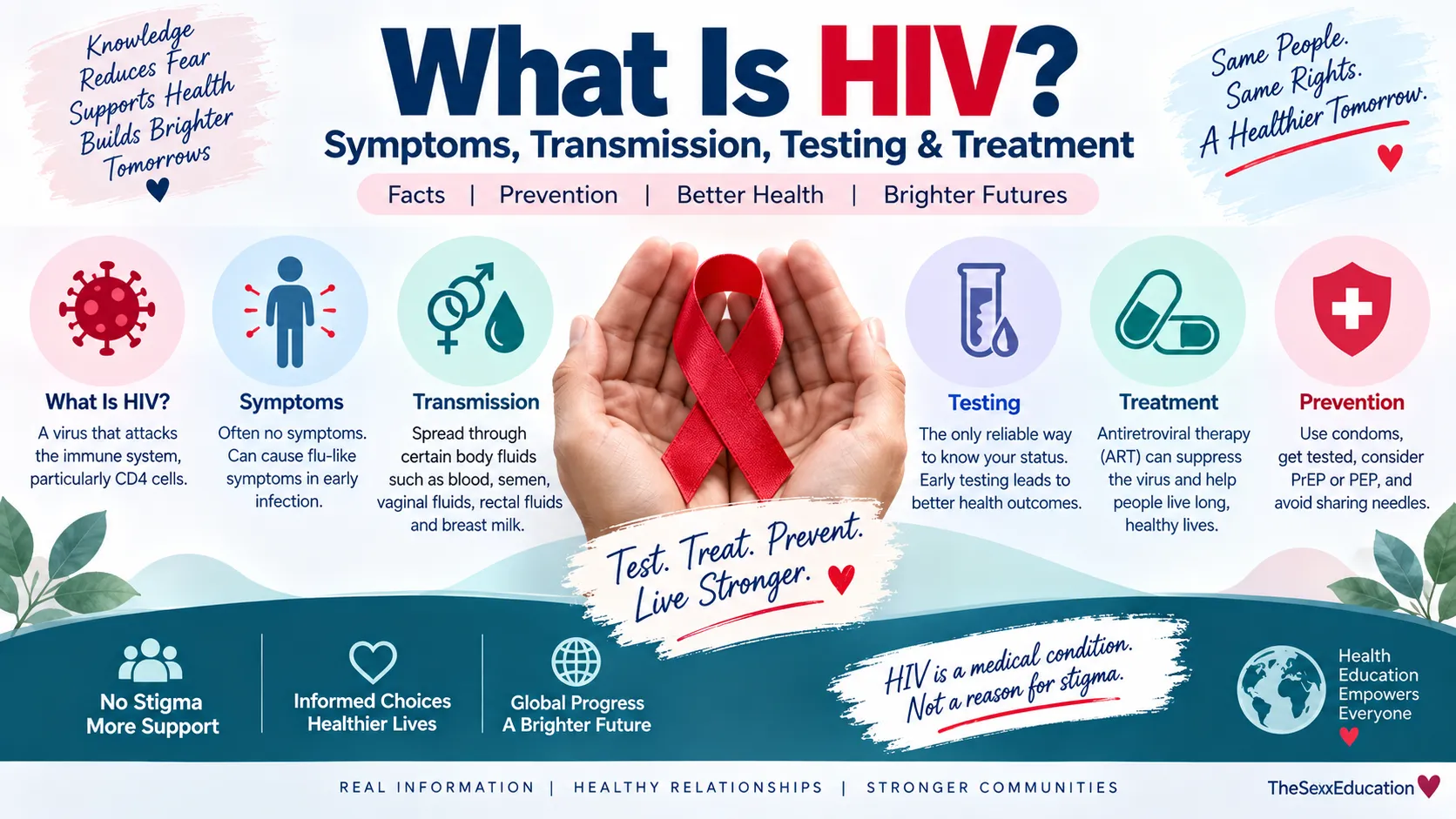
Today, HIV is a treatable chronic health condition. There is currently no cure for HIV, but effective antiretroviral therapy (ART) can suppress the virus, protect the immune system and help people living with HIV live long, healthy lives. People on effective treatment who maintain an undetectable viral load do not transmit HIV through sex.
The important thing to remember is that you cannot tell whether someone has HIV simply by looking at them, and some people have no symptoms for years. HIV testing is therefore essential when someone has had a potential exposure or has ongoing risk.
What Is HIV?
HIV stands for human immunodeficiency virus.
It is a virus that attacks cells of the immune system, especially CD4 cells, which are a type of white blood cell. As HIV damages these cells, the body’s ability to fight certain infections and diseases becomes weaker.
Without treatment, HIV can progressively damage the immune system. In advanced infection, people may develop serious infections, certain cancers and other illnesses associated with severe immune suppression.
HIV is different from many infections because a person can have the virus without feeling sick.
That is one reason testing matters.
Is HIV a sexually transmitted infection?
Yes. HIV can be transmitted through certain sexual activities because the virus can be present in sexual fluids.
However, HIV is not transmitted by ordinary social contact, such as hugging, shaking hands or sharing food.
For more information about sexual health and sexually transmitted infections, readers can also explore the Sexual Health section on TheSexxEducation.
What Is AIDS?
AIDS stands for acquired immunodeficiency syndrome.
AIDS is not a separate virus. It refers to the most advanced stage of HIV infection, when the immune system has been severely damaged.
In other words:
HIV = the virus
AIDS = the advanced stage of HIV infection
Not everyone with HIV develops AIDS. Effective ART can prevent HIV from progressing to advanced disease. WHO: HIV and AIDS
WHO defines advanced HIV disease in adults and adolescents as a CD4 count below 200 cells/mm³ or a WHO stage 3 or 4 clinical event. WHO: HIV and AIDS
What Does HIV Do to the Body?
HIV primarily targets CD4 cells.
After entering the body, HIV uses these cells to reproduce. Over time, untreated infection can reduce the body’s ability to fight infections.
This can make a person more vulnerable to illnesses such as:
- Tuberculosis (TB)
- Severe bacterial infections
- Certain fungal infections
- Cryptococcal meningitis
- Some cancers, including lymphomas and Kaposi’s sarcoma
HIV can also make some other infections more difficult to manage.
The good news is that ART can suppress HIV replication, allowing the immune system to recover and helping prevent HIV from progressing to advanced disease. WHO: Updated HIV Clinical Management Recommendations
What Are the Symptoms of HIV?
HIV symptoms can vary significantly from person to person.
Some people develop symptoms soon after infection, while others may have no noticeable symptoms.
This means symptoms alone cannot tell you whether you have HIV.
Early HIV symptoms
During the first few weeks after infection, some people develop a flu-like illness.
Possible symptoms include:
- Fever
- Headache
- Sore throat
- Rash
- Swollen lymph nodes
- Tiredness
- Muscle aches
- Night sweats
These symptoms are not specific to HIV. Many common infections can cause similar symptoms.
Therefore, having these symptoms does not mean that you have HIV.
Likewise, having no symptoms does not rule out HIV.
Can HIV Have No Symptoms?
Yes.
A person can have HIV without obvious symptoms, particularly during periods when the infection is not causing noticeable illness.
This is one of the biggest reasons HIV testing is important.
Someone may feel completely healthy while still having HIV and, if untreated, being able to transmit the virus.
The only reliable way to know your HIV status is through HIV testing. WHO recommends access to HIV testing for people who may be at risk and emphasizes connecting people who test positive with appropriate treatment and care.
What Are the Stages of HIV?
HIV infection is commonly described in stages based on the progression of infection and the condition of the immune system.
1. Acute HIV infection
This occurs soon after HIV infection.
Some people experience a flu-like illness, while others have no noticeable symptoms.
HIV levels in the blood can be high during this early period, which means transmission can be more likely.
2. Chronic HIV infection
HIV continues to remain in the body.
A person may feel well for a long time, particularly if the infection is being treated.
Without treatment, however, HIV can continue damaging the immune system.
3. Advanced HIV disease/AIDS
If HIV is not adequately treated and the immune system becomes severely weakened, a person can develop advanced HIV disease or AIDS.
Serious opportunistic infections and certain cancers become more likely at this stage.
How Is HIV Transmitted?
HIV can be transmitted when certain body fluids containing the virus enter another person’s body.
These include:
- Blood
- Semen
- Vaginal fluids
- Rectal fluids
- Breast milk
HIV can be transmitted through certain forms of vaginal or anal sex, sharing contaminated injection equipment, and from mother to child during pregnancy, childbirth or breastfeeding.
HIV and other STIs
Having another STI can also be relevant to sexual-health risk assessment. If you’re concerned that you may have been exposed to an STI, see our broader Sexual Health section.
Can You Get HIV From Oral Sex?
The risk of HIV transmission through oral sex is much lower than through anal or vaginal sex, but oral sex can transmit other STIs.
Important: Do not use the absence of symptoms to rule out an STI or HIV.
How Is HIV NOT Transmitted?
HIV is not spread through ordinary everyday contact.
You cannot get HIV from:
- Hugging
- Handshakes
- Sitting next to someone
- Sharing food
- Sharing drinking glasses
- Sharing water
- Sharing toilets
- Swimming pools
- Casual touching
- Mosquito bites
HIV is also not transmitted through saliva in ordinary social contact.
Understanding how HIV is actually transmitted is important because misinformation and stigma surrounding HIV can prevent people from seeking testing and treatment.
Can You Get HIV From Kissing?
Ordinary kissing does not transmit HIV.
HIV is not spread through saliva. WHO specifically states that HIV is not transmitted through kissing, hugging, shaking hands or sharing food or water.
If you’re worried about a specific sexual encounter, testing and professional medical advice are more reliable than trying to determine risk from symptoms.
How Do You Know If You Have HIV?
You cannot reliably tell whether someone has HIV from their appearance or symptoms.
HIV testing is the only way to know your status.
WHO supports a range of HIV testing approaches, including rapid testing and HIV self-testing, depending on the setting and national testing strategy.
If an HIV self-test produces a reactive result, additional testing through an appropriate healthcare or testing service is needed to confirm the diagnosis.
How Is HIV Diagnosed?
HIV can be diagnosed using different types of tests.
Depending on the test and timing, HIV testing may look for:
- HIV antibodies
- HIV antigen
- HIV genetic material
WHO notes that rapid diagnostic tests can provide same-day results, while HIV self-testing can allow people to test privately. However, a reactive self-test is not the same as a confirmed HIV diagnosis. Confirmatory testing through an appropriate testing service is required.
HIV testing should be confidential and voluntary
WHO emphasizes the importance of HIV testing services that respect the 5 Cs:
- Consent
- Confidentiality
- Counselling
- Correct results
- Connection to treatment and other services WHO: HIV and AIDS
What Is the HIV Window Period?
The window period is the time after HIV infection when a test may not yet be able to detect the infection.
This is important because someone can have HIV and potentially transmit it during this period even when a test is negative.
WHO says that most widely used HIV diagnostic tests detect antibodies, and in most cases antibodies develop within about 28 days of infection. During this window period, antibody levels may be too low for some rapid tests to detect.
The exact window period depends on the type of HIV test.
So, if you recently had a potential exposure and receive a negative result, ask a healthcare professional whether and when you should repeat the test.
Can HIV Be Cured?
Currently, there is no widely available cure for HIV.
However, HIV can be effectively treated.
Antiretroviral therapy can suppress the virus to very low levels, protect the immune system and help people living with HIV live long and healthy lives.
This is very different from the situation decades ago.
An HIV diagnosis today does not automatically mean that a person will develop AIDS or have a short life.
Early diagnosis and effective treatment have transformed HIV into a manageable chronic condition for many people.
What Is HIV Treatment?
HIV is treated with antiretroviral therapy (ART).
ART uses combinations of medicines that prevent HIV from multiplying effectively in the body.
The goal is to reduce the amount of HIV in the blood, known as the viral load, to a very low or undetectable level.
WHO’s updated HIV clinical-management recommendations continue to emphasize optimized antiretroviral treatment, with dolutegravir-based regimens confirmed as preferred options for initial and subsequent treatment in appropriate settings. WHO: Updated Recommendations on HIV Clinical Management
Treatment decisions should always be made with a qualified healthcare professional because the appropriate regimen depends on factors such as the person’s health, other medications, pregnancy status and previous HIV treatment.
What Does “Undetectable” Mean?
When HIV treatment works effectively, the amount of HIV in the blood can become so low that standard viral-load testing cannot detect it.
This is called an undetectable viral load.
One of the most important advances in HIV medicine is that people living with HIV who are taking ART and have an undetectable viral load do not transmit HIV to their sexual partners. WHO explicitly recognizes this benefit of effective treatment.
This concept is commonly summarized as:
U = U
Undetectable = Untransmittable
It is an important message for both HIV prevention and reducing HIV-related stigma.
How Can HIV Be Prevented?
There isn’t one single HIV prevention method that works for everyone.
Prevention can include several approaches.
1. Use condoms
Condoms can reduce the risk of HIV and several other STIs when used correctly and consistently.
If you are also concerned about pregnancy prevention, our guide Can You Get Pregnant From Precum? explains why withdrawal does not completely eliminate pregnancy risk and why condoms remain an important contraceptive option.
WHO also recommends condoms as part of HIV prevention.
2. Get tested
Knowing your HIV status can help you make informed decisions about prevention and treatment.
Testing for other STIs may also be important.
3. PrEP
PrEP, or pre-exposure prophylaxis, is HIV-prevention medication used by people who do not have HIV but may have a higher risk of acquiring it.
WHO currently recommends several PrEP options, including oral tenofovir-based PrEP, the dapivirine vaginal ring, long-acting injectable cabotegravir and long-acting injectable lenacapavir. Availability varies by country and healthcare system. WHO: HIV and AIDS Fact Sheet
We should create a dedicated “What Is PrEP?” article next and link this paragraph to it.
4. PEP
PEP, or post-exposure prophylaxis, is medication used after a potential HIV exposure to reduce the chance of infection.
Timing matters.
WHO recommends starting PEP as soon as possible, ideally within 24 hours and no later than 72 hours after exposure, with a 28-day course recommended in its guidance.
This should eventually link to a dedicated “What Is PEP for HIV?” article on your website.
5. Avoid sharing needles
People who inject drugs should never share needles, syringes or other injection equipment.
Harm-reduction services can help reduce HIV transmission risk.
Can Someone With HIV Have Sex?
Yes.
People living with HIV can have healthy relationships and satisfying sex lives.
The key is appropriate treatment and prevention.
When a person with HIV takes ART and maintains an undetectable viral load, they do not sexually transmit HIV.
Condoms may still be useful because they can help protect against other STIs and pregnancy.
For broader sexual-health information, readers can also explore TheSexxEducation’s Sexual Health category.
Can Someone With HIV Have Children?
Yes.
People living with HIV can have children.
However, pregnancy and reproductive planning should involve appropriate medical care because HIV can be transmitted from a mother to her baby during pregnancy, childbirth or breastfeeding.
Effective ART and appropriate clinical management can substantially reduce the risk of transmission to the child. WHO’s updated HIV clinical-management recommendations include recommendations addressing prevention of vertical transmission and care of infants at risk.
If you are living with HIV and planning a pregnancy, speak with your healthcare team before trying to conceive.
How Common Is HIV?
HIV remains a major global public-health issue.
According to WHO’s latest estimates:
- About 41.0 million people were living with HIV worldwide at the end of 2025.
- About 1.2 million people acquired HIV during 2025.
- About 570,000 people died from HIV-related causes in 2025.
- About 88% of people living with HIV knew their HIV status.
- Among those who knew their HIV-positive status, 89% were receiving ART.
- About 95% of people receiving ART had suppressed viral loads.
These numbers show both the continuing global importance of HIV prevention and the substantial progress made through testing and treatment.
HIV Testing Is More Important Than Symptoms
One of the most important things to understand about HIV is this:
You cannot use symptoms alone to determine whether you have HIV.
Early HIV infection can resemble other common illnesses, while some people have no symptoms.
If you have had a potential exposure, testing is more useful than trying to identify HIV from physical symptoms.
And if the exposure occurred recently, ask a healthcare professional about the appropriate testing timeline because of the HIV window period.
When Should You Get Tested for HIV?
Consider HIV testing if:
- You have had sex that may have exposed you to HIV.
- A sexual partner has HIV.
- You do not know your partner’s HIV status and have ongoing risk.
- You have been diagnosed with another STI.
- You share needles or injection equipment.
- You have another situation that a healthcare professional considers a potential exposure.
- You are pregnant or planning pregnancy and your healthcare provider recommends testing.
WHO recommends HIV testing for people who may be at risk and emphasizes connecting people who test positive with treatment and care.
What Should You Do After Possible HIV Exposure?
If you believe you may have been exposed to HIV, do not wait for symptoms.
If the exposure happened within 72 hours
Seek medical care urgently and ask about PEP.
PEP works best when started as soon as possible, ideally within 24 hours, and WHO recommends starting it no later than 72 hours after exposure. If more than 72 hours have passed
You should still seek medical advice.
A healthcare professional can assess the exposure, recommend appropriate HIV testing and discuss other prevention or follow-up options.
Common HIV Myths
Myth 1: You can tell if someone has HIV by looking at them.
Fact: HIV cannot be diagnosed from appearance. A person may have HIV without obvious symptoms.
Myth 2: HIV and AIDS are the same thing.
Fact: HIV is the virus. AIDS refers to the most advanced stage of HIV infection.
Myth 3: HIV spreads through hugging.
Fact: HIV is not transmitted through ordinary physical contact such as hugging or shaking hands.
Myth 4: HIV can be cured with treatment.
Fact: Current ART can suppress HIV very effectively, but there is currently no widely available cure.
Myth 5: Someone with HIV cannot have children.
Fact: People living with HIV can have children, but pregnancy requires appropriate medical planning and care.
Myth 6: Someone with an undetectable viral load can sexually transmit HIV.
Fact: WHO states that people taking ART who have an undetectable viral load do not transmit HIV to their sexual partners.
HIV vs AIDS: Quick Comparison
| HIV | AIDS |
|---|---|
| HIV is a virus | AIDS is the most advanced stage of HIV infection |
| HIV attacks the immune system | AIDS occurs when HIV has severely damaged immune function |
| A person can have HIV without symptoms | AIDS is associated with serious immune suppression |
| HIV can be controlled with ART | Effective ART can prevent progression to AIDS |
| HIV is transmissible when virus is present at transmissible levels | AIDS itself is not transmitted; HIV is transmitted |
Frequently Asked Questions
What is HIV?
HIV is the human immunodeficiency virus. It attacks the immune system, particularly CD4 cells, and can cause progressive immune damage if untreated.
What are the first symptoms of HIV?
Some people develop fever, headache, rash, sore throat, swollen lymph nodes or other flu-like symptoms during early infection. Others have no symptoms. Symptoms cannot confirm HIV.
How is HIV transmitted?
HIV can be transmitted through certain body fluids, including blood, semen, vaginal fluids, rectal fluids and breast milk. Sexual exposure, sharing contaminated injection equipment and mother-to-child transmission are important routes.
Can HIV be transmitted through kissing?
Ordinary kissing does not transmit HIV. HIV is not spread through saliva or routine social contact.
Can HIV be cured?
There is currently no widely available cure for HIV. ART can suppress the virus and allow people living with HIV to live long and healthy lives.
Can a person with HIV have sex?
Yes. With effective treatment and an undetectable viral load, HIV is not sexually transmitted. Condoms can also provide protection against other STIs and pregnancy.
What is an HIV window period?
The window period is the period after infection when an HIV test may not yet detect the virus or the body’s immune response. The exact period varies by test type.
What is PrEP?
PrEP is HIV-prevention medication taken by people who do not have HIV to reduce their risk of acquiring HIV. WHO recommends multiple PrEP options, including oral and long-acting approaches.
What is PEP?
PEP is antiretroviral medication used after a potential HIV exposure. It should be started as soon as possible and no later than 72 hours after exposure. WHO: HIV Post-Exposure Prophylaxis Guidelines
Can HIV be transmitted when the viral load is undetectable?
According to WHO, people living with HIV who are taking ART and have an undetectable viral load do not transmit HIV through sex.
When Should You See a Doctor?
Speak with a healthcare professional if:
- You think you may have been exposed to HIV.
- You have symptoms after a possible exposure.
- You want an HIV test.
- You have received a reactive HIV self-test.
- You have recently had an exposure and need to know whether PEP is appropriate.
- You have been diagnosed with HIV.
- You are living with HIV and want to discuss treatment, relationships or pregnancy.
If a possible exposure occurred within the last 72 hours, seek medical care urgently and ask about PEP. WHO: HIV Post-Exposure Prophylaxis Guidelines
The Bottom Line
HIV is a virus that attacks the immune system, but modern treatment has dramatically changed what an HIV diagnosis means.
You cannot reliably identify HIV from symptoms or appearance. Testing is the only way to know your status.
There is currently no widely available cure, but antiretroviral therapy can suppress HIV, protect the immune system and help people living with HIV lead long and healthy lives. When treatment results in an undetectable viral load, HIV is not sexually transmitted.
HIV prevention also includes condoms, testing, PrEP, PEP and other evidence-based prevention strategies.
Most importantly, HIV is a medical condition—not a reason for stigma or shame.
Advertisement · Continue Reading Below

No comments yet — be the first to comment.
Leave a comment
Comments are reviewed before they appear.