What Should You Do If You Have an STI? Treatment & Next Steps
Finding out that you have a sexually transmitted infection (STI) can be stressful, especially if you don’t know what to do next. The first thing to know is that an STI diagnosis is a health issue, not something you should be ashamed of. Many STIs can be treated and cured, while others can be effectively […]
Contents
Finding out that you have a sexually transmitted infection (STI) can be stressful, especially if you don’t know what to do next.
The first thing to know is that an STI diagnosis is a health issue, not something you should be ashamed of. Many STIs can be treated and cured, while others can be effectively managed with medical care.
If you’ve tested positive for an STI—or a healthcare professional has told you that you likely have one—there are several important steps you should take to protect your health and reduce the chance of passing the infection to someone else.
The World Health Organization’s 2026 consolidated STI handbook covers prevention, diagnosis, treatment, partner management and follow-up as part of the STI care pathway.
In This Article
- What should you do if you have an STI?
- Confirm which STI you have
- Follow your treatment
- Avoid sexual contact until advised
- Tell your sexual partners
- Make sure partners receive appropriate care
- Complete follow-up care
- Reduce your risk of another STI
- Can an STI be cured?
- What happens if an STI is untreated?
- Can you have an STI without symptoms?
- When should you seek medical help?
- Frequently asked questions
What Should You Do If You Have an STI?
If you’ve been diagnosed with an STI, the most important steps are:
- Understand which infection you have.
- Speak with a qualified healthcare professional about treatment.
- Follow the treatment exactly as prescribed.
- Avoid sexual contact until you have been advised that it is safe.
- Inform relevant sexual partners.
- Complete recommended follow-up care.
- Take steps to reduce the chance of another infection.
The WHO’s current STI guidance specifically includes diagnosis, treatment, partner management and follow-up as important parts of STI care.
1. Confirm Which STI You Have
Not every STI is the same.
STIs can be caused by bacteria, viruses or parasites, and treatment depends on the specific infection.
Common STIs include:
- Chlamydia
- Gonorrhoea
- Syphilis
- Trichomoniasis
- HIV
- Herpes
- HPV
- Hepatitis B
If you have received a positive test, ask your healthcare provider:
“Which STI did my test detect, and what do I need to do next?”
This is important because different infections require different approaches to treatment and follow-up.
The World Health Organization’s STI information and guidance provides additional information about STI prevention, diagnosis and treatment.
2. Follow the Treatment Prescribed by a Healthcare Professional
Once the infection has been identified, your healthcare provider can recommend the appropriate treatment.
Don’t try to treat an STI with leftover antibiotics or medication prescribed for someone else.
Treatment can depend on:
- The specific infection
- Test results
- Symptoms
- Pregnancy
- Other medical conditions
- Previous treatment
- Antibiotic resistance
- Local treatment recommendations
The WHO’s 2026 STI handbook brings together current guidance on STI diagnosis, treatment and care and includes specific considerations for antimicrobial resistance.
This is especially important for infections such as gonorrhoea, where antimicrobial resistance is an increasing public-health concern.
For readers in India, the National Health Mission’s STI/RTI guidelines provide India’s national guidance for prevention and management of reproductive tract infections and STIs.
Important: Don’t start, stop or change prescription medication based only on information from an online article.
3. Avoid Sexual Contact Until It Is Safe
After an STI diagnosis, you may need to temporarily avoid sexual contact.
The exact recommendation depends on:
- Which STI you have
- Which treatment you’re receiving
- Whether symptoms have resolved
- Whether your sexual partner has also been treated
For people being treated for an STI, CDC guidance emphasizes avoiding sexual intercourse until treatment is completed and partners have been appropriately treated to reduce the risk of reinfection.
So don’t assume that you can immediately resume sexual activity simply because you’ve started medication.
Follow the specific instructions provided by your healthcare professional.
4. Tell Your Sexual Partners
This can be one of the most difficult parts of receiving an STI diagnosis.
But it is also one of the most important.
Many STIs can cause no noticeable symptoms, so a current or recent sexual partner may have an infection without realizing it.
Telling a partner gives them the opportunity to:
- Get tested
- Receive treatment if necessary
- Avoid passing the infection to someone else
- Reduce the risk of reinfection
You don’t need to approach the conversation with blame.
You could simply say:
“I recently found out that I have an STI. Because we had sexual contact, I think it’s important that you get tested.”
The purpose is health and prevention—not assigning blame.
WHO’s current STI handbook specifically includes partner management as part of the STI care pathway.
5. Your Partner May Need Testing or Treatment
Treating only one person may not always solve the problem.
Depending on the infection, your healthcare provider may recommend that sexual partners are:
- Notified
- Tested
- Evaluated
- Treated
This helps reduce transmission and the possibility of reinfection.
If you’re unsure how far back you should notify partners, ask your healthcare provider.
Some sexual-health services can also help with confidential partner notification.
6. Complete Your Follow-Up Care
Treatment isn’t necessarily the end of STI care.
Depending on the infection, your healthcare provider may recommend:
- A follow-up appointment
- Repeat testing
- Additional treatment
- Testing for other STIs
- Partner management
- Monitoring for symptoms
The WHO’s 2026 handbook includes follow-up and partner management as components of STI care.
Don’t assume that feeling better automatically means the infection has been completely treated.
Follow the follow-up plan provided by your healthcare professional.
7. Take Steps to Prevent Another STI
Having one STI doesn’t mean you cannot get another STI in the future.
You can also become infected again with the same STI if you are exposed again.
Depending on your circumstances, prevention can include:
Use condoms correctly
Correct and consistent condom use can reduce the risk of many STIs, although it does not eliminate every possible route of transmission.
Get tested when appropriate
Testing can be particularly important if:
- You have symptoms
- You have a new sexual partner
- Your partner has an STI
- You think you may have been exposed
- A healthcare professional recommends testing
Consider vaccination
Vaccination can help prevent certain infections, including HPV and hepatitis B.
WHO identifies vaccination as one of the important strategies for preventing certain STIs.
Can an STI Be Cured?
It depends on the infection.
Some bacterial and parasitic STIs are generally curable with appropriate treatment.
Others can currently be managed rather than cured.
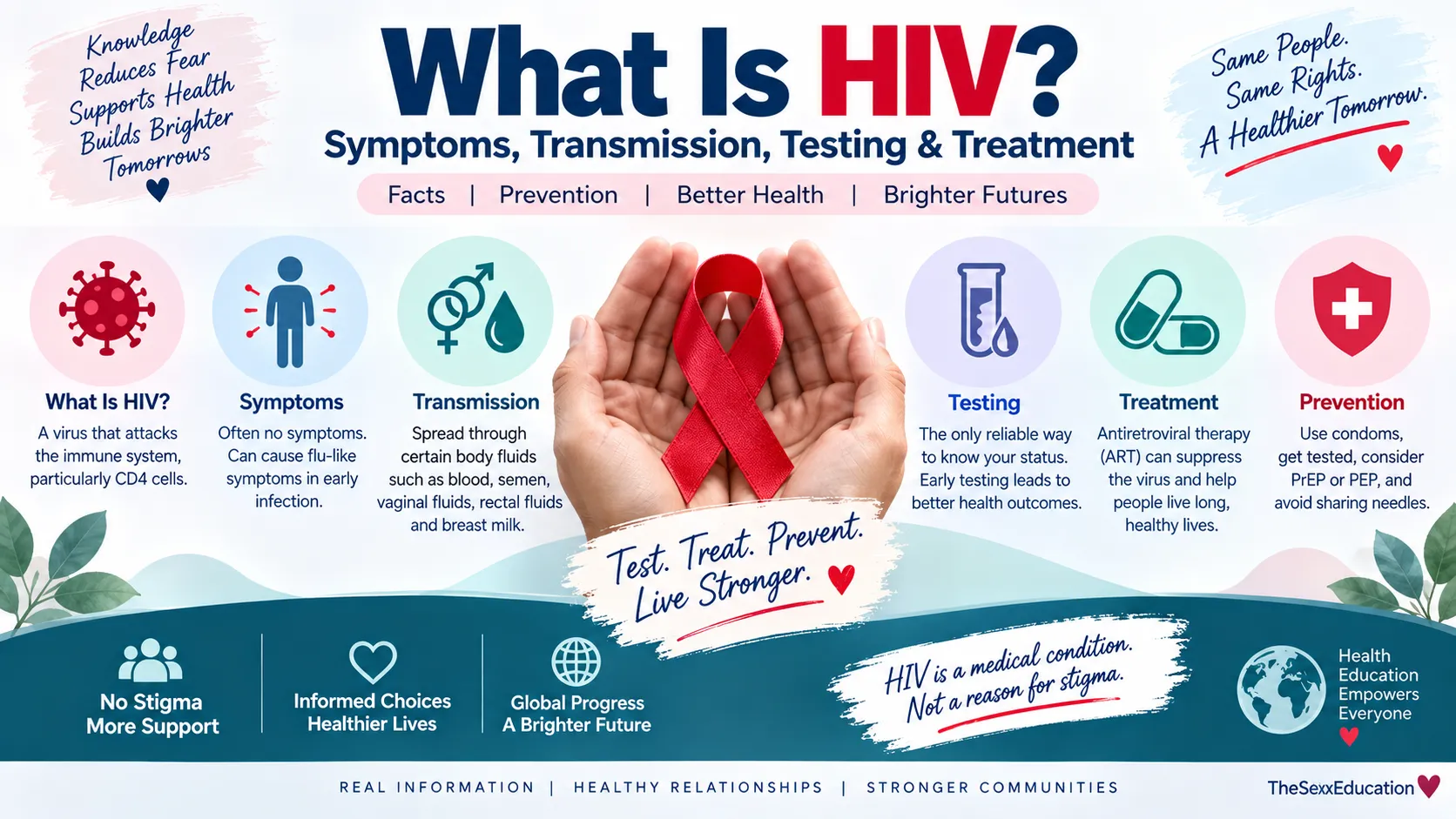
For example, HIV can be effectively controlled with antiretroviral treatment, while herpes currently has no cure but can be managed with antiviral medicines.
This is why it is important to identify the specific infection rather than searching online for a generic “STD medicine.”
For authoritative information, refer to the WHO STI guidance, which was consolidated into a new operational handbook in February 2026.
What Happens If an STI Is Left Untreated?
Some untreated STIs can cause serious health complications.
Depending on the infection, complications can include:
- Infertility
- Pregnancy complications
- Certain cancers
- Neurological problems
- Cardiovascular complications
- Increased risk of HIV acquisition
Some STIs can also be transmitted from a pregnant person to their baby.
That’s why testing, diagnosis and appropriate treatment are important.
Can You Have an STI Without Symptoms?
Yes.
This is one of the most important things to understand about STI testing.
A person can have an STI without obvious symptoms and can potentially transmit the infection without realizing it.
That’s why you shouldn’t rely only on how you feel to determine whether you have an STI.
If you think you may have been exposed, speak with a healthcare professional about whether testing is appropriate.
When Should You Seek Medical Help?
Speak with a healthcare professional if you are concerned that you may have an STI, particularly if you notice:
- Unusual genital discharge
- Burning or pain when urinating
- Genital sores
- Unusual lumps or growths
- A new rash
- Unusual genital bleeding
- Pelvic or lower abdominal pain
- Painful swelling around the testicles
These symptoms can have causes other than STIs, so symptoms alone cannot establish a diagnosis.
If you have severe pain, significant bleeding, high fever, fainting, severe illness or another urgent symptom, seek medical attention promptly.
What If Your Partner Tells You They Have an STI?
Don’t panic.
If a current or recent partner tells you they have been diagnosed with an STI:
- Ask which infection they were diagnosed with.
- Avoid sexual contact until you receive appropriate advice.
- Contact a healthcare professional.
- Explain when the possible exposure occurred.
- Follow the recommended testing or treatment.
- Don’t wait for symptoms before seeking advice.
Remember that an STI can exist without obvious symptoms.
What If You’re Embarrassed to Talk to a Doctor?
It’s understandable to feel uncomfortable.
However, sexual-health professionals deal with these questions regularly.
Be honest about:
- When the possible exposure occurred
- The type of sexual contact
- Whether protection was used
- Any symptoms you have
- Previous STI diagnoses
- Any treatment you’ve already taken
This information helps healthcare professionals determine which tests and treatments may be appropriate.
STI vs STD: What’s the Difference?
You may have noticed that this article primarily uses STI rather than STD.
The terms are sometimes used interchangeably, but “STI” is increasingly preferred because someone can have an infection without developing a disease or noticeable symptoms.
That’s why searches such as:
“What should I do if I have an STD?”
and
“What should I do if I have an STI?”
can refer to essentially the same concern.
For your website, I’d use STI as the primary terminology while naturally mentioning STD where it matches what people search for.
Frequently Asked Questions
What should you do if you have an STI?
Confirm which infection you have, speak with a healthcare professional, follow the recommended treatment, avoid sexual contact as advised, inform relevant partners and complete recommended follow-up care.
Can an STI go away on its own?
Some infections can resolve naturally, but you should not assume that an STI will disappear without medical evaluation. Some untreated infections can cause complications.
Should I tell my partner if I have an STI?
Yes. Current and relevant recent sexual partners may need testing or treatment depending on the infection and circumstances.
Can you have an STI without symptoms?
Yes. Many STIs can occur without noticeable symptoms.
Can you get an STI again after treatment?
Yes. Treatment of an infection does not necessarily provide immunity against future exposure.
Can condoms completely prevent STIs?
No method eliminates all STI risk, but correct and consistent condom use can reduce the risk of many infections.
Final Takeaway
If you’ve been diagnosed with an STI, don’t panic and don’t ignore it.
The most important thing is to get appropriate medical care, understand which infection you have, follow the prescribed treatment, avoid sexual contact as advised, notify relevant partners and complete any recommended follow-up.
An STI diagnosis is a health issue—not a reason for shame.
If you’re concerned that you may have an STI, the safest next step is to speak with a qualified healthcare professional.
Medical Disclaimer
This article is for general educational purposes only and is not a substitute for medical diagnosis, treatment or individualized advice. STI treatment depends on the specific infection, test results, medical history, pregnancy status and other factors. Do not start, stop or change medication without advice from a qualified healthcare professional. If you have severe or urgent symptoms, seek medical care promptly.
Advertisement · Continue Reading Below

No comments yet — be the first to comment.
Leave a comment
Comments are reviewed before they appear.