Does Masturbation Reduce Sperm Count? What Science Says
No. Masturbation does not permanently reduce sperm production or cause male infertility. Frequent ejaculation can temporarily change the amount of sperm present in an individual semen sample because there is less time between ejaculations for sperm to accumulate. However, this is different from permanently reducing the body’s ability to produce sperm. Mayo Clinic states that […]
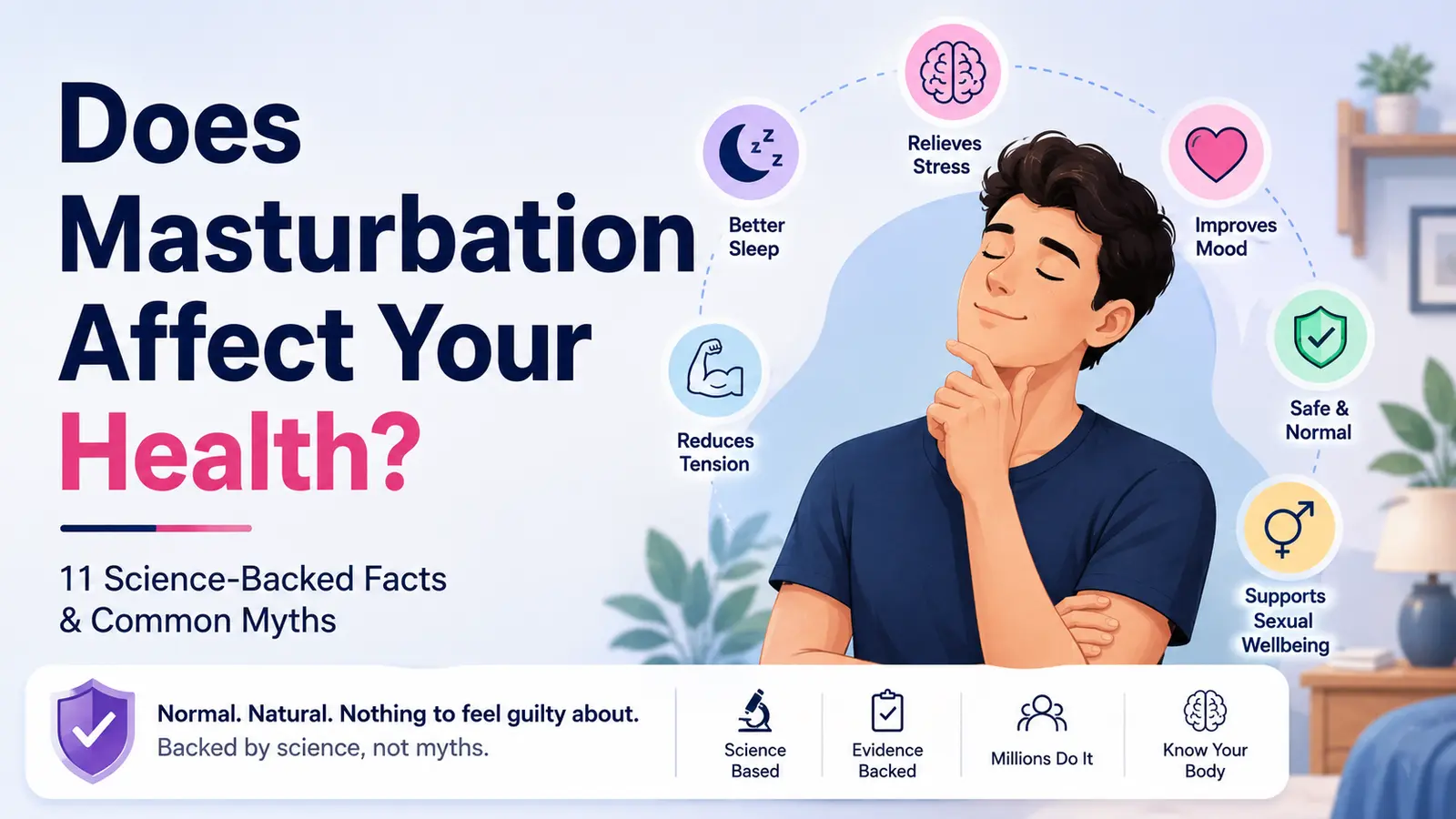
Contents
No. Masturbation does not permanently reduce sperm production or cause male infertility.
Frequent ejaculation can temporarily change the amount of sperm present in an individual semen sample because there is less time between ejaculations for sperm to accumulate. However, this is different from permanently reducing the body’s ability to produce sperm.
Mayo Clinic states that frequent male masturbation is unlikely to have much effect on fertility. Research also suggests that men with normal sperm quality can maintain normal sperm concentration and motility even with daily ejaculation.
So, if you’re worried that masturbation has “used up” your sperm, there is generally no reason to think that normal masturbation permanently lowers your sperm production.
Your body continuously produces sperm.
Quick Answer
| Question | Answer |
|---|---|
| Does masturbation permanently reduce sperm count? | No |
| Can frequent ejaculation temporarily change sperm concentration? | Yes |
| Does masturbation cause infertility? | No |
| Can abstinence increase sperm concentration in a sample? | It can |
| Does more sperm always mean better fertility? | No |
| Can masturbation affect a semen test? | Yes |
| Is there a fixed number of times a man should masturbate? | No |
How Does Masturbation Affect Sperm Count?
The important distinction is between sperm production and sperm concentration in one ejaculation.
Your body continuously produces sperm. Sperm then mature and are stored in the reproductive tract until ejaculation.
If you ejaculate several times within a short period, the next semen sample may contain fewer sperm because there has been less time for sperm to accumulate.
That doesn’t mean your testicles have stopped producing sperm.
The American Society for Reproductive Medicine (ASRM) notes that frequent ejaculation is a common source of concern, but research shows that men with normal semen quality can maintain normal sperm concentration and motility even with daily ejaculation.
In simple terms:
Frequent ejaculation → temporary change in an individual semen sample
does not equal
Frequent ejaculation → permanent infertility
Does Frequent Masturbation Reduce Male Fertility?
Usually, no.
Masturbation frequency by itself isn’t considered a major cause of male infertility.
Mayo Clinic specifically states that frequent masturbation isn’t likely to have much effect on male fertility. Some evidence suggests semen quality may be optimal after two to three days without ejaculation, while other research shows normal sperm concentration and motility even with daily ejaculation.
Male fertility involves much more than simply counting sperm.
Doctors may consider:
- Sperm concentration
- Total sperm number
- Sperm motility
- Sperm morphology
- Hormonal function
- Testicular function
- Sperm transport
- Ejaculation
- Sexual function
WHO explains that male infertility can involve problems with sperm production, sperm number, sperm morphology, sperm movement or semen ejection.
Can Masturbation Temporarily Lower Sperm Count?
Yes.
If ejaculation happens repeatedly within a short period, there may be fewer sperm available in the next ejaculation.
This is one reason the timing of the previous ejaculation matters when performing a semen analysis.
A sample collected shortly after a previous ejaculation may have different characteristics from one collected after several days without ejaculation.
ASRM reports that abstinence intervals can affect semen parameters. It also notes that men with normal semen quality can maintain normal sperm concentration and motility with daily ejaculation.
Therefore:
A temporary change in sperm concentration does not automatically mean infertility.
Does Abstaining From Masturbation Increase Sperm Count?
It can increase the amount of sperm in a particular semen sample, but longer abstinence isn’t necessarily better for fertility.
When ejaculation doesn’t occur for a period of time, sperm can accumulate.
However, ASRM notes that abstinence intervals longer than five days may adversely affect sperm counts, while intervals as short as two days can still be associated with normal sperm density. It also reports that semen parameters can begin to deteriorate after longer periods of abstinence.
So the idea that:
“The longer you avoid masturbation, the healthier your sperm will be.”
is too simplistic.
Sperm quality involves more than sperm concentration.
How Long Does It Take to Produce New Sperm?
Your body produces sperm continuously.
However, an individual sperm cell takes time to develop and mature.
Mayo Clinic notes that sperm take approximately 42 to 76 days to mature.
This does not mean that you need to wait two or three months after masturbation to “replace” your sperm.
Your body is producing new sperm while older sperm are being stored, ejaculated or broken down.
The WHO laboratory manual explains that semen analysis is used to investigate male fertility and assess characteristics of semen and sperm using standardized laboratory procedures.
Does Masturbation Cause Infertility?
No.
Normal masturbation is not considered a cause of male infertility.
Male infertility can have many different causes.
According to WHO, male infertility may result from problems involving:
- Semen ejection
- Low or absent sperm
- Abnormal sperm morphology
- Abnormal sperm motility
- Reproductive-tract obstruction
- Hormonal disorders
- Testicular failure
WHO also identifies factors such as smoking, excessive alcohol consumption, obesity, anabolic steroid use and some environmental exposures as factors that may affect male fertility.
So if a couple is having difficulty conceiving, automatically blaming masturbation could delay investigation of the actual cause.
What Actually Causes Low Sperm Count?
Low sperm count can have many possible causes.
1. Varicocele
A varicocele is an enlargement of veins around the testicle and can interfere with sperm production.
WHO identifies varicoceles among conditions that can cause testicular failure and impaired sperm production.
2. Hormonal problems
Hormones produced by the brain and reproductive organs play an important role in sperm production.
Hormonal disorders can interfere with this process.
3. Infections
Certain infections can affect the reproductive tract and potentially interfere with fertility.
4. Testicular problems
Injury, testicular failure and certain medical conditions can affect sperm production.
5. Genetic conditions
Some genetic conditions can affect sperm production or sperm transport.
6. Certain medications and treatments
Some medications and treatments, including chemotherapy, can affect sperm-producing cells.
7. Anabolic steroids
Anabolic steroids can suppress normal sperm production.
WHO specifically lists anabolic steroid use as a factor that can cause abnormal semen parameters such as sperm count and shape.
8. Smoking
Smoking can negatively affect reproductive health and fertility.
9. Excessive alcohol use
Excessive alcohol consumption can affect reproductive health.
10. Obesity
Obesity can be associated with impaired fertility and abnormal reproductive hormone levels.
WHO identifies smoking, excessive alcohol intake and obesity among lifestyle factors that can affect fertility.
What Is a Normal Sperm Count?
Sperm count is evaluated through a semen analysis.
But sperm concentration alone doesn’t determine whether someone is fertile.
A semen analysis can evaluate:
- Semen volume
- Sperm concentration
- Total sperm number
- Sperm motility
- Sperm morphology
- Other characteristics of the semen
WHO’s laboratory manual provides standardized procedures for examining and processing human semen and emphasizes semen analysis as an important tool for investigating male fertility.
This is why judging fertility from semen volume or masturbation frequency isn’t reliable.
Does More Semen Mean More Sperm?
Not necessarily.
Semen volume and sperm concentration are different measurements.
A larger volume of semen doesn’t automatically mean that it contains more sperm.
Likewise, producing less semen doesn’t automatically mean that a man has a low sperm count.
Only appropriate laboratory testing can measure sperm-related parameters accurately.
Does Masturbation Affect Sperm Quality?
Normal masturbation isn’t known to permanently damage sperm quality.
Sperm quality involves several characteristics.
Sperm concentration
The number of sperm present in a specific amount of semen.
Sperm motility
How effectively sperm move.
Sperm morphology
The size and shape of sperm.
Total sperm number
The total number of sperm in the entire ejaculate.
ASRM reports that men with normal semen quality can maintain normal sperm concentration and motility even with daily ejaculation.
Therefore, frequent masturbation shouldn’t automatically be interpreted as poor sperm quality.
Is There a Normal Frequency of Masturbation?
There is no universal medically defined number of times a man should masturbate.
Some men masturbate frequently, others occasionally, and some don’t masturbate at all.
Frequency becomes more important when the behavior causes a problem.
For example, consider speaking with a healthcare professional if masturbation:
- Causes physical injury
- Interferes with work or studies
- Causes significant distress
- Interferes with relationships
- Becomes difficult to control
The question isn’t simply:
“How many times do you masturbate?”
It’s whether the behavior is affecting your physical, sexual or everyday wellbeing.
Can You Masturbate Every Day and Still Have Normal Sperm?
Yes.
Daily ejaculation doesn’t automatically mean that sperm quality is poor.
ASRM cites research involving nearly 10,000 semen specimens and reports that men with normal semen quality maintained normal sperm concentration and motility even with daily ejaculation.
Mayo Clinic similarly states that research has found normal sperm concentration and motility in men with normal sperm quality who ejaculate daily.
Does Masturbation Affect Fertility When Trying to Have a Baby?
Normal masturbation generally does not prevent conception.
If you’re trying to conceive, what matters is that sperm are available during the fertile window through sexual intercourse.
ASRM recommends regular intercourse during the fertile window rather than unnecessarily restricting intercourse because of fears that frequent ejaculation will “use up” sperm.
For couples attempting pregnancy, intercourse every 1–2 days during the fertile window can help maximize the chance of conception.
Should You Stop Masturbating When Trying to Conceive?
Not necessarily.
There is no general medical recommendation that every man should completely stop masturbating while trying to conceive.
However, semen analysis is different.
If you’re providing a sample for a fertility test, follow the laboratory’s instructions regarding abstinence.
WHO recommends that a semen sample for basic examination be collected after a minimum of 2 days and maximum of 7 days of ejaculatory abstinence.
This recommendation helps standardize semen testing.
It doesn’t mean that masturbation is harmful to fertility.
What Happens During a Semen Analysis?
A semen analysis examines a sample of semen in a laboratory.
The WHO laboratory manual provides standardized procedures for semen examination and processing and describes semen analysis as a tool for investigating male fertility.
A laboratory may evaluate:
- Semen volume
- Sperm concentration
- Total sperm number
- Sperm motility
- Sperm morphology
- Other semen characteristics
If a result is abnormal, a healthcare professional may recommend additional testing or repeat semen analysis.
How Many Days Should You Avoid Masturbation Before a Sperm Test?
For a standardized semen analysis, WHO recommends 2–7 days of ejaculatory abstinence before collecting the sample.
Follow the specific instructions provided by your laboratory because testing protocols can vary.
Importantly, this recommendation is about standardizing the test, not proving that masturbation harms sperm.
Can Frequent Masturbation Cause Low Sperm Count?
Frequent masturbation can temporarily change sperm concentration in a particular ejaculation, but it is not considered a cause of chronic low sperm production.
If repeated semen analyses show a low sperm count, doctors should investigate other possible causes.
WHO identifies several possible contributors to male infertility, including reproductive-tract problems, hormonal disorders, testicular failure, abnormal sperm function, smoking, excessive alcohol consumption, obesity and anabolic steroid use.
Can Low Sperm Count Be Treated?
Treatment depends on the underlying cause.
Depending on the diagnosis, treatment may involve:
- Treating infections
- Addressing hormonal disorders
- Treating a varicocele when appropriate
- Reviewing medications
- Addressing lifestyle factors
- Treating reproductive-tract problems
- Using assisted reproductive techniques when appropriate
Low sperm count does not automatically mean that a man can never father a child.
WHO emphasizes that infertility can be diagnosed and treated through appropriate fertility care.
When Should a Man Get a Sperm Test?
Consider speaking with a healthcare professional if:
- You and your partner have been trying to conceive without success.
- You have persistent testicular pain or swelling.
- You have difficulty ejaculating.
- You have persistent erectile problems.
- You have had testicular injury or surgery.
- You have a history of reproductive infections.
- You have concerns about sperm production.
- You have previously been diagnosed with a fertility-related condition.
WHO defines infertility as failure to achieve pregnancy after 12 months or more of regular unprotected sexual intercourse and notes that male factors can involve sperm number, morphology, motility or semen ejection.
7 Common Myths About Masturbation and Sperm
Myth 1: Masturbation permanently lowers sperm count.
False.
Frequent ejaculation can temporarily change sperm concentration in an individual sample, but it does not mean that sperm production has permanently decreased.
Myth 2: Masturbation causes infertility.
False.
Normal masturbation isn’t considered a cause of male infertility.
Myth 3: You need to avoid ejaculation for weeks to produce healthy sperm.
False.
Longer abstinence isn’t automatically better. ASRM notes that prolonged abstinence can adversely affect some semen parameters.
Myth 4: Daily masturbation means you have low sperm count.
False.
Men with normal semen quality can maintain normal sperm concentration and motility even with daily ejaculation.
Myth 5: More semen means more sperm.
False.
Semen volume and sperm concentration are separate measurements.
Myth 6: One abnormal semen analysis means infertility.
False.
Semen parameters can vary, so healthcare professionals may recommend repeat testing.
Myth 7: Stopping masturbation automatically improves fertility.
Not necessarily.
Fertility depends on many factors, and simply stopping masturbation doesn’t treat underlying causes of infertility.
How to Support Healthy Sperm
Rather than focusing only on masturbation frequency, pay attention to factors that can affect reproductive health.
Avoid smoking
Smoking can negatively affect fertility.
Limit excessive alcohol use
Excessive alcohol consumption can affect reproductive health.
Avoid non-prescribed anabolic steroids
Anabolic steroids can suppress sperm production.
Maintain a healthy weight
Obesity can affect male fertility.
Manage your overall health
Conditions affecting hormones, the testicles or reproductive tract may affect fertility.
Seek medical advice when needed
If you’re concerned about fertility, a semen analysis and appropriate medical evaluation are more useful than trying to diagnose yourself based on masturbation frequency.
Frequently Asked Questions
Does masturbation reduce sperm count?
No, not permanently. Frequent ejaculation can temporarily change sperm concentration in an individual semen sample, but normal masturbation does not permanently reduce sperm production.
Does daily masturbation reduce sperm count?
Daily ejaculation can temporarily change the number of sperm in an individual ejaculation, but research indicates that men with normal semen quality can maintain normal sperm concentration and motility even with daily ejaculation.
Does masturbation cause infertility?
No. Normal masturbation isn’t considered a cause of male infertility.
Does masturbation reduce sperm quality?
Normal masturbation isn’t known to permanently damage sperm quality. The characteristics of an individual semen sample can vary depending on factors including the time since the previous ejaculation.
How long does it take to produce new sperm?
Sperm production is continuous, although individual sperm cells take weeks to develop and mature.
How many days should I avoid masturbation before a sperm test?
WHO recommends 2–7 days of ejaculatory abstinence before semen collection for basic semen examination.
Does abstaining from masturbation increase sperm count?
It can increase sperm concentration or total sperm number in an individual sample, but longer abstinence isn’t necessarily better for fertility.
Is there a normal masturbation frequency for men?
No. There is no universal number of times a man should masturbate.
Does masturbation affect testosterone?
Normal masturbation isn’t considered a cause of chronically low testosterone.
Does masturbation affect fertility when trying to conceive?
Normal masturbation generally does not prevent conception. Regular intercourse during the fertile window is more important than completely avoiding masturbation.
Can low sperm count be treated?
Treatment depends on the underlying cause. Some causes can be treated, while other situations may require fertility treatment.
The Bottom Line
Does masturbation reduce sperm count?
No—not permanently.
Frequent ejaculation can temporarily change sperm concentration or semen volume because there has been less time for sperm to accumulate. But that is different from permanently reducing the body’s ability to produce sperm.
Mayo Clinic states that frequent masturbation is unlikely to have much effect on male fertility, while ASRM notes that men with normal semen quality can maintain normal sperm concentration and motility even with daily ejaculation.
If you’re worried about fertility, don’t automatically blame masturbation.
Male infertility can have many causes, including testicular problems, hormonal disorders, reproductive-tract problems, abnormal sperm function, smoking, excessive alcohol use, obesity and anabolic steroid use.
If you have persistent concerns, a semen analysis and medical evaluation can provide much more useful information than simply counting how often you masturbate.
Advertisement · Continue Reading Below

Thankyou for giving such type of information
Leave a comment
Comments are reviewed before they appear.