What Is Premature Ejaculation? Causes, Symptoms & Treatment
Overview Premature ejaculation (PE) is a common sexual-health condition in which ejaculation happens sooner than desired, with difficulty delaying ejaculation and associated personal distress or other negative consequences. Occasionally ejaculating sooner than expected is common and does not necessarily mean that a person has premature ejaculation. A diagnosis generally considers how consistently the problem occurs, […]
Contents
Overview
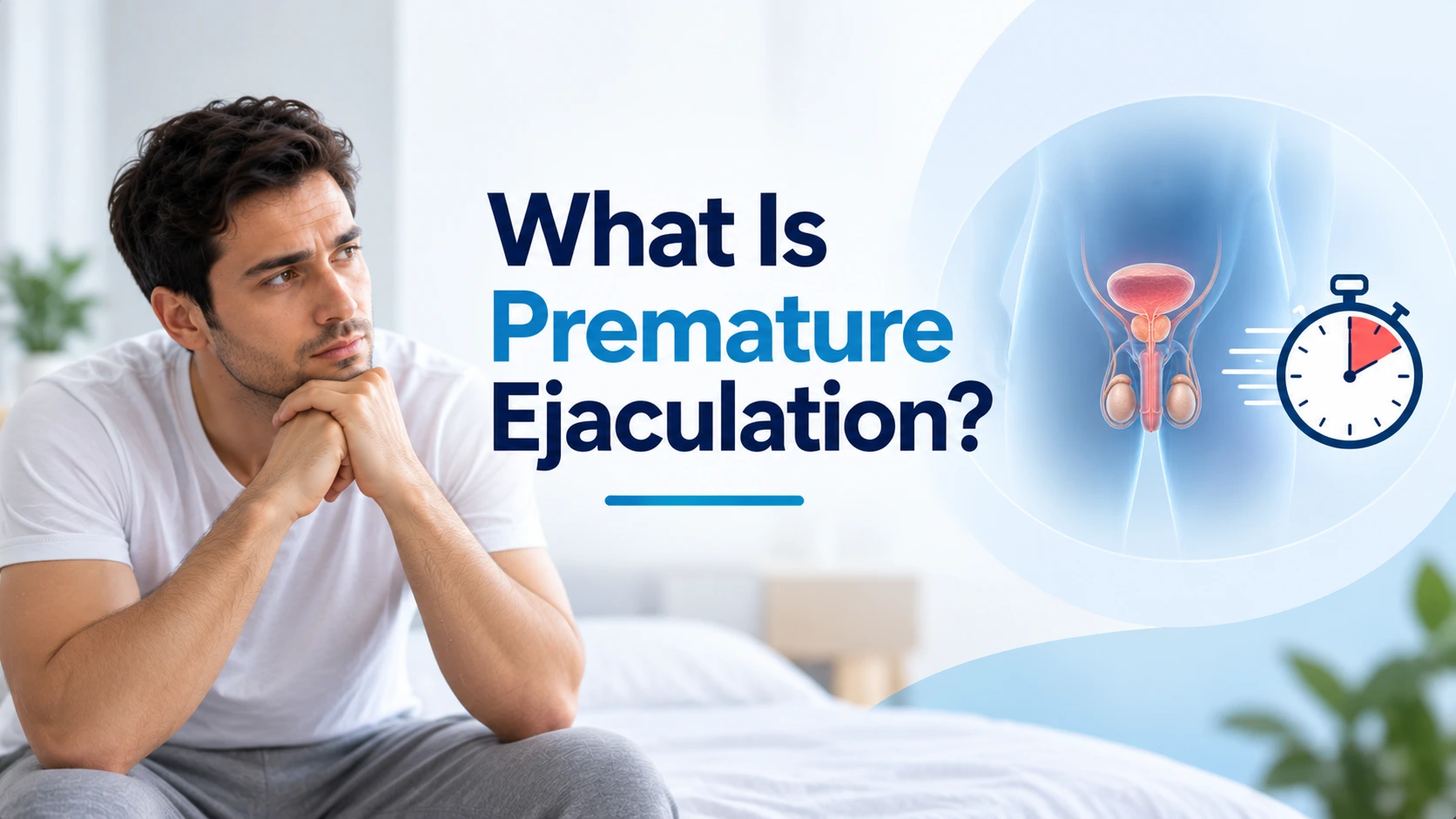
Premature ejaculation (PE) is a common sexual-health condition in which ejaculation happens sooner than desired, with difficulty delaying ejaculation and associated personal distress or other negative consequences.
Occasionally ejaculating sooner than expected is common and does not necessarily mean that a person has premature ejaculation. A diagnosis generally considers how consistently the problem occurs, the ability to delay ejaculation and whether it causes significant distress.
The International Society for Sexual Medicine (ISSM) distinguishes between lifelong and acquired premature ejaculation. Lifelong PE generally involves ejaculation before or within about one minute of vaginal penetration from the beginning of sexual experience, while acquired PE involves a clinically significant reduction in ejaculation time, often to about three minutes or less. Both definitions also include difficulty delaying ejaculation and negative personal consequences.
Premature ejaculation is treatable. Depending on the individual, treatment can include behavioral techniques, counseling, pelvic-floor exercises, topical anesthetics and prescription medicines.
Symptoms
The main symptoms of premature ejaculation include:
- Ejaculating sooner than you or your partner would prefer
- Difficulty delaying ejaculation
- The problem occurring repeatedly
- Feeling frustrated, embarrassed or distressed
- Avoiding sexual intimacy because of ejaculation concerns
Premature ejaculation can occur in different sexual situations, including partnered sex and, for some people, masturbation.
It’s important to understand that one or two episodes of early ejaculation do not automatically mean you have PE.
The NHS also notes that occasional premature ejaculation is common and generally isn’t a cause for concern.
Lifelong vs. Acquired Premature Ejaculation
Premature ejaculation is commonly described in two forms.
Lifelong Premature Ejaculation
Lifelong PE begins with a person’s earliest sexual experiences.
The ISSM definition describes it as ejaculation that occurs before or within about one minute of vaginal penetration on nearly all occasions, combined with difficulty delaying ejaculation and negative personal consequences.
Acquired Premature Ejaculation
Acquired PE develops after a person previously had satisfactory control over ejaculation.
It involves a clinically significant and bothersome reduction in ejaculation time, often to around three minutes or less, together with reduced control and negative consequences.
This distinction can be useful because acquired PE may sometimes be associated with another sexual, psychological or physical health problem.
When to See a Doctor
Talk with a healthcare professional if premature ejaculation:
- Happens during most sexual encounters
- Is difficult to control
- Causes significant distress
- Is affecting your relationship
- Causes you to avoid sexual intimacy
- Has developed suddenly after previously satisfactory ejaculation control
- Occurs together with erectile dysfunction or other symptoms
The NHS recommends seeking medical advice when ejaculation problems are persistent or causing concern.
There is no reason to feel embarrassed about discussing PE. It is a common sexual-health concern, and treatment options are available.
Mayo Clinic — Premature Ejaculation: Symptoms and Causes
Causes
The exact cause of premature ejaculation isn’t fully understood.
Current evidence suggests that PE can involve a combination of psychological, relationship and biological factors rather than one single cause.
Psychological Causes
Psychological factors that may contribute include:
- Performance anxiety
- Stress
- Depression
- Concerns about sexual performance
- Poor body image
- Negative or traumatic sexual experiences
- Feelings of guilt
- Relationship difficulties
Worrying about ejaculating too quickly can itself contribute to a cycle of anxiety and rapid ejaculation.
Erectile Dysfunction
Erectile dysfunction (ED) and premature ejaculation can occur together.
Some men who are worried about losing their erection may rush sexual activity or ejaculation. Over time, this can contribute to a pattern that becomes difficult to change.
If both PE and erection problems are present, it’s important to mention both to a healthcare professional.
Related article: What Is Erectile Dysfunction? Causes, Symptoms & Treatment — consider adding this internal link when your ED article is published.
Anxiety
Anxiety is commonly associated with premature ejaculation.
It may involve:
- Fear of sexual failure
- Worry about satisfying a partner
- Concern about ejaculating too quickly
- Anxiety in a new relationship
- General anxiety unrelated to sex
The relationship can work in both directions: anxiety may contribute to PE, while repeated PE may increase anxiety about future sexual encounters.
Relationship Problems
Relationship difficulties can also contribute to sexual problems.
Communication problems, relationship stress and concerns about sexual intimacy may affect sexual function and satisfaction.
Talking openly with a partner can sometimes reduce pressure and make it easier to address the problem.
Biological Causes
Premature ejaculation may also have biological contributors.
Possible factors include:
- Abnormal hormone levels
- Changes in brain chemicals involved in sexual function
- Prostate inflammation or infection
- Urethral inflammation or infection
- Certain inherited characteristics
- Other underlying health conditions
Mayo Clinic identifies hormonal, neurological and prostate/urethral factors among possible biological contributors.
The NHS also lists prostate problems and thyroid disorders among possible physical causes, particularly when ejaculation problems develop suddenly.
Risk Factors
Several factors may increase the likelihood of experiencing premature ejaculation.
Erectile Dysfunction
Men with difficulty getting or maintaining an erection may develop anxiety about losing the erection and rush toward ejaculation.
Stress
Mental or emotional stress can make it harder to relax and focus during sexual activity.
Anxiety About Sexual Performance
Repeated worry about ejaculation can contribute to a cycle of anxiety and reduced ejaculation control.
Relationship Stress
Relationship difficulties can affect sexual satisfaction and contribute to sexual problems.
Can Premature Ejaculation Develop Suddenly?
Yes.
A man who previously had satisfactory ejaculation control can develop acquired premature ejaculation.
Possible contributing factors include:
- Erectile dysfunction
- Anxiety
- Stress
- Relationship problems
- Prostate problems
- Thyroid problems
- Other health conditions
- Certain medications or substances
The NHS specifically lists prostate and thyroid problems, recreational drug use, depression, stress, relationship problems and performance anxiety among possible contributors.
A persistent sudden change deserves medical evaluation rather than being automatically attributed to psychological causes.
Does Premature Ejaculation Mean You Have Low Testosterone?
Not necessarily.
Premature ejaculation does not automatically mean testosterone is low.
Hormonal abnormalities can be one possible biological contributor, but testosterone testing isn’t automatically required for everyone with PE.
A healthcare professional can determine whether hormone testing is appropriate based on your symptoms and medical history.
Complications
Premature ejaculation can affect more than ejaculation itself.
Possible complications include:
Relationship Stress
Persistent PE can lead to frustration, embarrassment or reduced sexual intimacy.
Performance Anxiety
Repeated experiences can make someone increasingly worried about future sexual encounters.
Avoiding Sexual Intimacy
Some people may avoid sexual situations because they are concerned about ejaculating too quickly.
Difficulty Conceiving
PE generally does not cause infertility by itself. However, if ejaculation consistently occurs before semen can be deposited in the vagina, conception may become more difficult.
If you are trying to conceive and ejaculation problems are interfering with intercourse, speak with a healthcare professional.
Related article: Does Masturbation Reduce Sperm Count? — this can be used as an internal link when discussing fertility concerns.
How Is Premature Ejaculation Diagnosed?
There is no single blood test or scan that automatically diagnoses PE.
Diagnosis usually involves discussing your:
- Sexual history
- Ejaculation timing
- Ability to delay ejaculation
- Frequency of the problem
- Previous sexual experiences
- Relationship circumstances
- Stress and anxiety
- Erectile function
- Medications
- Other health conditions
A healthcare professional may also perform a physical examination.
Mayo Clinic states that diagnosis is primarily based on health and sexual history and may include a physical examination. Additional tests may sometimes be considered when erectile problems or another medical condition is suspected.
Is There a Normal Time to Ejaculate?
This is one of the most common questions about premature ejaculation.
There is no single time that every man should be expected to last.
The ISSM uses specific timing thresholds as part of its clinical definitions, but timing is only one part of the assessment. Ejaculation control and personal distress are also important.
Mayo Clinic notes that the average time from the beginning of intercourse to ejaculation is about five minutes, but an average should not be treated as a target that everyone needs to reach.
Treatment
The good news is that premature ejaculation is treatable.
Treatment depends on the type of PE, possible causes, other health conditions and personal preferences.
Common approaches include:
- Behavioral techniques
- Pelvic-floor exercises
- Counseling or sex therapy
- Condoms
- Topical anesthetics
- Prescription medicines
- Treatment of underlying medical conditions
Mayo Clinic notes that behavioral treatment, medication and counseling can be used individually or in combination.
Behavioral Techniques
Behavioral approaches aim to improve awareness of arousal and ejaculation control.
Stop-Start Technique
The stop-start technique involves temporarily stopping sexual stimulation when ejaculation feels close, allowing arousal to decrease, and then continuing.
It may take practice to recognize the point at which ejaculation becomes difficult to delay.
Mayo Clinic and the NHS both describe stop-start approaches as possible behavioral treatments.
Pelvic Floor Exercises
The pelvic floor muscles are involved in bladder control and sexual function.
Strengthening these muscles with pelvic-floor exercises may help some men improve ejaculation control. Mayo Clinic includes pelvic-floor exercises among behavioral treatment options.
If you’re unsure how to perform these exercises correctly, a healthcare professional or pelvic-floor physiotherapist can provide guidance.
Counseling and Sex Therapy
Counseling can be particularly useful when anxiety, stress or relationship problems are contributing to PE.
A qualified therapist may help with:
- Performance anxiety
- Sexual confidence
- Relationship communication
- Stress
- Behavioral techniques
Mayo Clinic notes that counseling may be particularly useful when combined with other treatment approaches.
Can Condoms Help With Premature Ejaculation?
They can help some men.
Condoms may decrease penile sensitivity and can sometimes help delay ejaculation.
Some condoms designed for ejaculation control contain a mild numbing agent or use thicker material.
Condoms also provide an important additional benefit: they can reduce the risk of pregnancy and many sexually transmitted infections when used correctly.
Internal link: What Should You Do If You Have an STI?
Topical Numbing Creams and Sprays
Topical anesthetics containing medicines such as lidocaine or prilocaine may reduce penile sensation and delay ejaculation.
Mayo Clinic notes that topical anesthetics can be effective, but they may also reduce sexual sensation or pleasure and can potentially affect a partner if transferred.
Use these products only according to medical or product instructions.
Do not apply prescription medication or unregulated numbing products based solely on advice from social media or online forums.
Prescription Medicines
Prescription medicines may be considered when behavioral approaches alone aren’t enough.
The AUA/SMSNA guideline identifies daily SSRIs, on-demand clomipramine or dapoxetine where available, and topical penile anesthetics among pharmacological treatment options for PE.
Mayo Clinic also describes SSRIs and other medicines that may be used under medical supervision.
Medication should be selected by a qualified healthcare professional because potential side effects, drug interactions and individual health conditions need to be considered.
Do not self-medicate with antidepressants, tramadol or other prescription medicines for PE.
Does Premature Ejaculation Go Away on Its Own?
Sometimes occasional early ejaculation may resolve without treatment.
However, persistent PE shouldn’t simply be ignored if it is causing distress.
Because effective treatments are available, someone experiencing frequent or bothersome premature ejaculation can discuss the problem with a doctor rather than relying on unproven remedies.
The NHS states that occasional episodes are common, while persistent problems can benefit from treatment.
Can Masturbation Cause Premature Ejaculation?
Masturbation itself is not established as a direct cause of premature ejaculation.
However, learned patterns of rushing during early sexual experiences have been proposed as one possible contributor to lifelong PE.
This does not mean masturbation is harmful or that masturbating automatically causes PE.
For related information, link naturally to your existing article:
Internal link: Does Masturbation Affect Your Health? What Science Says
and:
Internal link: Does Masturbation Reduce Sperm Count? What Science Says
Can Anxiety Cause Premature Ejaculation?
Yes.
Performance anxiety and other forms of anxiety can contribute to premature ejaculation.
Someone may become worried about ejaculating too soon, which increases anxiety during sexual activity and can make ejaculation control more difficult.
However, PE isn’t always psychological. Biological, relationship and psychological factors can overlap.
Can Premature Ejaculation Be Cured?
PE can often be managed effectively, and many men experience improvement with appropriate treatment.
There isn’t one treatment that works for everyone.
Some people improve with behavioral techniques, while others may benefit from counseling, topical treatments, prescription medication or a combination of approaches.
For acquired PE, identifying and treating an underlying problem can also be important.
Premature Ejaculation vs. Erectile Dysfunction
These conditions are different but can occur together.
| Premature Ejaculation | Erectile Dysfunction |
|---|---|
| Difficulty delaying ejaculation | Difficulty getting or maintaining an erection |
| Ejaculation occurs sooner than desired | Erection isn’t firm or persistent enough for satisfactory sexual activity |
| Main issue is ejaculation control | Main issue is erection |
| Anxiety can contribute | Anxiety can contribute |
| Both can occur at the same time | Both can occur at the same time |
If you experience both, tell your healthcare professional about both problems.
Premature Ejaculation: Myths vs Facts
Myth: PE means you are sexually weak.
Fact: PE is a recognized sexual-health condition involving ejaculation control and personal distress. It is not a measure of masculinity.
Myth: Every man who ejaculates quickly has PE.
Fact: Occasional early ejaculation is common and does not automatically indicate PE.
Myth: PE is always caused by anxiety.
Fact: Psychological, relationship and biological factors can all contribute.
Myth: PE cannot be treated.
Fact: Behavioral techniques, counseling, topical treatments and prescription medicines can all have a role in treatment.
Myth: You need to last a specific number of minutes.
Fact: Clinical definitions consider more than time alone, including ejaculation control and personal distress.
When Should You See a Doctor?
Consider speaking with a healthcare professional if:
- You regularly ejaculate sooner than you want.
- You cannot delay ejaculation during most sexual encounters.
- The problem causes significant distress.
- You’re avoiding sexual intimacy because of it.
- PE has suddenly developed.
- You also experience erectile dysfunction.
- You have urinary or prostate symptoms.
- You suspect another medical condition is contributing.
A doctor may refer you to a urologist, sexual-medicine specialist or qualified mental-health professional depending on your symptoms.
The Bottom Line
Premature ejaculation is common and treatable.
It isn’t defined simply by ejaculating quickly once in a while. Clinicians consider the pattern of ejaculation, ability to delay it and whether the problem causes significant distress or other negative consequences.
PE can be associated with anxiety, stress, relationship difficulties, erectile dysfunction and certain biological or medical factors.
Treatment may include behavioral techniques, pelvic-floor exercises, counseling, condoms, topical anesthetics and prescription medication. The best approach depends on the individual and any underlying causes.
If premature ejaculation is happening regularly and bothering you, talk with a qualified healthcare professional rather than relying on unproven online treatments.
Frequently Asked Questions
What is premature ejaculation?
Premature ejaculation is a sexual-health condition involving ejaculation that occurs sooner than desired, difficulty delaying ejaculation and associated personal distress or negative consequences.
What causes premature ejaculation?
PE can involve psychological, relationship and biological factors, including anxiety, stress, erectile dysfunction, prostate or urethral problems and certain hormonal or neurological factors.
Is premature ejaculation common?
Yes. Mayo Clinic reports that as many as 1 in 3 people report experiencing premature ejaculation at some point, although occasional early ejaculation is different from persistent PE.
What is the normal time to ejaculate?
There is no universal “normal” duration. Clinical definitions consider ejaculation timing alongside control and personal distress.
Can anxiety cause premature ejaculation?
Yes. Performance anxiety and other forms of anxiety can contribute to PE.
Can premature ejaculation be treated?
Yes. Treatment can include behavioral techniques, counseling, pelvic-floor exercises, topical anesthetics and prescription medication.
Does masturbation cause premature ejaculation?
Masturbation itself isn’t established as a direct cause of PE. Learned patterns of rushing during early sexual experiences may contribute to ejaculation habits in some people.
Can premature ejaculation affect fertility?
PE generally doesn’t cause infertility, but if ejaculation consistently occurs before semen can be deposited in the vagina, it can sometimes make conception more difficult.
Should I see a doctor for premature ejaculation?
Yes, particularly if it happens frequently, causes distress, affects your relationship, or develops suddenly after previously satisfactory sexual function.
Advertisement · Continue Reading Below

No comments yet — be the first to comment.
Leave a comment
Comments are reviewed before they appear.