Can You Get Pregnant During Your Period? What Are the Chances?
Can you get pregnant during your period? Yes. Although pregnancy is generally less likely during menstruation than around ovulation, period sex is not a guaranteed pregnancy-free time. The possibility depends on several factors, including when you ovulate, how long your menstrual cycle is, when sex occurs during your period, whether sperm is still present when […]
Contents
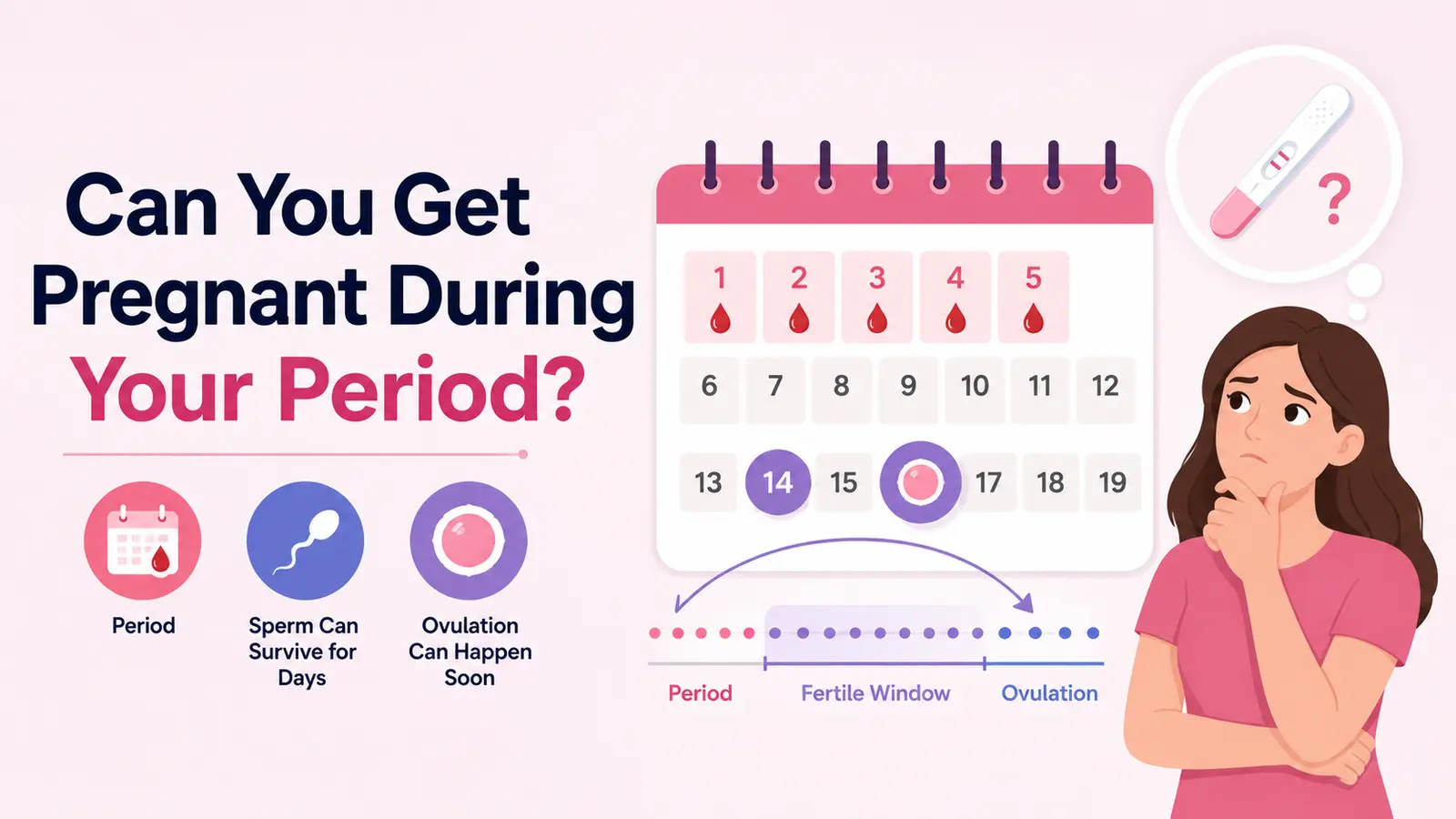
Can you get pregnant during your period? Yes. Although pregnancy is generally less likely during menstruation than around ovulation, period sex is not a guaranteed pregnancy-free time.
The possibility depends on several factors, including when you ovulate, how long your menstrual cycle is, when sex occurs during your period, whether sperm is still present when ovulation happens, and whether contraception was used.
Sperm can survive for several days inside the reproductive tract, while the egg remains available for fertilization for a much shorter period. This means sex during the later part of a period can potentially result in pregnancy if ovulation occurs soon afterward. The NHS notes that sperm can survive in the fallopian tubes for up to seven days and that pregnancy is possible soon after a period if ovulation occurs early or the cycle is short.
Short answer: You can get pregnant during your period. The chance is usually lower than during the fertile window, but it is not zero.
Can You Get Pregnant if You Have Sex on Your Period?
Yes, pregnancy is possible if you have vaginal sex during your period.
The important thing to understand is that having a period and being unable to become pregnant are not the same thing.
Ovulation happens at a different time for different people. It can also vary from one menstrual cycle to another.
If you have a shorter cycle, you may ovulate relatively soon after your period ends. If sperm from sex during your period is still present when ovulation occurs, fertilization can potentially happen.
The NHS explains that while pregnancy soon after a period is not very likely, it can happen when ovulation occurs early or someone has a short menstrual cycle.
So the idea that “you cannot get pregnant during your period” is a myth.
How Does Pregnancy Happen?
To understand pregnancy risk during your period, it helps to understand the basic menstrual cycle.
A menstrual cycle starts on the first day of menstrual bleeding and continues until the day before the next period. Cycle length varies between people. The NHS describes regular cycles between approximately 21 and 35 days as normal.
During the cycle:
Period → egg develops → ovulation → possible fertilization → next period
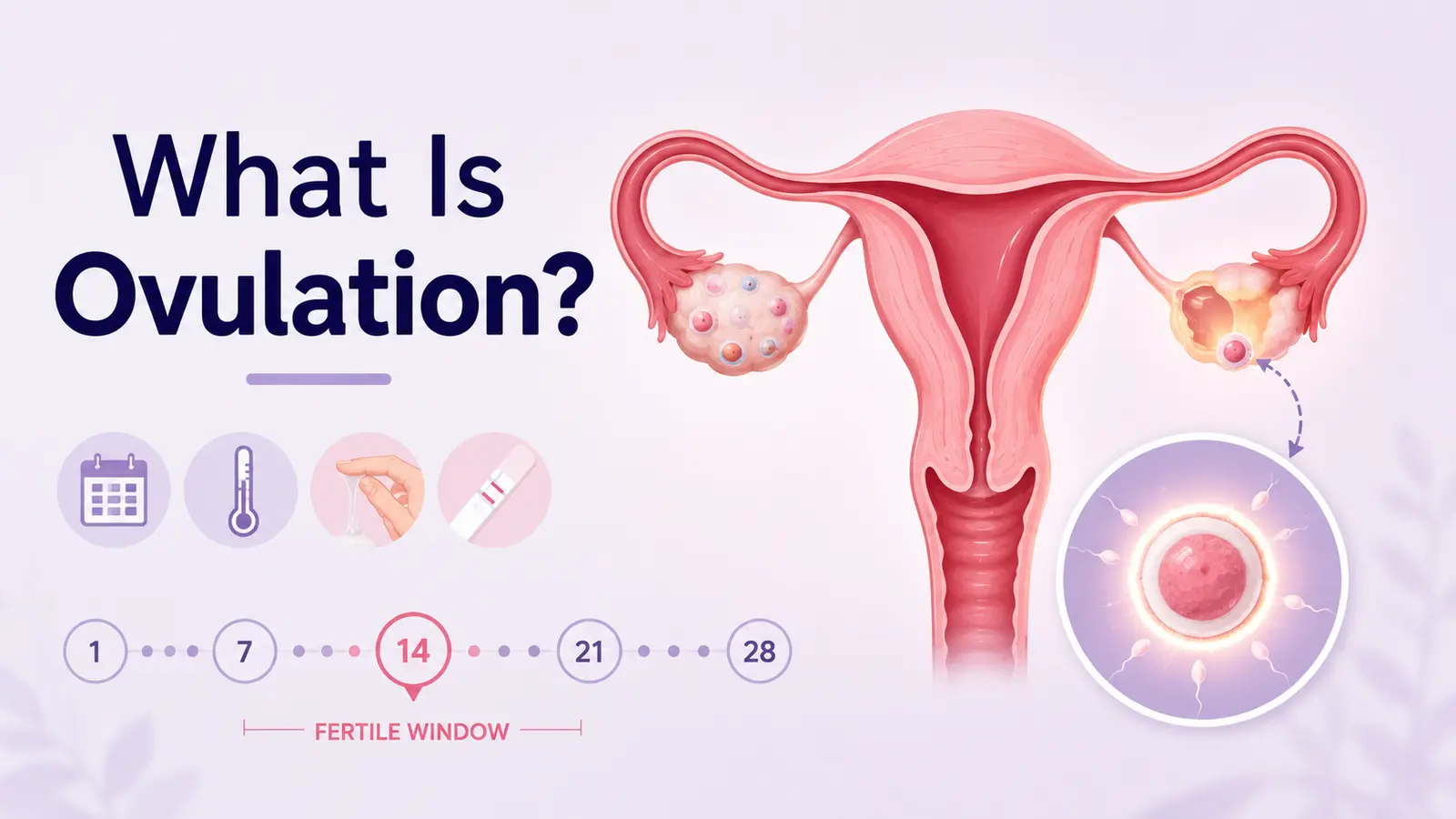
Ovulation
Ovulation is when an ovary releases an egg.
If sperm meets the egg around this time, fertilization can occur.
The timing of ovulation isn’t always predictable from a calendar. The NHS says ovulation usually occurs around 10 to 16 days before the next period, rather than necessarily on day 14 of every cycle.
This is why knowing the timing of your next period can be useful when understanding your cycle.
For a detailed explanation, read:
What Is Ovulation? 9 Signs, Timing & Pregnancy Facts
Why Can You Get Pregnant During Your Period?
There are two important reasons.
1. Ovulation Can Happen Earlier Than Expected
Not everyone has a 28-day menstrual cycle.
Someone may have a shorter cycle, or their cycle may vary from month to month.
If ovulation happens relatively soon after menstruation, sex during the later part of the period could potentially be followed by fertilization.
The NHS specifically notes that pregnancy soon after a period is possible when ovulation happens early or the menstrual cycle is short.
2. Sperm Can Survive for Several Days
Sperm doesn’t necessarily disappear immediately after ejaculation.
The NHS states that sperm can survive in the fallopian tubes for up to seven days.
That creates an important situation:
Sex during period → sperm survives → ovulation occurs → egg is fertilized
Therefore, pregnancy doesn’t require sex to happen on the exact day of ovulation.
The World Health Organization also identifies the days before and around ovulation as the most fertile period.
What Are the Chances of Getting Pregnant During Your Period?
There is no single percentage that accurately describes everyone’s chance of pregnancy during a period.
Your individual likelihood depends on:
- The day of your period when sex occurred
- Your usual cycle length
- Whether your cycles are regular
- When you ovulate
- Whether sperm remains viable until ovulation
- Whether contraception was used
- Whether the bleeding was actually a menstrual period
Generally, the chance is lower during the earlier days of a typical period than during the fertile window.
However, the chance can become more relevant toward the end of a period, particularly for someone with a short cycle.
This is why saying “the chance is zero” or assigning one exact percentage to everyone would be misleading.
Can You Get Pregnant on the First Day of Your Period?
Yes, but it is generally less likely than sex closer to ovulation.
For someone with a typical cycle, ovulation usually isn’t occurring on the first day of menstrual bleeding.
However, cycle timing varies.
There is also another important issue: not all vaginal bleeding is necessarily a menstrual period.
If bleeding occurs at an unexpected time, it can sometimes be mistaken for a period.
Therefore, the first day of bleeding should not be considered a guaranteed pregnancy-safe day.
Can You Get Pregnant on the Last Day of Your Period?
Yes.
The possibility may be higher toward the end of menstruation because ovulation may be approaching, particularly if you have a shorter cycle.
For example:
Day 1: Period begins
Day 5: Sex occurs
Day 8–10: Ovulation occurs
Sperm survives: Pregnancy may be possible
This is only an example. Actual ovulation timing varies.
The NHS confirms that pregnancy can occur soon after a period when ovulation happens early or cycles are short.
Can You Get Pregnant Right After Your Period?
Yes.
Pregnancy shortly after menstruation is possible.
The possibility can be greater if:
- Your cycles are short.
- Your cycles are irregular.
- You ovulate earlier than expected.
- You have sex without contraception.
- Sperm remains viable until ovulation.
The NHS specifically lists early ovulation and shorter cycles as reasons pregnancy can occur soon after a period.
Does Your Menstrual Cycle Length Matter?
Yes.
Cycle length can affect how close your period is to ovulation.
For example, someone with a 21-day cycle may ovulate considerably earlier than someone with a longer cycle.
This matters because sperm can survive for several days.
Example of the basic idea
Shorter cycle:
Period → shorter gap → ovulation
Longer cycle:
Period → longer gap → ovulation
The exact dates vary, so counting days on a calendar cannot guarantee when ovulation will happen.
The NHS says regular cycles can range from approximately 21 to 35 days.
Can You Get Pregnant During an Irregular Period?
Yes.
In fact, irregular cycles can make pregnancy risk harder to predict.
If your cycle changes significantly from month to month, you may not know exactly when ovulation will happen.
For that reason, using a calendar alone to identify “safe days” can be unreliable.
The NHS notes that irregular periods can make getting pregnant more difficult because ovulation may not occur regularly.
If your periods are consistently irregular, particularly if you are also trying to become pregnant, speak with a healthcare professional.
Does Period Blood Kill Sperm?
No.
Menstrual blood does not function as contraception.
Sperm can survive for several days inside the reproductive tract, which is why sex before ovulation can potentially lead to pregnancy.
So:
Period blood ≠ contraception
Having sex while menstruating does not create a biological barrier that prevents sperm from eventually reaching an egg.
What Is the Fertile Window?
The fertile window is the part of the menstrual cycle when pregnancy is most likely.
It isn’t limited to one day.
The reason is that sperm can survive for several days, while the egg has a much shorter lifespan after ovulation.
The WHO’s family-planning guidance describes the most fertile period as several days before and around ovulation.
This means pregnancy can result from sex that happens before ovulation.
Simple example
Sex → sperm survives → ovulation → possible fertilization
That’s why someone doesn’t necessarily have to have sex on the exact day of ovulation to become pregnant.
Can You Get Pregnant During Your Period Without Ejaculation?
Pregnancy is still possible if sperm reaches the vagina, although the risk depends on the sexual circumstances.
Withdrawal reduces the amount of semen entering the vagina, but it isn’t considered one of the most reliable contraceptive methods.
WHO lists withdrawal and fertility-awareness methods among methods that are less reliable than highly effective contraceptive options.
If you want more information about pre-ejaculate specifically, read:
Can You Get Pregnant From Precum?
Can You Get Pregnant During Your Period From Precum?
It is possible.
Pre-ejaculate does not necessarily contain sperm, but pregnancy can occur if sperm reaches the vagina.
Because sperm can survive for several days and ovulation timing varies, withdrawal or relying on precum assumptions isn’t a dependable way to eliminate pregnancy risk.
If you are concerned about a recent sexual encounter, the timing of the sex and whether contraception was used are more useful for assessing what to do next than simply whether you were menstruating.
Does Period Sex Protect Against Pregnancy?
No.
A menstrual period is not a contraceptive method.
If you don’t want to become pregnant, use a reliable form of contraception even when you’re on your period.
WHO states that many contraceptive options are available, including condoms, pills, implants, IUDs and other methods. It also notes that condoms are the only contraceptive method that protects against both pregnancy and sexually transmitted infections, including HIV.
WHO — Family Planning and Contraception Methods
Can You Get Pregnant During Your Period if You Use Birth Control?
The likelihood of pregnancy is much lower when contraception is used correctly, but the effectiveness depends on the method and how it is used.
Contraceptive options include:
- Condoms
- Birth-control pills
- Hormonal implants
- IUDs
- Injections
- Patches
- Vaginal rings
- Sterilization
WHO’s current contraception guidance explains that contraceptive methods differ in how they work and how effective they are.
If you’re in India, the National Health Mission (Government of India) also provides family-planning services including condoms, oral contraceptives, IUCDs, injectable contraception and emergency contraception.
National Health Mission — Family Planning, Government of India
Can You Get Pregnant During Your Period and Still Have an STI Risk?
Yes.
Being on your period doesn’t protect against sexually transmitted infections.
If you have sex with a partner who may have an STI, condoms and other appropriate barrier methods can reduce the risk of transmission.
WHO states that condoms are the only contraceptive method that also protects against STI transmission, including HIV.
For more information, read:
What Should You Do If You Have an STI?
You can also read:
Oral Sex: Safety, STIs & Protection
What If You Had Unprotected Sex During Your Period?
If you had vaginal sex without contraception and don’t want to become pregnant, don’t assume you’re safe simply because you were menstruating.
Emergency contraception may be an option depending on how long ago the sex occurred.
WHO states that emergency contraception can be used after unprotected sex and that emergency contraceptive methods include pills and a copper-bearing IUD.
The CDC states that emergency contraceptive pills should be taken as soon as possible within five days after unprotected sex, while a copper IUD can be placed within five days of the first act of unprotected intercourse.
If you’re in India, the National Health Mission provides official guidance and services relating to emergency contraception.
National Health Mission — Family Planning Guidelines
If the unprotected sex happened recently, don’t wait for symptoms before seeking advice.
When Should You Take a Pregnancy Test?
If you are worried about pregnancy after sex during your period, a pregnancy test is more useful than trying to judge pregnancy from bleeding or symptoms.
If your next period doesn’t arrive when expected, take a pregnancy test according to the test’s instructions.
If you’re unsure when your next period is due because your cycles are irregular, a healthcare professional can help you determine when testing is appropriate.
The CDC notes that pregnancy testing has timing limitations and that recent unprotected sex may require consideration of emergency contraception even when a pregnancy test is negative.
Can You Have a Period While Pregnant?
A true menstrual period does not occur during pregnancy.
However, bleeding can occur during pregnancy and may sometimes be mistaken for a period.
Therefore, if you have unusual bleeding and pregnancy is possible, don’t assume the bleeding automatically rules out pregnancy.
If you have a positive pregnancy test and experience significant bleeding or pain, seek medical care.
Period vs Pregnancy-Related Bleeding
| Feature | Typical period | Other bleeding |
|---|---|---|
| Timing | Usually follows your normal cycle | May happen at an unexpected time |
| Flow | Usually follows your usual pattern | Can be lighter, heavier or different |
| Duration | Similar to your normal period | Can vary |
| Pregnancy test | Usually negative | May be positive if pregnancy exists |
| What to do | Usually normal menstruation | Consider medical advice if pregnancy is possible |
Bleeding by itself cannot confirm or rule out pregnancy.
A pregnancy test is a more appropriate way to check.
Can You Get Pregnant Right Before Your Period?
Pregnancy is generally less likely immediately before an expected period if ovulation has already occurred, because the egg remains viable for only a short time.
However, predicting the exact date of ovulation isn’t always possible.
If your cycle changes or ovulation occurs later than expected, the fertile window can also shift.
That’s why relying solely on an expected period date isn’t a guaranteed way to prevent pregnancy.
Can You Get Pregnant During Your Period If Your Cycle Is 28 Days?
Yes, but the likelihood is generally low during the early part of a typical 28-day cycle.
A 28-day cycle is an average, not a rule.
Even among people who usually have 28-day cycles, ovulation timing can vary.
The NHS says people with regular 28-day cycles are likely to be fertile around day 14, but this does not apply to everyone.
Therefore, 28-day cycle ≠ guaranteed safe period.
Can You Get Pregnant During Your Period If Your Cycle Is Short?
Yes, and the possibility can be more relevant.
With a shorter cycle, ovulation may occur earlier.
If sex happens toward the end of the period and sperm survives until ovulation, pregnancy can potentially occur.
This is one of the reasons the NHS specifically identifies short cycles and early ovulation as situations where pregnancy soon after a period is possible.
Is Period Sex a Safe Time to Avoid Pregnancy?
If by “safe” you mean zero pregnancy risk, the answer is no.
The risk may be lower at certain points in the cycle, but there is no universal “safe day” that guarantees pregnancy cannot occur.
The CDC explains that fertility-awareness methods involve fertile, infertile and less-likely-but-still-possible days, and their effectiveness varies.
If avoiding pregnancy is important, use a reliable contraceptive method rather than relying on menstruation alone.
How Can You Reduce the Risk of Pregnancy During Your Period?
If you don’t want to become pregnant, you can use contraception consistently.
Depending on your circumstances, options include:
Condoms
Condoms provide a barrier that helps prevent sperm from entering the reproductive tract and also reduce the risk of many STIs.
Hormonal contraception
Methods such as pills, patches, rings, injections and implants can prevent pregnancy through hormonal effects, including preventing ovulation depending on the method.
IUDs
Copper and hormonal IUDs are highly effective contraceptive options.
Emergency contraception
If contraception wasn’t used or failed, emergency contraception can provide an additional option after sex. WHO and CDC guidance describe emergency contraception options and timing.
What If You’re Trying to Get Pregnant?
If you’re trying to become pregnant, sex during menstruation isn’t usually the most fertile time.
Pregnancy is more likely around ovulation.
The NHS recommends having sex every 2 to 3 days without contraception when trying to conceive, rather than relying entirely on predicting one exact ovulation day.
Understanding your fertile window can also help.
Read:
What Is Ovulation? 9 Signs, Timing & Pregnancy Facts
Common Myths About Pregnancy During Your Period
Myth 1: You Cannot Get Pregnant During Your Period
False.
Pregnancy is possible, particularly when ovulation occurs early or cycles are short.
Myth 2: Period Blood Kills Sperm
False.
Sperm can survive for several days in the reproductive tract.
Myth 3: The First Week of Your Cycle Is Always Safe
False.
Cycle length and ovulation timing vary.
Myth 4: You Can Only Get Pregnant on the Day of Ovulation
False.
Sex in the days before ovulation can potentially result in pregnancy because sperm can survive for several days.
Myth 5: Bleeding Means You Definitely Aren’t Pregnant
False.
Bleeding isn’t enough to determine whether someone is pregnant.
Frequently Asked Questions
Can you get pregnant during your period?
Yes. The chance is generally lower than around ovulation, but pregnancy is possible, especially if ovulation occurs early or the cycle is short.
What are the chances of getting pregnant during your period?
There isn’t one percentage that applies to everyone. The likelihood depends on cycle length, ovulation timing, the day of the period, sperm survival and contraception.
Can you get pregnant on the first day of your period?
Yes, although pregnancy is generally less likely than during the fertile window. The first day of bleeding isn’t a guaranteed pregnancy-free day.
Can you get pregnant on the last day of your period?
Yes. Pregnancy may be more possible toward the end of a period if ovulation occurs soon afterward, especially with shorter cycles.
Can you get pregnant right after your period?
Yes. The NHS specifically notes that pregnancy soon after a period is possible if ovulation occurs early or the cycle is short.
Can sperm survive during your period?
Yes. Sperm can survive for several days in the reproductive tract.
Does period blood prevent pregnancy?
No. Menstrual blood is not contraception.
Can you get pregnant from precum during your period?
Pregnancy is possible if sperm reaches the vagina. For more information, read Can You Get Pregnant From Precum?.
Can you get pregnant if you have irregular periods?
Yes. Irregular cycles can make ovulation more difficult to predict.
Is period sex a safe way to avoid pregnancy?
No. The risk may be lower during some days of the cycle, but it isn’t zero.
Can you get pregnant during your period if you use birth control?
Pregnancy is still theoretically possible with any contraceptive method, but correct and consistent use greatly reduces the risk. WHO provides current information about contraceptive choices and effectiveness.
What should I do after unprotected sex during my period?
If you don’t want pregnancy, consider emergency contraception promptly. CDC guidance recommends emergency contraceptive pills as soon as possible within five days, with the copper IUD also an option within five days of the first act of unprotected intercourse.
When should I take a pregnancy test?
If your next period doesn’t arrive when expected, take a pregnancy test. If your cycle is irregular or you’re unsure when to test, follow the test instructions or speak with a healthcare professional.
The Bottom Line
Can you get pregnant during your period? Yes.
Pregnancy is generally less likely during the early days of menstruation than around ovulation, but the risk is not zero.
The biggest factors are:
- When you ovulate
- How long your menstrual cycle is
- When sex occurs during your period
- How long sperm survives
- Whether contraception was used
Shorter cycles and early ovulation can make pregnancy more possible from sex during the later part of a period.
If you don’t want to become pregnant, don’t use your period as a substitute for contraception. WHO recommends a range of contraceptive options, and condoms additionally provide protection against many STIs.
If you’ve had unprotected sex recently and pregnancy isn’t desired, emergency contraception may still be an option depending on how much time has passed.
Advertisement · Continue Reading Below

No comments yet — be the first to comment.
Leave a comment
Comments are reviewed before they appear.