What Is Emergency Contraception? How Does It Work?
Emergency contraception (EC) is a method used to help prevent pregnancy after unprotected sex or when contraception may have failed. It can be used after situations such as a broken condom, missed contraceptive pills, failed withdrawal or sex without contraception. Emergency contraception should be used as soon as possible because it generally works better the […]
Contents
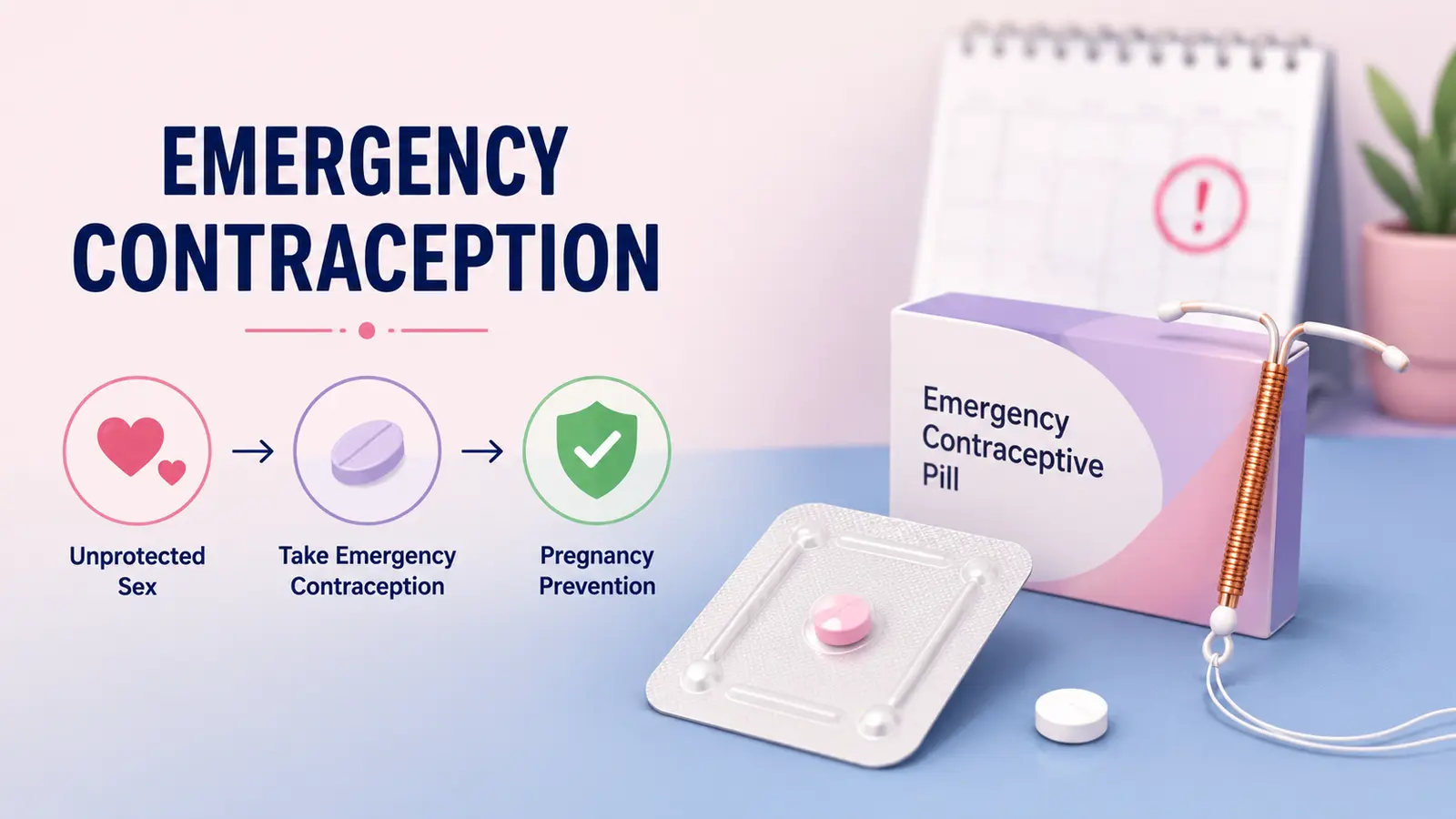
Emergency contraception (EC) is a method used to help prevent pregnancy after unprotected sex or when contraception may have failed. It can be used after situations such as a broken condom, missed contraceptive pills, failed withdrawal or sex without contraception.
Emergency contraception should be used as soon as possible because it generally works better the sooner it is used. WHO recommends emergency contraception within 5 days (120 hours) after unprotected intercourse.
Emergency contraception is not the same as an abortion. Emergency contraceptive pills work mainly by preventing or delaying ovulation, while a copper IUD prevents fertilization. They do not terminate an established pregnancy.
Quick answer: Emergency contraception can help prevent pregnancy after unprotected sex or contraceptive failure. Options include emergency contraceptive pills and a copper IUD. The sooner emergency contraception is used, the better.
What Is Emergency Contraception?
Emergency contraception refers to contraceptive methods that can be used after sexual intercourse to reduce the chance of pregnancy.
It may be appropriate when:
- No contraception was used.
- A condom broke or slipped.
- A contraceptive method was used incorrectly.
- Birth-control pills were missed.
- Withdrawal failed.
- A contraceptive device was expelled or displaced.
- Sexual assault occurred without effective contraceptive protection.
WHO specifically lists unprotected intercourse, contraceptive failure, incorrect contraceptive use and sexual assault without contraceptive coverage as situations in which emergency contraception can be used.
Emergency contraception is intended for emergency situations, not as a replacement for regular contraception.
How Does Emergency Contraception Work?
The answer depends on which emergency contraception method is used.
Emergency contraceptive pills
Emergency contraceptive pills primarily work by preventing or delaying ovulation.
They do not induce an abortion and cannot interrupt an established pregnancy.
Copper IUD
A copper-bearing intrauterine device works differently. It creates changes that interfere with sperm and egg before fertilization can occur. WHO considers the copper IUD the most effective form of emergency contraception.
The important distinction is:
Emergency contraception prevents pregnancy from starting; it does not end an established pregnancy.
When Should You Take Emergency Contraception?
As soon as possible after unprotected sex.
WHO recommends emergency contraception within 5 days after intercourse, but effectiveness is generally better when it is used sooner.
The CDC similarly recommends taking emergency contraceptive pills as soon as possible within five days of unprotected intercourse.
Simple timeline
Unprotected sex
↓
Use emergency contraception as soon as possible
↓
Up to 5 days may still be an option, depending on the method
Waiting unnecessarily can reduce the effectiveness of some emergency contraceptive options.
Can Emergency Contraception Work After 3 Days?
Yes, depending on the method.
WHO recommends emergency contraceptive pills within 120 hours (5 days), with ulipristal acetate being more effective than other emergency contraceptive pills between 72 and 120 hours after unprotected intercourse.
The CDC similarly states that ulipristal acetate and levonorgestrel have similar effectiveness when used within the first three days, while ulipristal acetate has been observed to be more effective during days 3–5.
The copper IUD is another option that can be inserted within five days of unprotected intercourse and is highly effective.
If you’ve had unprotected sex within the last five days and don’t want pregnancy, seek professional advice promptly rather than waiting.
What Are the Types of Emergency Contraception?
WHO describes four emergency-contraception regimens:
- Ulipristal acetate emergency contraceptive pills
- Levonorgestrel emergency contraceptive pills
- Combined oral contraceptive pills used as emergency contraception
- Copper-bearing IUD
The exact availability of these options varies by country.
In India, the National Health Mission (NHM) includes emergency contraceptive pills among the family-planning methods provided through the public-health system.
National Health Mission — Family Planning Guidelines
1. Ulipristal Acetate
Ulipristal acetate is an emergency contraceptive pill.
WHO’s guidance describes a 30 mg single dose regimen.
It works primarily by delaying ovulation.
It can be used up to 120 hours (5 days) after unprotected intercourse, and WHO notes that it is particularly effective between 72 and 120 hours.
2. Levonorgestrel
Levonorgestrel is another emergency contraceptive pill.
WHO describes a 1.5 mg single-dose regimen, with an alternative two-dose regimen in some guidance.
It works primarily by delaying or preventing ovulation.
Like other emergency contraceptive pills, it should be taken as soon as possible after unprotected sex.
3. Combined Oral Contraceptive Pills
Certain combined oral contraceptive pills can also be used as emergency contraception using the Yuzpe regimen.
This method uses specific doses of ethinyl estradiol and levonorgestrel in two doses 12 hours apart.
However, this regimen is generally less convenient and can cause more nausea and vomiting than dedicated emergency contraceptive pills.
The CDC notes that the combined regimen is less effective than ulipristal acetate or levonorgestrel and is associated with more frequent nausea and vomiting.
Do not try to calculate an emergency dose of ordinary birth-control pills yourself. Speak with a healthcare professional or pharmacist about the appropriate product and dose.
4. Copper IUD
The copper intrauterine device (IUD) is the most effective emergency contraceptive method.
WHO states that when inserted within 120 hours (5 days) of unprotected intercourse, a copper IUD is more than 99% effective at preventing pregnancy.
One advantage is that the copper IUD can continue to provide contraception after it is inserted.
This makes it both:
Emergency contraception + ongoing contraception
A healthcare professional must insert the device.
How Effective Is Emergency Contraception?
Effectiveness depends on:
- The type of emergency contraception used
- How soon it is used
- Where you are in your menstrual cycle
- Whether ovulation has already occurred
- Individual circumstances
WHO states that emergency contraception can prevent more than 95% of pregnancies when used within five days, while the copper IUD is the most effective emergency option.
However, emergency contraception is not 100% effective.
This is why taking it as soon as possible is important.
Which Emergency Contraception Is Most Effective?
According to WHO:
🥇 Copper IUD
More than 99% effective when inserted within 120 hours of unprotected intercourse.
Emergency contraceptive pills
They are effective, but their effectiveness varies depending on the type of pill and how soon it is taken.
WHO reports pregnancy rates of approximately 1.2% with ulipristal acetate and 1.2%–2.1% with levonorgestrel in the studies it cites.
These study results should not be interpreted as an individual guaranteed pregnancy probability.
Does Emergency Contraception Cause an Abortion?
No.
This is one of the most common misconceptions about emergency contraception.
WHO states that emergency contraceptive pills prevent pregnancy by preventing or delaying ovulation and do not induce abortion. Emergency contraception cannot interrupt an established pregnancy.
So:
Emergency contraception ≠ abortion medication
Emergency contraception is used before an established pregnancy to prevent pregnancy from occurring.
Can Emergency Contraception Work If You’re Already Pregnant?
No.
Emergency contraception is intended to prevent pregnancy after unprotected sex.
It does not terminate an established pregnancy.
WHO states that emergency contraception cannot interrupt an established pregnancy or harm a developing embryo.
If you think you may already be pregnant, speak with a healthcare professional rather than taking emergency contraception expecting it to end the pregnancy.
Who Can Use Emergency Contraception?
WHO states that emergency contraception can be needed by people of reproductive age and that there are no age limits for emergency contraception in its guidance.
However, the suitability of a copper IUD depends on its medical eligibility criteria.
Certain conditions can make a copper IUD unsuitable, including some pelvic infections, unexplained vaginal bleeding and certain other medical conditions.
A healthcare professional can determine whether an IUD is appropriate.
When Is Emergency Contraception Needed?
Emergency contraception may be appropriate after:
Unprotected sex
No contraceptive method was used.
Condom breakage
A condom broke, slipped or was used incorrectly.
Missed birth-control pills
Several contraceptive pills were missed or taken incorrectly.
Failed withdrawal
Ejaculation occurred inside the vagina or on the external genitalia after withdrawal was attempted.
Contraceptive device failure
An IUD or implant was expelled or displaced.
Sexual assault
Sexual intercourse occurred without effective contraceptive protection.
WHO specifically includes these circumstances among situations where emergency contraception can be used.
What Happens After Taking Emergency Contraception?
Your next period may not arrive exactly when you expect it.
Emergency contraceptive pills can cause temporary side effects such as:
- Nausea
- Vomiting
- Fatigue
- Mild irregular bleeding
- Changes in menstrual timing
WHO describes these effects as generally mild and temporary.
If you vomit within two hours of taking an emergency contraceptive pill, WHO advises that the dose should be repeated.
If you’re unsure what to do after vomiting, contact a pharmacist or healthcare professional.
Does Emergency Contraception Affect Future Fertility?
No evidence indicates that emergency contraceptive pills cause permanent infertility.
WHO states that emergency contraceptive pills do not harm future fertility and that there is no delay in the return to fertility after taking them.
This is an important point because concerns about infertility can prevent people from seeking emergency contraception when it is needed.
Can You Use Emergency Contraception More Than Once?
Emergency contraception can be used when needed, but it should not replace a regular contraceptive method.
WHO notes that repeated use can lead to increased side effects, including menstrual irregularities, although repeated use poses no known health risks in general. It also recommends counseling about regular contraception when emergency contraception is used repeatedly.
If you frequently need emergency contraception, consider discussing a regular contraceptive method with a healthcare professional.
Options may include:
- Condoms
- Birth-control pills
- IUDs
- Implants
- Injectable contraception
- Other appropriate contraceptive methods
The Government of India’s National Health Mission provides information on contraceptive choices available through India’s public-health system.
Does Emergency Contraception Protect Against STIs?
No.
Emergency contraception helps prevent pregnancy. It does not protect against sexually transmitted infections (STIs), including HIV.
The CDC specifically advises that people using emergency contraception should also consider appropriate STI-prevention measures, including condoms.
If you are concerned about STI exposure, read:
Can You Have an STI Without Symptoms?
You can also read:
Oral Sex: Safety, STIs & Protection
What If You Had Unprotected Sex 5 Days Ago?
Don’t assume it’s too late without checking your options.
Emergency contraception is time-sensitive.
The CDC recommends emergency contraceptive pills as soon as possible within five days after unprotected intercourse. A copper IUD can also be used within five days of the first act of unprotected intercourse.
If it has been close to or more than five days, speak with a healthcare professional promptly because eligibility can depend on the method and timing of ovulation.
What If You Had Unprotected Sex More Than Once?
This situation can be more complicated because emergency contraceptive pills mainly work by preventing or delaying ovulation.
Additional unprotected sex after taking an emergency contraceptive pill can create another pregnancy risk.
WHO’s updated recommendations emphasize that effectiveness can vary with the type of emergency contraceptive, timing and additional unprotected intercourse during the same cycle.
If you’ve had multiple episodes of unprotected sex, tell the healthcare professional when each episode occurred so they can advise you appropriately.
When Should You Take a Pregnancy Test After Emergency Contraception?
Emergency contraception reduces the chance of pregnancy but does not eliminate it completely.
A pregnancy test may be appropriate if:
- Your expected period doesn’t arrive.
- Your period is significantly different from usual.
- You develop symptoms that make you concerned about pregnancy.
- A healthcare professional recommends testing.
The CDC advises pregnancy testing if someone does not have a withdrawal bleed within three weeks after using certain emergency contraception regimens.
If you’re unsure when to test because your cycles are irregular, speak with a healthcare professional.
Does Emergency Contraception Delay Your Period?
It can.
Temporary menstrual changes can occur after emergency contraceptive pills.
You may experience:
- Earlier bleeding
- Later bleeding
- Spotting
- A change in flow
WHO lists slight irregular vaginal bleeding among possible side effects.
A delayed period after emergency contraception does not automatically mean you are pregnant, but if your period is significantly late, consider taking a pregnancy test.
Can Emergency Contraception Be Used After a Broken Condom?
Yes.
A broken, slipped or incorrectly used condom is one of the situations in which emergency contraception may be considered. WHO specifically lists condom breakage and slippage among contraceptive failures for which emergency contraception can be used.
If you don’t want to become pregnant, act promptly because emergency contraception works better when used sooner.
Emergency Contraception vs Regular Birth Control
These two should not be confused.
| Emergency contraception | Regular contraception |
|---|---|
| Used after sex | Used before/during sex or continuously |
| Intended for emergencies | Intended for ongoing pregnancy prevention |
| Includes emergency pills and copper IUD | Includes condoms, pills, IUDs, implants and other methods |
| Time-sensitive | Used according to the method |
| Does not protect against STIs | Condoms can reduce STI risk |
| Not 100% effective | Effectiveness varies by method |
Emergency contraception is best thought of as a backup option, not a replacement for regular contraception.
Emergency Contraception in India
For readers in India, the National Health Mission (NHM) includes emergency contraceptive pills within the country’s public family-planning programme. The NHM also provides official family-planning guidelines and a reference framework for contraceptive services.
Government of India — National Health Mission Family Planning
Government of India — Family Planning Guidelines
If you need emergency contraception, a qualified healthcare professional or pharmacist can help determine which option is appropriate and how it should be used.
Common Myths About Emergency Contraception
Myth 1: Emergency contraception causes abortion.
False.
Emergency contraceptive pills work primarily by preventing or delaying ovulation and do not terminate an established pregnancy.
Myth 2: Emergency contraception causes permanent infertility.
False.
WHO states that emergency contraceptive pills do not harm future fertility.
Myth 3: You should wait until the next morning.
False.
You don’t need to wait. Emergency contraception generally works better when taken as soon as possible.
Myth 4: Emergency contraception protects against STIs.
False.
Emergency contraception prevents pregnancy; it does not protect against STIs.
Myth 5: Emergency contraception is 100% effective.
False.
No emergency contraceptive method guarantees that pregnancy will not occur. The copper IUD is the most effective emergency option, with WHO reporting more than 99% effectiveness when inserted within 120 hours.
Myth 6: Emergency contraception can be used to end an existing pregnancy.
False.
Emergency contraception cannot interrupt an established pregnancy.
Frequently Asked Questions
What is emergency contraception?
Emergency contraception is a method used after sexual intercourse to reduce the chance of pregnancy following unprotected sex or contraceptive failure.
How does emergency contraception work?
Emergency contraceptive pills primarily prevent or delay ovulation. A copper IUD prevents fertilization through effects on sperm and egg.
How long after sex can you take emergency contraception?
Emergency contraception can generally be used within 5 days (120 hours) after unprotected sex, depending on the method. It is more effective when used sooner.
Is emergency contraception the same as the morning-after pill?
The term “morning-after pill” commonly refers to emergency contraceptive pills, but emergency contraception also includes the copper IUD. Therefore, emergency contraception is a broader term.
What is the most effective emergency contraception?
The copper-bearing IUD is the most effective emergency contraceptive method. WHO states that it is more than 99% effective when inserted within 120 hours of unprotected intercourse.
Does emergency contraception cause abortion?
No. Emergency contraceptive pills prevent or delay ovulation and do not terminate an established pregnancy.
Can emergency contraception cause infertility?
No. WHO states that emergency contraceptive pills do not harm future fertility.
Can emergency contraception delay your period?
It can temporarily change menstrual bleeding or timing. Slight irregular bleeding is a recognized side effect.
Can you use emergency contraception more than once?
It can be used when needed, but frequent use may cause more menstrual irregularities and side effects. If you need it repeatedly, discuss regular contraception with a healthcare professional.
Does emergency contraception protect against STIs?
No. Emergency contraception does not protect against STIs or HIV. Condoms can reduce the risk of many STIs.
What happens if you vomit after taking emergency contraception?
WHO advises that if vomiting occurs within two hours of taking an emergency contraceptive pill, the dose should be repeated.
Can emergency contraception be used after a condom breaks?
Yes. Condom breakage or slippage is specifically listed by WHO as a situation where emergency contraception can be used.
Is emergency contraception available in India?
Emergency contraceptive pills are included among contraceptive services in India’s public-sector family-planning programme.
What if I had unprotected sex five days ago?
Emergency contraception is time-sensitive. Contact a healthcare professional immediately to discuss whether an appropriate emergency option is still available. The copper IUD and some emergency contraceptive pills can be used within five days, depending on the circumstances.
The Bottom Line
Emergency contraception is a time-sensitive way to reduce the chance of pregnancy after unprotected sex or contraceptive failure.
It includes emergency contraceptive pills and the copper IUD. Emergency contraceptive pills work primarily by preventing or delaying ovulation, while the copper IUD prevents fertilization.
The most important thing to remember is:
The sooner emergency contraception is used after unprotected sex, the better.
WHO recommends emergency contraception within 5 days, and the copper IUD is the most effective emergency option.
Emergency contraception does not cause an abortion, does not harm future fertility and does not protect against STIs.
If you’ve recently had unprotected sex and don’t want to become pregnant, don’t wait for symptoms—seek advice promptly.
Advertisement · Continue Reading Below

No comments yet — be the first to comment.
Leave a comment
Comments are reviewed before they appear.