Can You Get Pregnant From Precum? Here’s What You Need to Know
Yes, pregnancy from precum is possible, although the risk is generally lower than when semen is ejaculated inside the vagina. Precum, also called pre-ejaculate, is released before ejaculation. It usually does not contain sperm, but sperm may sometimes be present. If sperm-containing fluid enters the vagina, pregnancy can occur. Planned Parenthood explains that pre-ejaculate may […]
Contents
Yes, pregnancy from precum is possible, although the risk is generally lower than when semen is ejaculated inside the vagina. Precum, also called pre-ejaculate, is released before ejaculation. It usually does not contain sperm, but sperm may sometimes be present. If sperm-containing fluid enters the vagina, pregnancy can occur. Planned Parenthood explains that pre-ejaculate may sometimes contain sperm.
That means ejaculation does not have to happen inside the vagina for pregnancy to be possible.
What Is Precum?
Precum is a clear, slippery fluid that may come out of the penis before ejaculation. It is different from semen, which is released during ejaculation and usually contains sperm.
Precum is produced mainly by the bulbourethral glands and helps lubricate the urethra. It generally does not contain sperm, but sperm may sometimes be present. Because you cannot tell by looking at precum whether it contains sperm, it should not be considered a guaranteed pregnancy-free fluid.
A research study published in the Human Fertility journal found that sperm was not consistently present in pre-ejaculate, but some samples did contain sperm. This supports the medical advice that pregnancy from precum is possible, even though the risk is usually lower than with ejaculation. Read the research study on pre-ejaculate and sperm.
So, Can Precum Actually Cause Pregnancy?
Yes, but the risk is generally low.
Pregnancy can happen when sperm reaches an egg. If precum containing sperm enters the vagina, sperm may travel through the reproductive tract and fertilize an egg.
The exact risk from one sexual encounter cannot be calculated simply by knowing that precum was present. Risk may depend on:
- Whether precum entered the vagina
- Whether semen was also released near the vaginal opening
- Whether contraception was used
- Where the person was in their menstrual cycle
- Whether ovulation occurred around the time of sex
The World Health Organization explains that pregnancy can occur when sperm enters the vagina and fertilizes an egg, including after unprotected vaginal sex. WHO: Family planning and contraception methods.
Why Can Precum Contain Sperm?
Pre-ejaculate is not normally intended to carry sperm. However, sperm may remain in the urethra after an earlier ejaculation and mix with pre-ejaculate. Some people may also release sperm in pre-ejaculate more consistently than others.
Because there is no practical way to know whether a particular sample of precum contains sperm, relying only on withdrawal is not a highly reliable way to prevent pregnancy.
The Centers for Disease Control and Prevention lists withdrawal as less effective than many other contraceptive methods because it requires the penis to be removed before ejaculation every time and does not protect against STIs. CDC: Contraception and birth control methods.
Can You Get Pregnant From Precum Without Ejaculation?
Yes.
If precum containing sperm enters the vagina, pregnancy is possible even if the penis never ejaculated inside the vagina.
The risk is generally lower than when semen is ejaculated inside the vagina, but it is not zero. This is one reason the withdrawal method is less reliable than using an effective contraceptive method consistently.
Can You Get Pregnant If He Pulled Out Before Ejaculating?
Pregnancy is still possible.
Pulling out before ejaculation can reduce the chance of pregnancy compared with ejaculating inside the vagina, but it does not eliminate the risk. Precum may contain sperm, and withdrawal may also fail if ejaculation begins before the penis is fully removed.
Withdrawal does not protect against sexually transmitted infections. If avoiding pregnancy is important, use a condom correctly from the beginning of sexual contact. Condoms can also reduce the risk of many STIs when used correctly and consistently. WHO: Condoms and sexually transmitted infections.
Can You Get Pregnant From Precum Without Penetration?
The risk is very low, but pregnancy could theoretically occur if sperm-containing fluid gets directly onto or very close to the vaginal opening and enters the vagina.
Pregnancy does not require ejaculation directly inside the vagina. What matters is whether viable sperm reaches the vagina and then travels toward an egg.
Simply touching, kissing, hugging, or having oral sex does not cause pregnancy. Pregnancy requires sperm to enter the vagina or otherwise reach the reproductive tract.
What If Precum Got Inside the Vagina?
If precum may have entered the vagina and pregnancy is not wanted, emergency contraception may help reduce the risk after unprotected sex.
Emergency contraception includes:
- Emergency contraceptive pills, which should be taken as soon as possible and according to the product instructions
- A copper intrauterine device, which can be inserted by a qualified healthcare professional and is one of the most effective forms of emergency contraception
The World Health Organization states that emergency contraception can prevent most pregnancies when used within five days after unprotected sex, although it generally works better the sooner it is used. WHO: Emergency contraception.
If this happened recently, speak with a pharmacist, doctor, sexual-health clinic, or other qualified healthcare professional about which option is appropriate for you.
When Should You Take a Pregnancy Test?
A home pregnancy test is usually most reliable from the first day of a missed period.
If you do not know when your next period is due, the NHS recommends taking a pregnancy test at least 21 days after the last unprotected sex. NHS: Doing a pregnancy test.
Testing too early can produce a negative result even if pregnancy has occurred.
If the test is negative but your period still does not come, consider testing again after a few days or speaking with a healthcare professional.
Does Precum Always Have Sperm?
No.
Precum usually does not contain sperm, but sperm can sometimes be present. Research has found that sperm is not consistently found in pre-ejaculate, but some samples may contain sperm capable of causing pregnancy. Research published in Human Fertility.
This means precum cannot be considered completely safe from a pregnancy perspective.
Is Pregnancy From Precum Common?
Pregnancy from precum is possible but generally less likely than pregnancy from ejaculation inside the vagina.
There is no reliable percentage that applies to every sexual encounter. The risk depends on what happened, whether sperm entered the vagina, whether contraception was used, and the timing of ovulation.
It is important not to treat “low risk” as “zero risk.” If avoiding pregnancy is important, use reliable contraception rather than relying on the absence of ejaculation.
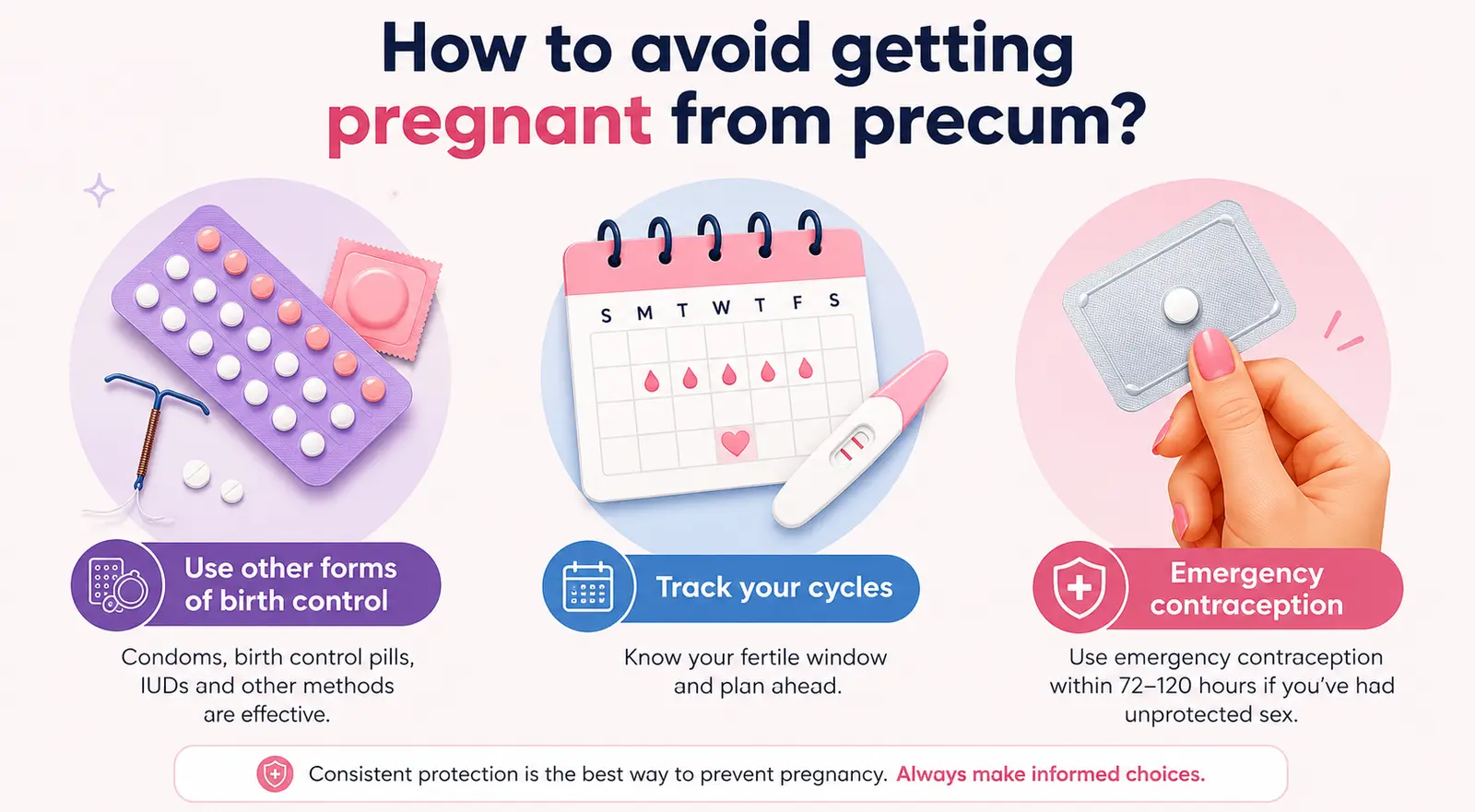
How Can You Reduce the Risk of Pregnancy?
If you do not want to become pregnant:
- Use a condom correctly every time.
- Put the condom on before the penis touches the vagina.
- Consider combining condoms with another reliable form of contraception.
- Do not rely solely on withdrawal if avoiding pregnancy is important.
- If unprotected sex has already happened, consider emergency contraception as soon as possible.
- Take a pregnancy test if your period is late or when enough time has passed for a reliable test.
- Speak with a healthcare professional if you need help choosing contraception.
The WHO provides information about contraceptive options, including condoms, hormonal contraception, intrauterine devices, implants, and other methods. WHO: Family planning and contraception methods.
The Bottom Line
Can you get pregnant from precum? Yes, it is possible.
The chance is generally lower because precum usually does not contain sperm. However, some pre-ejaculate samples may contain sperm, and there is no reliable way to know whether sperm is present. Therefore, withdrawal does not completely eliminate the possibility of pregnancy.
If you are worried after a recent sexual encounter, do not panic. Consider emergency contraception if appropriate, and take a pregnancy test at the right time.
Frequently Asked Questions
1. Can precum get you pregnant?
Yes. Pregnancy from precum is possible, although the chance is generally lower than with ejaculation inside the vagina. Precum usually does not contain sperm, but sperm may sometimes be present. Planned Parenthood explains how pre-ejaculate can sometimes lead to pregnancy.
2. Can you get pregnant if he didn’t cum?
Yes. Ejaculation is not required for pregnancy to be possible because precum can sometimes contain sperm.
3. What are the chances of getting pregnant from precum?
There is no single percentage that accurately predicts the risk from one particular encounter. The risk depends on whether precum entered the vagina, whether semen was released nearby, contraception use, and fertility timing.
4. Does precum contain sperm?
Usually, precum does not contain sperm, but sperm can sometimes be present. Research has found that sperm is not consistently present in pre-ejaculate, although some samples may contain sperm. PubMed research on sperm in pre-ejaculate.
5. Can you get pregnant from precum during ovulation?
Yes. If sperm reaches an egg during the fertile part of the menstrual cycle, pregnancy is possible. Ovulation timing can vary, and it may be difficult to predict precisely.
The NHS explains that pregnancy is most likely around ovulation, but sperm can survive in the reproductive tract for several days. NHS: Fertility in the menstrual cycle.
6. Can you get pregnant if he pulled out?
Yes. Withdrawal reduces the risk compared with ejaculation inside the vagina, but it does not eliminate pregnancy risk. Precum may contain sperm, and withdrawal can also be difficult to perform perfectly every time.
7. Can you get pregnant from precum without penetration?
The risk is very low, but pregnancy could theoretically occur if sperm-containing fluid reaches the vaginal opening and sperm enters the vagina.
8. Can you get pregnant from precum on the outside?
Pregnancy is unlikely if precum only gets on external skin. The concern increases if sperm-containing fluid gets on or near the vaginal opening and enters the vagina.
9. How long after precum should I take a pregnancy test?
A pregnancy test is generally most reliable from the first day of a missed period. If you do not know when your period is due, test at least 21 days after the last unprotected sex. When to take a pregnancy test.
10. What should I do if precum got inside me?
If pregnancy is not wanted and the sexual contact was recent, consider emergency contraception and speak with a pharmacist or healthcare professional about your options.
The WHO states that emergency contraception can be used within five days after unprotected sex, depending on the method, and works better when used sooner. Emergency contraception.
11. Does urinating after sex prevent pregnancy?
No. Urinating after sex does not reliably prevent pregnancy because urine does not remove sperm that have already entered the vagina or reproductive tract.
12. Can condoms prevent pregnancy from precum?
Yes. When used correctly and consistently, condoms provide a barrier that helps prevent sperm-containing fluids from entering the vagina. They also help reduce the risk of many STIs. Condoms.
13. Can you get pregnant the first time?
Yes. Having sex for the first time does not protect someone from pregnancy. If sperm reaches an egg, pregnancy is possible.
14. Can you get pregnant if there was no ejaculation inside?
Yes, although the risk is generally lower than when ejaculation occurs inside the vagina. Precum can sometimes contain sperm.
15. Is precum the same as semen?
No. Precum is pre-ejaculate released before ejaculation, while semen is the fluid released during ejaculation and normally contains sperm.
Advertisement · Continue Reading Below


No comments yet — be the first to comment.
Leave a comment
Comments are reviewed before they appear.