First Time Sex: What to Expect, How to Prepare, and What You Should Know
First time sex can bring up a lot of questions. Will it hurt? Can you get pregnant the first time? Should you use a condom? What if you’re nervous? How do you know whether you’re actually ready? There is no single way a first sexual experience should feel. Some people feel excited, while others feel […]
Contents
First time sex can bring up a lot of questions. Will it hurt? Can you get pregnant the first time? Should you use a condom? What if you’re nervous? How do you know whether you’re actually ready?
There is no single way a first sexual experience should feel. Some people feel excited, while others feel nervous or uncertain. Many experience a combination of emotions.
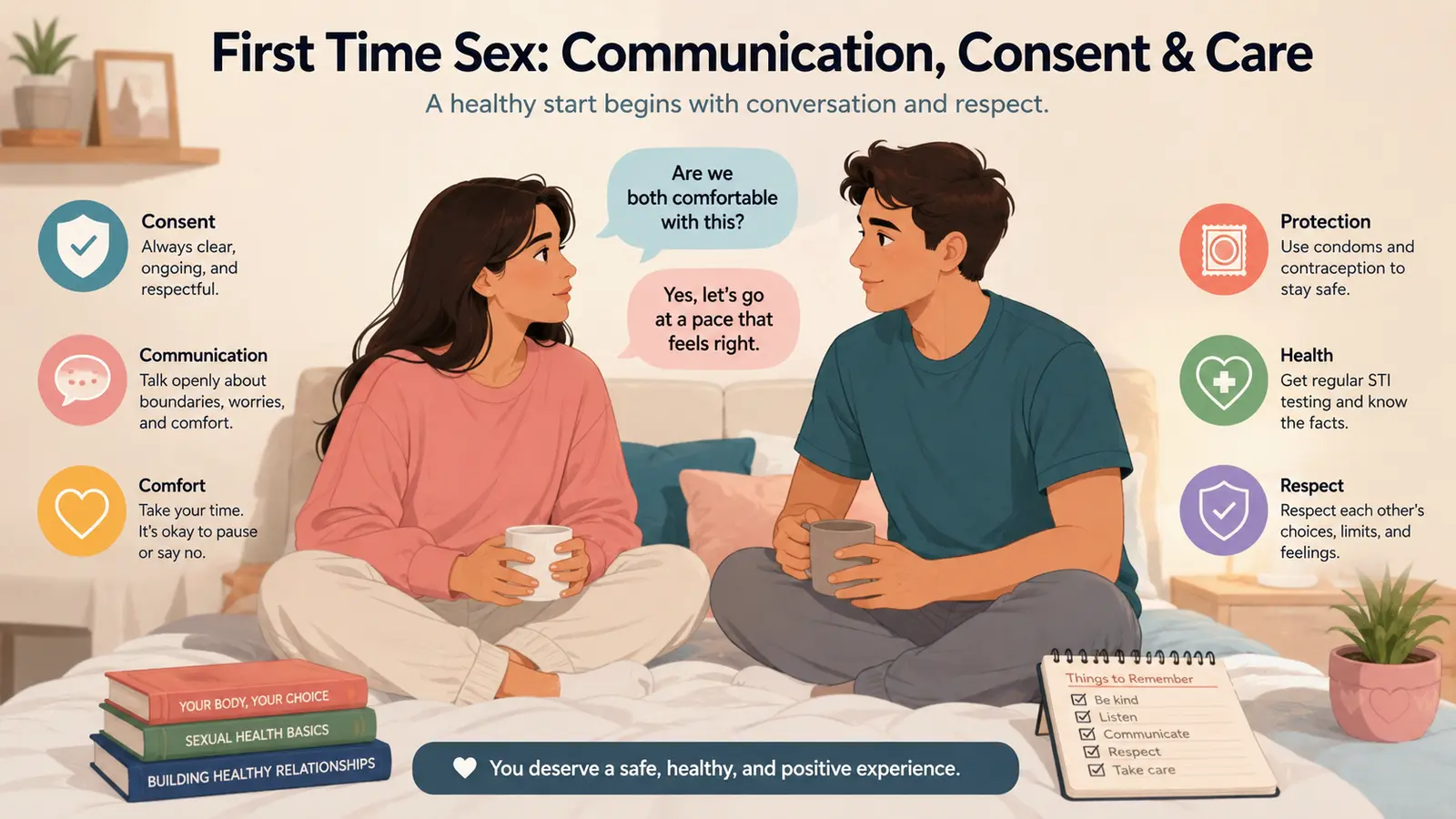
The most important things to consider are consent, communication, protection, comfort, and understanding the potential risks.
This guide explains what to know before having sex for the first time, including common questions about pain, pregnancy, sexually transmitted infections (STIs), condoms, bleeding, consent, and preparation.
First-Time Sex: Questions You May Have
Before your first sexual experience, it’s normal to wonder:
- Does first-time sex hurt?
- Can you get pregnant the first time?
- Will there be bleeding?
- Should you use a condom?
- Can you get an STI from your first sexual experience?
- How do you know if you’re ready?
- What should you do if you’re nervous?
- What happens if a condom breaks?
Understanding these questions before you’re in the moment can help you make informed decisions.
1. Make Sure You’re Ready for Sex
There is no universal age, relationship status, or amount of dating time that makes someone automatically ready for first time sex. What matters is whether you freely want to have sex and feel comfortable making that decision.
You shouldn’t feel pressured because:
- Your friends have already had sex.
- Your partner expects it.
- You think you’re falling behind.
- You are afraid your partner will leave you.
- You feel that being in a relationship means you have to have sex.
A healthy sexual decision should be your own.
If you’re uncertain or uncomfortable, it’s okay to wait.
2. Understand Consent Before Having Sex
Consent is one of the most important parts of a healthy sexual experience.
Consent should be:
- Freely given — without pressure or manipulation.
- Clear — both people understand what they are agreeing to.
- Ongoing — either person can change their mind.
- Specific — agreeing to one activity doesn’t automatically mean agreeing to another.
You can change your mind at any point.
You can say:
“I don’t want to continue.”
“Let’s slow down.”
“I’m not comfortable with this.”
Your partner should respect your decision.
Likewise, you should respect theirs.
3. Will First-Time Sex Hurt?
This is one of the most common questions about first-time sex.
There isn’t one universal experience. Some people may experience discomfort, while others may not.
Discomfort can be associated with factors such as:
- Anxiety or tension
- Not being sufficiently aroused
- Insufficient lubrication
- Going too quickly
- Not communicating about comfort
Taking things slowly and communicating with your partner can help.
Lubricant can also reduce friction and make sexual activity more comfortable.
Pain should not be treated as something you simply have to tolerate.
If you experience significant or persistent pain, stop and consider speaking with a healthcare professional.
4. Can You Get Pregnant the First Time?
Yes. Pregnancy can happen during first time sex if sperm can reach an egg.
Being inexperienced does not prevent pregnancy.
If penis-in-vagina sex is possible, consider contraception before sexual activity.
There are several contraceptive options, and the right choice depends on individual circumstances. The NHS provides an overview of different contraception methods and how they are used.
Condoms can help reduce the risk of pregnancy and can also help reduce the risk of sexually transmitted infections (STIs). The NHS provides detailed guidance on how to use condoms correctly and what to do if a condom breaks or slips. Some people also use another contraceptive method, such as birth-control pills, an IUD, or an implant.
The appropriate contraceptive method depends on individual circumstances.
If you need personalized contraceptive advice, speak with a qualified healthcare professional.
5. Can You Get an STI the First Time?
Yes.
Your first sexual experience does not automatically protect you against sexually transmitted infections.
Depending on the infection, STIs can spread through different forms of sexual contact.
Ways to reduce risk can include:
- Using condoms correctly and consistently
- Discussing sexual health with your partner
- Getting STI testing when appropriate
- Following medical advice if you have a known exposure
If you or your partner are concerned about an STI, a healthcare professional can advise you about appropriate testing and treatment.
If you are concerned about exposure or want to get tested, you can also learn more about sexual health services and STI testing from the NHS.
6. Should You Use a Condom the First Time?
If pregnancy or STI transmission is possible, using a condom is an important safer-sex precaution.
It’s better to think about protection before sexual activity rather than waiting until afterward.
Before using a condom:
- Check that the package is intact.
- Check the expiration date.
- Follow the instructions for correct use.
- Use a new condom for each act of sexual intercourse.
Condoms can sometimes break or slip, particularly when they aren’t used correctly.
If a condom breaks or slips, don’t panic. Depending on the circumstances, emergency contraception or STI testing may be appropriate.
7. Will You Bleed the First Time?
Not necessarily.
Some people may experience bleeding, while others don’t.
Bleeding is not a requirement of first-time sex, and its presence or absence cannot reliably establish whether someone has had sex before.
This is an important misconception to understand because the idea that everyone should bleed during their first sexual experience is medically inaccurate.
Understanding the Hymen
The hymen is tissue around the vaginal opening that varies considerably between individuals.
It isn’t a seal that proves whether someone has had sex.
Its appearance cannot reliably determine whether a person has had vaginal intercourse.
This is one reason why using bleeding or the appearance of the hymen as “proof” of someone’s sexual history is not medically reliable.
Don’t Use Porn as Your Sex-Education Guide
Pornography is entertainment, not a realistic instruction manual for sex.
Real sexual experiences can involve things that pornography often doesn’t show, including:
- Communication
- Consent
- Contraception
- STI prevention
- Nervousness
- Body differences
- Checking whether a partner is comfortable
You don’t need to copy what you’ve seen online.
A healthy sexual experience isn’t a performance or a competition.
Talk to Your Partner Before Having Sex
A conversation before sex can prevent misunderstandings and help both people feel more comfortable.
You might discuss:
“Are we both comfortable with this?”
“What are our boundaries?”
“What protection are we going to use?”
“What should we do if either of us wants to stop?”
These conversations can feel awkward at first, but they’re an important part of communicating about sexual health and boundaries.
What If You’re Nervous?
Being nervous about first-time sex is normal.
You don’t need to feel completely confident before making a decision, but you should feel safe, respected, and free to say no.
Don’t rush because you believe you’re supposed to become sexually experienced by a certain age.
If you’re not ready, waiting is completely okay.
What Should You Prepare Before First-Time Sex?
If you’ve decided to have sex, planning ahead can make the situation safer and less stressful.
Consider having:
- Condoms
- Appropriate lubricant
- A private and safe environment
- Enough time so you don’t feel rushed
- Appropriate contraception if pregnancy is possible
- Access to healthcare if you need medical advice
The goal isn’t to make your first experience perfect.
The goal is to make informed decisions and protect everyone’s health and boundaries.
What If a Condom Breaks?
If a condom breaks or slips, try not to panic.
Depending on the circumstances, you may need emergency contraception or an STI test. The NHS provides guidance on what to do if a condom splits or comes off during sex.
If pregnancy is possible, emergency contraception may be an option, depending on the circumstances and how much time has passed.
If there may have been an STI exposure, a healthcare professional can advise you about testing, treatment, or other appropriate steps.
The sooner you seek appropriate advice after a potential exposure, the more options you may have.
First-Time Sex Checklist
Before having sex, ask yourself:
Do I actually want this?
You should want to have sex for yourself, not because someone is pressuring you.
Do we both consent?
Both partners should freely agree and understand that consent can be withdrawn.
Do I feel safe?
You should feel physically and emotionally safe with the person you’re with.
Do we have protection?
Think about condoms, contraception, and STI prevention before sexual activity.
Can we communicate?
You should feel comfortable talking about boundaries, protection, and stopping.
Do I understand the risks?
Knowing about pregnancy and STIs can help you make informed decisions.
If you’re unsure about any of these questions, there’s no need to rush.
Frequently Asked Questions About First-Time Sex
Does first-time sex always hurt?
No. Experiences vary. Some people may experience discomfort, while others don’t. Significant or persistent pain should not simply be ignored.
Can you get pregnant the first time?
Yes. Pregnancy can occur during the first sexual experience if sperm can reach an egg.
Is bleeding normal the first time?
Some people may bleed, but many don’t. Bleeding isn’t required and isn’t a reliable indicator of someone’s sexual history.
Do you need a condom if it’s your first time?
If pregnancy or STI transmission is possible, condoms are an important safer-sex precaution.
How do you know if you’re ready for sex?
There isn’t one universal test. Consider whether you genuinely want to have sex, feel safe and respected, understand the risks, and can communicate freely with your partner.
What if I change my mind?
You can stop at any time. Consent can be withdrawn during sexual activity.
Final Takeaway
Your first time sex experience doesn’t have to be perfect or follow what you’ve seen in movies or pornography.
The most important preparation is understanding consent, contraception, STI prevention, communication, comfort, and personal boundaries.
You don’t have to rush.
If you’re nervous, that’s okay. If you’re not ready, that’s okay too.
A healthy sexual experience is one where everyone involved feels safe, respected, comfortable, and genuinely willing.
Advertisement · Continue Reading Below


No comments yet — be the first to comment.
Leave a comment
Comments are reviewed before they appear.