Can Pelvic Floor Exercises Improve Sexual Function?
When people hear about pelvic floor exercises, they often think only about bladder control. But the pelvic floor muscles also have an important role in sexual function. These muscles support the pelvic organs and are involved in sexual responses, including erection, ejaculation and orgasm. Research has increasingly investigated whether strengthening and properly coordinating these muscles […]
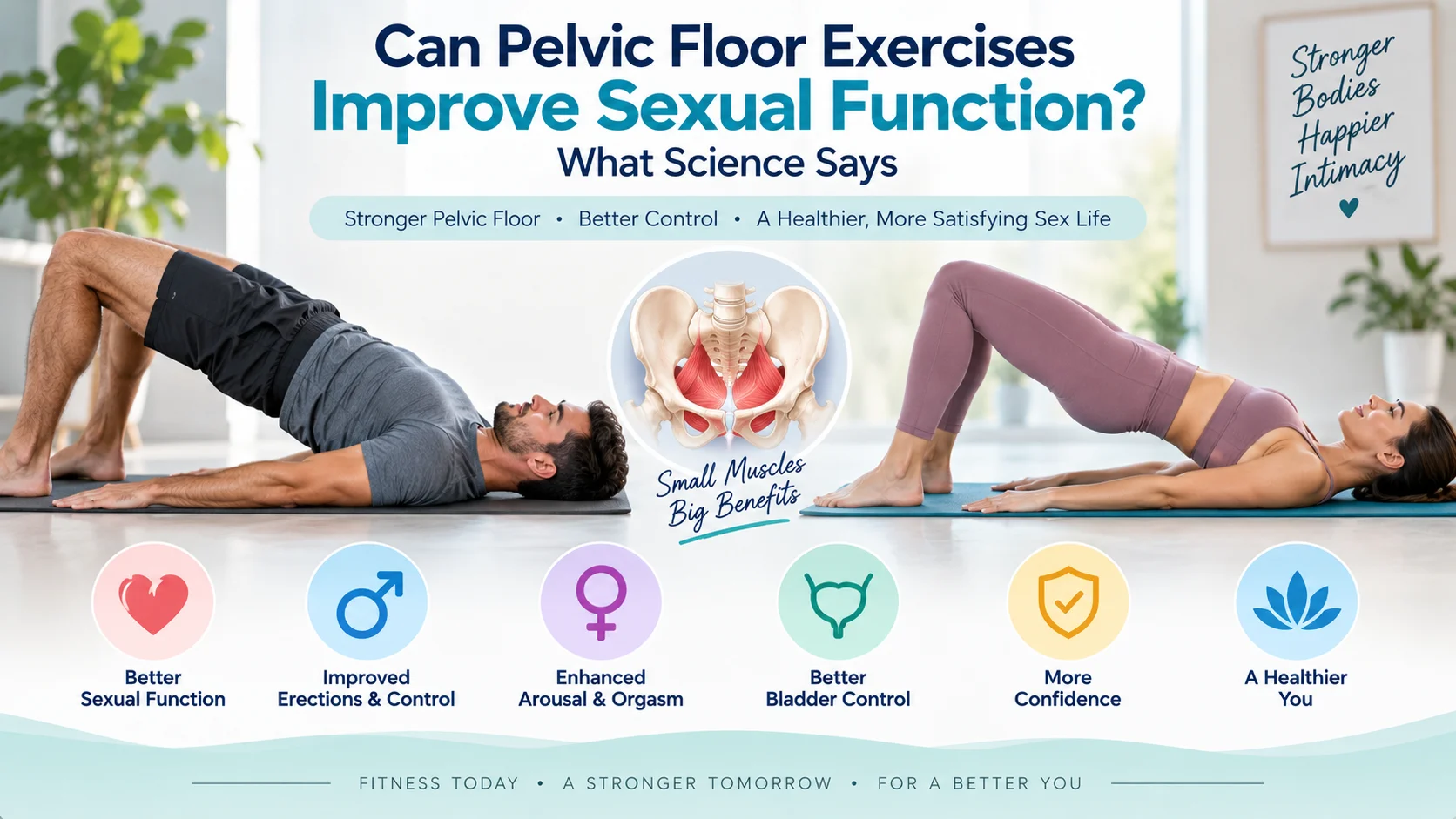
Contents
When people hear about pelvic floor exercises, they often think only about bladder control. But the pelvic floor muscles also have an important role in sexual function.
These muscles support the pelvic organs and are involved in sexual responses, including erection, ejaculation and orgasm. Research has increasingly investigated whether strengthening and properly coordinating these muscles can improve sexual function.
The answer is potentially yes—but pelvic floor exercises are not a universal treatment for every sexual problem.
Studies in women have found improvements in some aspects of sexual function following pelvic floor muscle training, while research in men suggests potential benefits for erectile dysfunction and premature ejaculation. However, the quality and consistency of the evidence vary between conditions.
A 2024 systematic review and meta-analysis of 33 studies found evidence supporting the involvement of the pelvic floor muscles in women’s sexual function and sexual response. Ten of 14 interventional studies reported a significant effect of pelvic-floor-focused treatments on sexual function.
So, can pelvic floor exercises improve sexual function? They may—and for some people they can be a useful part of a broader sexual-health or pelvic-health plan.
What Are the Pelvic Floor Muscles?
The pelvic floor is a group of muscles and connective tissues located at the base of the pelvis.
Think of these muscles as a supportive sling. They help:
- Support the bladder and bowel
- Support pelvic organs
- Control urine and bowel movements
- Stabilize the pelvis
- Contribute to sexual function
- Contract during orgasm
- Help coordinate muscles involved in sexual responses
Pelvic floor muscles need more than strength alone. They also need to contract and relax at the appropriate times.
This distinction is important because constantly tightening the pelvic floor is not necessarily better. Some people have pelvic-floor muscles that are already overly tense rather than weak, and strengthening them without professional assessment may not be appropriate.
Clinical guidance from NHS pelvic-health services also emphasizes both contraction and complete relaxation of the pelvic floor.
How Can Pelvic Floor Exercises Affect Sexual Function?
The pelvic floor participates in several physiological processes related to sexual function.
During sexual activity, pelvic floor muscle activity is associated with sexual arousal and orgasm. Research in women has found an association between pelvic floor muscle strength and sexual function, although an association does not prove that strengthening the muscles will automatically improve sexual experiences.
Pelvic floor training may potentially help by improving:
- Muscle strength
- Muscle endurance
- Awareness and control
- Coordination
- Confidence related to pelvic symptoms
- Some types of urinary symptoms that can interfere with sexual activity
However, sexual function is complex. Hormones, medications, cardiovascular health, mental health, relationship factors, pain, sleep, stress and other medical conditions can all influence sexual wellbeing.
That is why pelvic floor exercises should be viewed as one potential component of sexual-health care, not a guaranteed solution.
Pelvic Floor Exercises and Sexual Function in Women
Research on women has received considerable attention, particularly among women with pelvic floor disorders, urinary incontinence, pelvic organ prolapse, pregnancy-related changes and sexual dysfunction.
A 2015 systematic review included eight randomized controlled trials involving 1,341 women. Most studies reported improvements in at least one measure of sexual function after pelvic floor muscle training, although the researchers cautioned that differences between studies and limitations in study quality made the evidence difficult to interpret definitively.
More recent evidence provides additional support.
A 2024 systematic review and meta-analysis included 33 studies and found that many interventional studies reported significant effects of pelvic-floor-focused treatments on women’s sexual function. The review also found a moderate association between pelvic floor muscle strength and sexual function.
What aspects may improve?
Depending on the individual and the underlying problem, pelvic floor training may be associated with improvements in:
- Sexual arousal
- Orgasm
- Sexual satisfaction
- Some aspects of sexual pain
- Awareness of pelvic muscles
- Pelvic muscle control
A 2023 systematic review and meta-analysis of 21 randomized controlled trials found improvements in arousal, orgasm, satisfaction, pain and overall Female Sexual Function Index scores. However, the researchers rated the certainty of evidence as very low because of substantial clinical and statistical heterogeneity.
This is an important distinction: research suggests potential benefits, but it does not mean every woman will experience the same results.
If you’re interested in orgasm and sexual response, you can also read our related guide on Is It Normal If Women Don’t Orgasm Every Time? What Science Says.
What About Women After Pregnancy or Childbirth?
Pregnancy and childbirth can affect pelvic floor muscles, and some women experience urinary leakage, pelvic pressure or other pelvic-floor symptoms afterward.
Pelvic floor muscle training is commonly used to improve pelvic floor function and urinary symptoms.
Research specifically examining sexual function during pregnancy and after childbirth has suggested possible benefits, but this area remains less studied than bladder and continence outcomes.
A woman recovering after childbirth should not assume that sexual difficulties are caused only by weak pelvic floor muscles. Pain, hormonal changes, vaginal dryness, healing, fatigue, relationship factors and psychological wellbeing can also influence sexual function.
Can Pelvic Floor Exercises Help Men?
Yes, pelvic floor exercises can also be relevant to men’s sexual health.
In men, the pelvic floor contributes to urinary and bowel control and plays a role in sexual function. NHS clinical guidance notes that pelvic floor exercises can help strengthen these muscles and may support erection and ejaculation control.
Research has specifically investigated pelvic floor muscle training for:
- Erectile dysfunction
- Premature ejaculation
- Ejaculatory control
- Sexual function after certain medical procedures
A systematic review of pelvic floor muscle training for erectile dysfunction and premature ejaculation included 10 trials. The studies generally reported improvements, but the researchers noted substantial differences in training protocols and rated the methodological quality from low to moderate.
That means pelvic floor training is promising, but it should not be presented as a guaranteed cure for erectile dysfunction or premature ejaculation.
For example, premature ejaculation can have psychological, relationship, neurological, hormonal, prostate-related and other contributing factors. Pelvic floor training may be useful for some men, but treatment should be based on the underlying problem.
Can Pelvic Floor Exercises Improve Erections?
Possibly.
The pelvic floor muscles participate in the physiological mechanisms involved in maintaining an erection. Research has investigated pelvic floor muscle exercises as a non-drug approach for erectile dysfunction.
One randomized controlled trial included in the evidence base reported improvements following pelvic floor muscle exercises and biofeedback, while later systematic reviews have also reported generally positive findings.
However, erectile dysfunction can also be associated with:
- Cardiovascular disease
- Diabetes
- Obesity
- High blood pressure
- Smoking
- Medication effects
- Hormonal problems
- Anxiety
- Depression
- Relationship difficulties
Therefore, new or persistent erectile dysfunction deserves medical evaluation rather than simply doing more Kegels.
You may also find our article on Does Exercise Improve Your Sex Life? What Science Says useful for understanding how overall physical activity relates to sexual health.
Can Pelvic Floor Exercises Help With Premature Ejaculation?
Pelvic floor training has been studied as one possible approach for premature ejaculation.
The theory is that better awareness and control of pelvic floor muscles may help some men coordinate the muscles involved in ejaculation.
The evidence is encouraging but not definitive. A systematic review found that most included studies reported improvement in premature ejaculation outcomes, but the training programs varied substantially and there was no single optimal training protocol.
Therefore, pelvic floor exercises should not be promoted as a guaranteed method to “last longer.”
If premature ejaculation is persistent and causing distress, assessment by a healthcare professional can help determine whether behavioral techniques, counseling, medication, treatment of erectile dysfunction or pelvic-floor physiotherapy may be appropriate.
How to Do Pelvic Floor Exercises Correctly
The basic exercise is often called a Kegel exercise.
The goal is to gently contract the pelvic floor muscles and then completely relax them.
Step 1: Identify the muscles
Imagine that you are trying to prevent passing gas and, at the same time, stop urine from flowing.
You should feel a gentle squeeze and lift.
For men, there may be a sensation of lifting around the base of the penis.
For women, the sensation may feel like the muscles around the vagina and anus are drawing upward.
NHS guidance for both men and women recommends avoiding excessive contraction of the buttocks, thighs and abdominal muscles.
Step 2: Start gently
Contract the pelvic floor muscles for a few seconds.
Then relax completely.
You do not need to squeeze as hard as possible.
Step 3: Practice both slow and quick contractions
Pelvic floor programs commonly include:
Slow contractions:
Gradually build the ability to hold a contraction for several seconds.
Fast contractions:
Contract and relax the muscles quickly.
Both types can help develop muscle control.
Step 4: Keep breathing
Do not hold your breath while exercising.
Your stomach, thighs and buttocks should remain as relaxed as possible.
Step 5: Allow complete relaxation
This part is often overlooked.
The pelvic floor needs to be able to relax as well as contract.
Clinical guidance from Cambridge University Hospitals recommends practicing both short and long contractions and emphasizes the importance of fully relaxing the muscles after each contraction.
Should You Stop Urinating to Practice Kegels?
No.
You may briefly use the sensation of stopping urine flow to identify the correct muscles, but repeatedly stopping and starting your urine stream is not recommended as a regular exercise.
NHS guidance specifically advises against using urine interruption as the exercise itself because it may interfere with normal bladder emptying.
Instead, identify the muscles and then perform the exercises when you are not urinating.
How Often Should You Do Pelvic Floor Exercises?
There is no single routine that is appropriate for everyone.
A commonly used approach is to perform a combination of slow and quick contractions regularly and gradually increase the workload as your muscles become more conditioned.
For example, ACOG describes a program of 10 contractions, three times per day, beginning with approximately three-second holds and gradually building toward longer contractions.
But more is not automatically better.
Pelvic floor muscles can become fatigued, and some people may have excessive pelvic-floor tension rather than weakness.
If exercises cause pain, pelvic pressure or worsening symptoms, stop and seek professional guidance.
Can You Do Too Many Kegel Exercises?
Yes.
The goal is not to keep the pelvic floor contracted throughout the day.
Overtraining or repeatedly tightening muscles without adequate relaxation can contribute to muscle fatigue or increased tension.
This is why proper technique matters more than simply doing hundreds of repetitions.
NHS pelvic-health guidance specifically notes that the muscles can fatigue and emphasizes relaxation between contractions.
If you have pelvic pain, pain during sex, difficulty relaxing the pelvic floor, urinary symptoms or symptoms that worsen when you exercise, a pelvic-health physiotherapist may be able to assess whether strengthening, relaxation training or another approach is appropriate.
Pelvic Floor Strength Is Not the Same as Sexual Performance
One common misconception is:
Stronger pelvic floor = better sex.
It’s not that simple.
Sexual function depends on multiple physical and psychological factors.
For example, someone may have strong pelvic floor muscles but still experience:
- Low sexual desire
- Difficulty becoming aroused
- Erectile difficulties
- Vaginal dryness
- Pain during sex
- Difficulty reaching orgasm
- Anxiety about sexual performance
Likewise, someone with pelvic floor weakness may have normal and satisfying sexual function.
Research therefore supports viewing pelvic floor health as one part of overall sexual health, rather than a single predictor of sexual satisfaction.
What If Pelvic Floor Exercises Don’t Help?
If you’ve been performing exercises consistently but your sexual symptoms continue, don’t simply increase the number of repetitions.
The underlying cause may be something else.
Depending on your symptoms, a healthcare professional may evaluate:
- Hormonal factors
- Medications
- Diabetes or cardiovascular risk
- Pelvic pain
- Urinary problems
- Erectile dysfunction
- Premature ejaculation
- Menopause-related changes
- Postpartum recovery
- Psychological stress
- Anxiety or depression
- Relationship factors
A pelvic-floor physiotherapist can also assess whether the muscles are weak, overactive, poorly coordinated or otherwise not functioning normally.
Who Might Benefit From Pelvic Floor Training?
Pelvic floor exercises may be particularly relevant for people experiencing pelvic floor weakness or certain related symptoms, including some people with:
- Urinary leakage
- Pelvic organ prolapse
- Postpartum pelvic floor weakness
- Erectile difficulties
- Ejaculatory-control problems
- Certain types of sexual dysfunction
For women with pelvic organ prolapse, the randomized controlled trial you referenced found that some women receiving six months of pelvic floor muscle training and lifestyle advice reported improvements in sexual function. However, the study did not find a significant difference in the number of women who were sexually active or in satisfaction with intercourse frequency.
This illustrates why individual study findings should not be turned into a blanket promise.
When Should You See a Doctor or Pelvic-Floor Specialist?
Consider getting professional advice if you have:
- Persistent erectile difficulties
- Ongoing premature ejaculation
- Pain during sex
- Pelvic pain
- Urinary or bowel leakage
- A feeling of pelvic pressure or bulging
- Symptoms after childbirth that aren’t improving
- Symptoms after pelvic or prostate surgery
- Difficulty identifying or relaxing your pelvic floor
- Sexual symptoms that are affecting your quality of life
A pelvic-floor physiotherapist can help determine whether you need strengthening, relaxation, coordination training or another type of treatment.
Pelvic Floor Exercises and Your Overall Fitness
Pelvic floor exercises should not replace general physical activity.
Regular exercise supports cardiovascular health, metabolic health and overall wellbeing, all of which can influence sexual health.
For broader information, see our Fitness & Wellness section.
You can also read:
- Does Masturbation Affect Your Health? What Science Says
- Does Masturbation Reduce Sperm Count? What Science Says
- Is It Normal If Women Don’t Orgasm Every Time? What Science Says
These articles provide additional context around sexual function, orgasm, masturbation and reproductive health.
Frequently Asked Questions
Can pelvic floor exercises improve sexual function?
They may. Research suggests pelvic floor muscle training can improve some aspects of sexual function in certain women and men, but results vary and the evidence is not equally strong for every condition.
Can Kegels improve orgasms?
They may improve some aspects of orgasmic function in certain people. Studies in women have reported improvements in orgasm scores following pelvic floor muscle training, although the overall certainty of evidence remains limited.
Can pelvic floor exercises improve erections?
They may help some men with erectile dysfunction. Research has reported improvements, but erectile dysfunction has many possible causes and should be medically assessed when persistent.
Can Kegels help premature ejaculation?
Pelvic floor muscle training may help some men improve ejaculatory control. However, studies have used different training methods, and there is no universally established exercise protocol.
How long does it take for pelvic floor exercises to work?
It varies. Pelvic floor muscles need consistent training, and improvements in muscle function may take weeks or months. NHS clinical guidance notes that some people may need several months of regular practice before noticing meaningful improvement in symptoms.
Can women do Kegel exercises?
Yes. Kegel exercises are commonly used by women to strengthen the pelvic floor muscles and may help with urinary symptoms and some aspects of sexual function.
Can men do Kegel exercises?
Yes. Pelvic floor exercises can also be performed by men and are used to improve pelvic muscle strength and control. They have been studied in conditions including erectile dysfunction and premature ejaculation.
Should I do Kegels every day?
Pelvic floor programs generally involve regular practice, but the exact frequency should depend on your muscle function and symptoms. Quality, proper relaxation and consistency are more important than excessive repetitions.
Are Kegels safe for everyone?
They are commonly used, but they are not appropriate as a one-size-fits-all treatment. People with pelvic pain or an overactive/tight pelvic floor may require relaxation and coordination work rather than simply more strengthening.
Bottom Line
Pelvic floor exercises can potentially improve sexual function, but they are not a magic solution.
Research suggests that pelvic floor muscle training may benefit aspects of sexual function such as arousal, orgasm, satisfaction, erectile function and ejaculatory control in some people. Evidence is particularly encouraging in women, although researchers continue to highlight limitations such as study heterogeneity and low certainty in some analyses.
The key is to train the pelvic floor correctly—including both contraction and relaxation.
If you have persistent sexual difficulties, pelvic pain or other symptoms, it is better to identify the underlying cause rather than simply doing more Kegels.
Sexual health is part of overall health, and pelvic floor fitness can be one useful piece of that bigger picture.
Medical & Research Sources
For readers who want to explore the evidence further:
- Systematic review and meta-analysis of pelvic floor muscle training for female sexual dysfunction — PubMed: PubMed research paper
- Systematic review and meta-analysis on pelvic floor muscles and sexual response — PubMed: PubMed research paper
- Pelvic floor muscle training for erectile dysfunction and premature ejaculation — PubMed: PubMed research paper
- Female pelvic floor exercise guidance — ACOG: ACOG pelvic floor guidance
- Pelvic floor exercise guidance for women — NHS: NHS pelvic floor exercises
- Pelvic floor exercise guidance for men — NHS: NHS men’s pelvic floor exercises
- Sexual health information — SMSNA: SMSNA pelvic floor and sexual health
Editorial note for TheSexxEducation
Because this is a sexual-health/YMYL article, I recommend adding a visible “Medically Reviewed By” field and “Last Updated” date beneath the author information. Also, avoid claiming that Kegels guarantee stronger erections, more intense orgasms, tighter vaginas, or longer-lasting sex—the current evidence does not support those blanket claims.
Advertisement · Continue Reading Below



No comments yet — be the first to comment.
Leave a comment
Comments are reviewed before they appear.