Can Exercise Improve Your Sex Life? How Fitness Affects Sexual Health
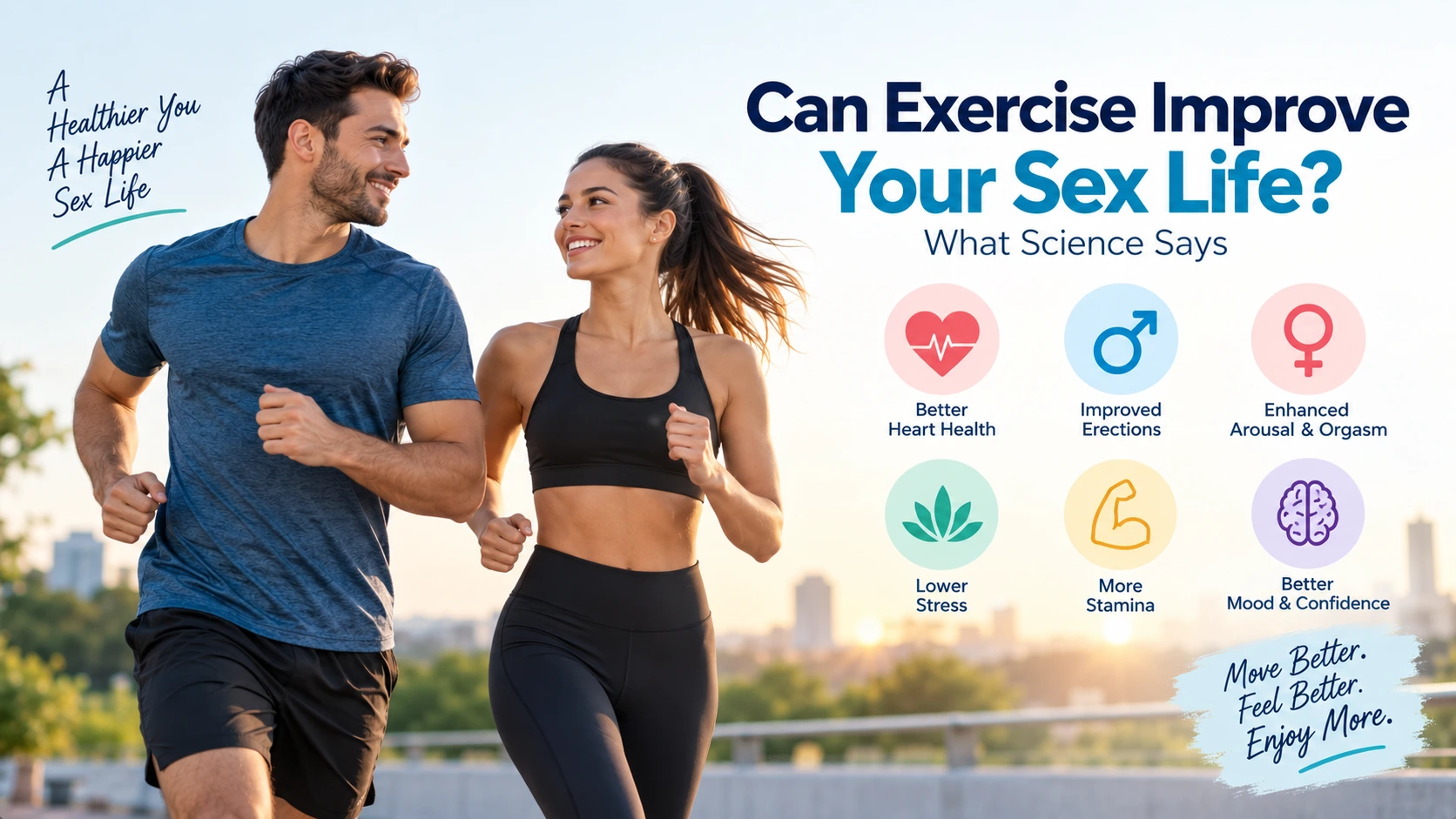
Exercise is usually associated with a healthier heart, stronger muscles, better sleep and improved fitness. But there may be another reason to stay active: your sexual health. So, can exercise improve your sex life? The answer is yes, potentially. Regular physical activity can support several factors involved in sexual function, including cardiovascular health, blood flow, […]
Contents
Exercise is usually associated with a healthier heart, stronger muscles, better sleep and improved fitness.
But there may be another reason to stay active: your sexual health.
So, can exercise improve your sex life?
The answer is yes, potentially.
Regular physical activity can support several factors involved in sexual function, including cardiovascular health, blood flow, physical fitness, mood and overall wellbeing.
For men, research has particularly strong evidence for the relationship between aerobic exercise and erectile function. A systematic review and meta-analysis of 11 randomized controlled trials found that regular aerobic exercise significantly improved erectile-function scores compared with non-exercising controls.
Research in women is also encouraging. A 2026 systematic review of 23 studies found that exercise interventions were associated with improvements in sexual desire, arousal, lubrication, orgasm, satisfaction and pain during sex. However, the researchers rated the overall certainty of evidence as low because the studies varied considerably.
That doesn’t mean exercise is a magic treatment for every sexual problem.
It means that taking care of your physical health can also support your sexual wellbeing.
How Can Exercise Improve Your Sex Life?
Exercise may influence sexual health through several physical and psychological pathways.
These include:
- Better cardiovascular fitness
- Healthier blood circulation
- Improved physical stamina
- Better mood
- Reduced stress
- Improved sleep
- Greater physical confidence
- Better metabolic health
Sexual function itself is complex. Desire, arousal, erections, lubrication, orgasm and satisfaction can all be influenced by different factors.
So improving one part of your health doesn’t automatically guarantee better sex.
But regular movement can create a healthier foundation for sexual function.
1. Exercise Can Improve Cardiovascular Health
Good circulation is important for sexual function.
During sexual arousal, blood flow changes throughout the body and increases in genital tissues.
For men, adequate blood flow is particularly important for achieving and maintaining an erection.
This is one reason cardiovascular health and erectile function are closely connected.
A 2023 systematic review and meta-analysis found that aerobic exercise improved erectile-function scores in men, with larger improvements among men who started with poorer erectile function.
A newer 2026 meta-analysis of lifestyle interventions also found significant improvements in erectile function compared with control groups, including in exercise-only interventions.
So, when people ask whether exercise can help erectile function, there is meaningful evidence supporting the idea.
2. Exercise May Help With Erectile Dysfunction
Erectile dysfunction (ED) can have many causes.
These may include:
- Cardiovascular disease
- Diabetes
- High blood pressure
- Obesity
- Physical inactivity
- Certain medications
- Hormonal problems
- Psychological factors
- Neurological conditions
Exercise doesn’t eliminate all of these causes.
However, regular aerobic activity can improve several health factors that are relevant to erectile function.
One meta-analysis of randomized controlled trials found an average improvement of 2.8 points on the IIEF-EF scale among men assigned to aerobic exercise compared with non-exercising controls. The improvement was greater among men with more severe baseline erectile difficulties.
This is useful evidence, but exercise shouldn’t be presented as a guaranteed cure for ED.
If erection problems are persistent, new or worsening, medical evaluation is appropriate.
3. Exercise May Reduce Stress That Interferes With Sex
Your brain plays an important role in sexual function.
Stress, anxiety and mental distraction can make it harder to become aroused or remain focused during sexual activity.
Regular physical activity can support mental wellbeing and may help some people manage stress.
That can indirectly benefit sexual wellbeing.
This doesn’t mean:
Exercise = instant libido boost.
Instead, think of it as:
Regular activity → better physical and psychological wellbeing → potentially better sexual function.
If anxiety or stress is seriously affecting your sex life, exercise can be one part of the solution, but professional support may also be useful.
4. Exercise Can Improve Physical Confidence
Sexual confidence isn’t determined by body size or appearance.
However, regular physical activity can improve physical fitness and how people feel about their bodies and abilities.
Feeling stronger and more comfortable in your body may reduce some of the self-consciousness that can interfere with intimacy.
Importantly, being fit doesn’t mean looking a particular way.
Fitness can mean:
- Walking regularly
- Cycling
- Swimming
- Strength training
- Playing sports
- Dancing
- Doing yoga
- Simply becoming more physically active
You don’t need a particular body shape to have a healthy sex life.
5. Can Exercise Increase Libido?
This is where things become more complicated.
There isn’t enough evidence to say that exercise directly increases sexual desire in everyone.
Libido can be influenced by:
- Stress
- Sleep
- Hormones
- Relationship factors
- Mental health
- Medications
- Physical health
- Age
- Pregnancy or menopause
- Personal circumstances
Exercise may indirectly help by improving some of these factors.
For example, if regular activity improves your sleep and reduces stress, your sexual desire may improve as a result.
But you shouldn’t expect one workout to suddenly increase your sex drive.
6. Can Exercise Improve Women’s Sexual Function?
Evidence suggests that it may.
A 2026 systematic review and meta-analysis included 23 studies investigating exercise interventions in adult women. Twenty studies reported improvements in sexual function following exercise, and the meta-analysis of 15 studies using the Female Sexual Function Index found significant benefits compared with controls.
The improvements included:
- Desire
- Arousal
- Lubrication
- Orgasm
- Satisfaction
- Pain during sex
The studies investigated several types of exercise, including:
- Aerobic exercise
- Resistance training
- Pelvic-floor exercise
- Yoga
- Aquatic exercise
- Core training
- Combined exercise programs
However, the review also found substantial variation between studies and rated the overall certainty of evidence as low.
So the evidence is promising, but we shouldn’t claim that one particular workout is guaranteed to improve sexual function.
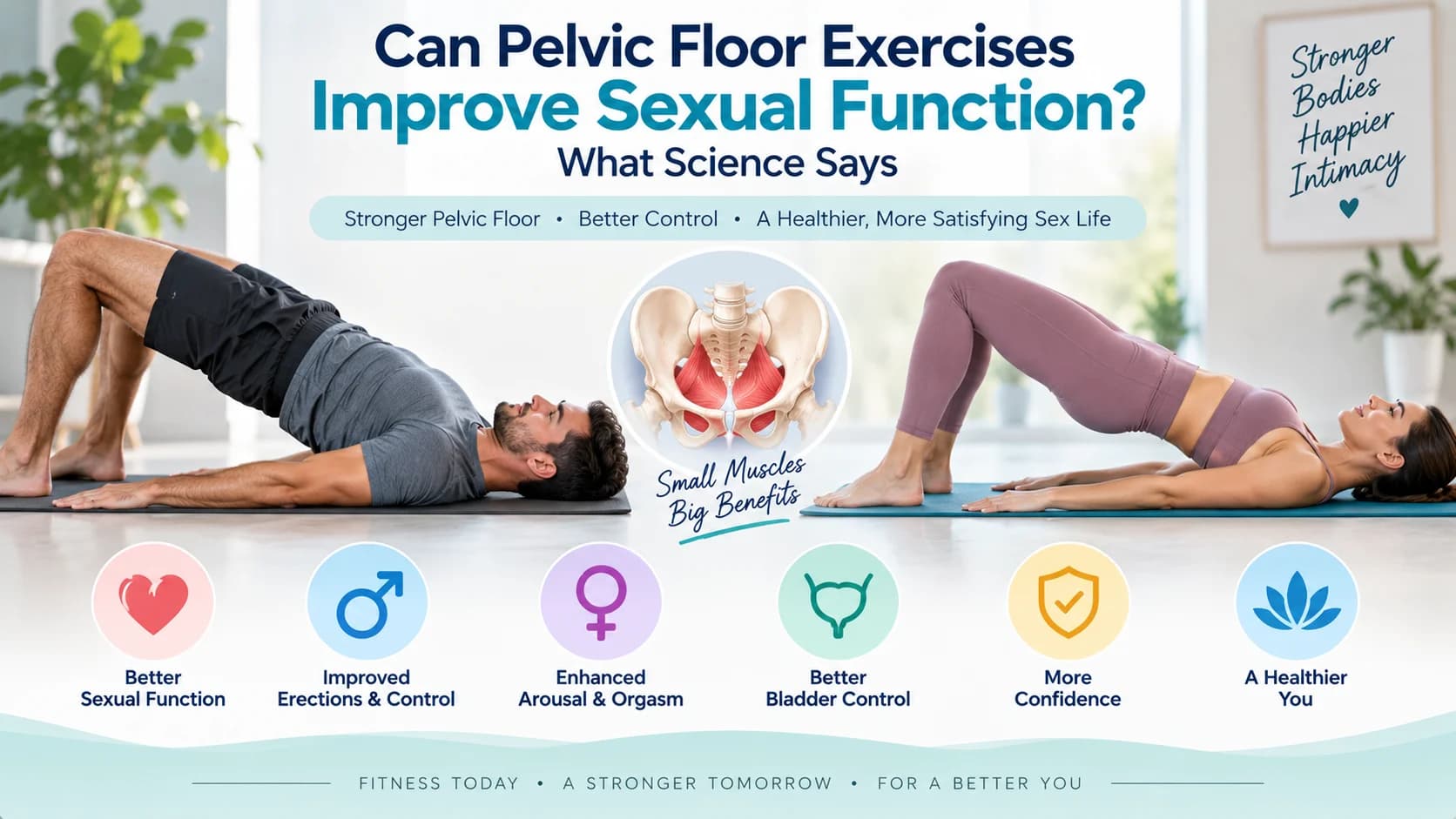
7. What About Pelvic-Floor Exercises?
The pelvic floor is a group of muscles that supports structures in the pelvis and contributes to bladder and bowel control.
Pelvic-floor exercises are often discussed in relation to sexual function.
Research has investigated pelvic-floor training as one of several exercise approaches for sexual health.
However, it’s important not to oversimplify the evidence.
For example, a 2024 systematic review focusing specifically on men with erectile dysfunction found significant benefits from physical activity overall, particularly aerobic exercise, while pelvic-floor muscle training alone did not show a significant improvement in that analysis.
This illustrates an important point:
Not every exercise produces the same sexual-health benefit.
8. What Is the Best Exercise for Sexual Health?
There isn’t one universal “best exercise for sex.”
Different activities provide different benefits.
Aerobic Exercise
Examples include:
- Brisk walking
- Jogging
- Cycling
- Swimming
- Dancing
Aerobic exercise currently has some of the strongest evidence for improving erectile function in men.
Strength Training
Resistance exercise can improve:
- Muscle strength
- Physical fitness
- Functional capacity
- Body composition
It can therefore be an important part of an overall healthy lifestyle.
Pelvic-Floor Exercises
Pelvic-floor training may benefit some aspects of pelvic and sexual function, although evidence varies depending on the population and specific problem being studied.
Yoga and Mind-Body Exercise
Yoga combines physical activity with breathing and relaxation.
It has also been studied as an intervention for sexual function, particularly in women.
The practical answer?
Choose an exercise you can do consistently.
A workout you enjoy and continue doing is likely more useful than a theoretically perfect workout that you abandon after two weeks.
9. How Much Exercise Do You Need?
You don’t need extreme workouts to support your health.
The World Health Organization recommends that adults aged 18–64 get:
150–300 minutes of moderate-intensity physical activity per week
or
75–150 minutes of vigorous-intensity physical activity per week
or an equivalent combination.
WHO also recommends muscle-strengthening activities involving all major muscle groups on at least 2 days per week.
For example:
30 minutes of brisk walking × 5 days = 150 minutes per week.
You can also combine different activities throughout the week.
And if you’re currently inactive, you don’t need to start with a demanding workout.
Start gradually.
10. Does Exercise Improve Sexual Stamina?
It can improve your physical endurance, but sexual stamina is more complicated.
Sexual experiences can be affected by:
- Cardiovascular fitness
- Muscle endurance
- Anxiety
- Arousal
- Erectile function
- Ejaculatory control
- Sleep
- Relationship factors
Therefore, being physically fit doesn’t automatically mean you’ll never experience sexual difficulties.
For example, a person can have excellent cardiovascular fitness and still experience premature ejaculation.
If you’re experiencing ejaculation problems, read our guide on premature ejaculation, its causes, symptoms and treatment.
Once your PE article’s final URL is available, use that exact article URL rather than the homepage.
11. Does Exercise Make You More Likely to Orgasm?
Exercise may support some aspects of sexual function, but it’s not accurate to say that exercise guarantees stronger or more frequent orgasms.
Recent research in women found improvements in orgasm scores among several exercise interventions, but the overall evidence was rated low certainty because of differences between studies.
There are many other factors involved in orgasm.
These include:
- Arousal
- Type of stimulation
- Stress
- Fatigue
- Medications
- Hormonal changes
- Comfort
- Relationship factors
- Individual sexual response
If you’re interested in why orgasm doesn’t happen every time, read our article Is It Normal If Women Don’t Orgasm Every Time? What Science Says.
That article explains why orgasm frequency isn’t a reliable measure of sexual health by itself.
12. Does Exercise Improve Sex During Menopause?
Exercise may also support sexual wellbeing during and after menopause.
A 2025 systematic review and meta-analysis of eight studies involving 1,127 postmenopausal women found that exercise over 12 weeks had a positive effect on sexuality and some psychological symptoms associated with menopause.
Other research has investigated pelvic-floor training and mind-body exercise in peri- and postmenopausal women.
However, sexual changes during menopause can have several causes.
These may include:
- Hormonal changes
- Vaginal symptoms
- Sleep problems
- Stress
- Medications
- Relationship factors
Exercise can therefore be one part of a broader approach, rather than a standalone solution.
13. Does Exercise Improve Blood Flow to the Genitals?
Exercise supports cardiovascular health and blood-vessel function.
That matters because genital arousal involves changes in blood flow.
For men, erectile function is particularly dependent on vascular mechanisms.
For women, genital arousal also involves changes in genital blood flow.
However, it would be misleading to say that exercising immediately “sends more blood to your genitals.”
The relationship is more complex.
The strongest evidence is about overall physical activity and sexual function, rather than a simple short-term increase in genital blood flow after every workout.
14. Does the Timing of Exercise Matter?
You may have heard that exercising shortly before sex can act like an aphrodisiac.
The evidence here is much less straightforward than the evidence for regular exercise.
Some laboratory research has examined changes in genital blood flow following exercise, but these short-term responses shouldn’t be confused with the long-term benefits of regular physical activity.
In practical terms:
You don’t need to schedule a workout 30 minutes before sex to benefit sexually from exercise.
Consistency matters more.
If exercise makes you exhausted, uncomfortable or sore, forcing yourself to have sex immediately afterward isn’t necessary.
15. Can Too Much Exercise Hurt Your Sex Life?
More exercise isn’t always better.
Very intense training combined with inadequate recovery, nutrition or rest can negatively affect overall health.
This is particularly important for athletes or people following demanding training schedules.
Signs that you’re not recovering well can include:
- Persistent fatigue
- Poor sleep
- Declining performance
- Increased soreness
- Mood changes
- Loss of motivation
Sexual wellbeing can also be affected when the body is under excessive physical stress.
The goal should therefore be:
Regular exercise + adequate nutrition + recovery + sleep
rather than exercising as much as possible.
16. Does Sex Count as Exercise?
Sexual activity involves physical movement and can increase heart rate.
But it generally shouldn’t replace your regular exercise routine.
One frequently cited study involving young heterosexual couples found that sexual activity used energy, but the average energy expenditure was considerably lower than during a moderate exercise session.
So while sex is physical activity, it shouldn’t be your only form of exercise.
Think of it this way:
Exercise is good for your health, and sexual activity is one type of physical activity — but they’re not interchangeable.
17. Can Exercise Help If You Already Have a Sexual Problem?
It depends on the problem.
Exercise may be particularly useful when physical inactivity, cardiovascular health, metabolic health or general fitness contributes to sexual difficulties.
But sexual problems can have many different causes.
For example:
Erectile dysfunction
Exercise can improve erectile function in some men, particularly through aerobic activity.
Low libido
Exercise may help indirectly through better mood, sleep and general health, but it isn’t a guaranteed treatment.
Difficulty reaching orgasm
Exercise may support overall sexual function, but psychological, relationship, medication and physical factors can also matter.
Premature ejaculation
Fitness alone isn’t a proven cure. Treatment may involve behavioral approaches, counseling, pelvic-floor work or medication depending on the individual.
Exercise and Sexual Health: What the Science Says
| Question | Evidence-based answer |
|---|---|
| Can exercise improve sex life? | It can support several aspects of sexual health. |
| Can exercise improve erections? | Yes. Aerobic exercise has good evidence for improving erectile function in men. |
| Can exercise increase libido? | It may help indirectly, but isn’t a guaranteed libido booster. |
| Can exercise help women’s sexual function? | Recent evidence suggests potential improvements across several domains. |
| Is cardio good for sexual health? | Yes, particularly for erectile function. |
| Is strength training useful? | Yes for overall fitness and health, although direct sexual benefits are less certain. |
| Are pelvic-floor exercises useful? | They may help some people, but evidence varies by condition and population. |
| Does exercise guarantee better orgasms? | No. Sexual response depends on many factors. |
| Can too much exercise be harmful? | Excessive training without adequate recovery can negatively affect wellbeing. |
| Does sex replace exercise? | No. Sexual activity shouldn’t be considered a substitute for regular physical activity. |
A Simple Fitness Routine for Better Overall Sexual Health
You don’t need a complicated “sex workout.”
A balanced weekly routine could include:
Cardio
Choose activities such as:
- Walking
- Cycling
- Swimming
- Jogging
- Dancing
Strength training
Work major muscle groups at least twice per week.
Mobility
Include stretching or mobility exercises if they help you move comfortably.
Recovery
Give your body enough:
- Sleep
- Food
- Hydration
- Rest
The goal isn’t to become an athlete.
It’s to become healthier and more physically capable.
When Exercise Isn’t Enough
Exercise is valuable, but don’t assume every sexual problem can be fixed with fitness.
Talk with a healthcare professional if you experience:
- Persistent erectile difficulties
- Persistent low sexual desire
- Pain during sex
- Difficulty reaching orgasm that causes distress
- Persistent ejaculation problems
- Sudden changes in sexual function
- Sexual problems after starting medication
- Other symptoms affecting your health
A sexual problem can sometimes be a sign of another underlying condition.
Getting the cause evaluated is often more useful than simply exercising harder.
Frequently Asked Questions
Can exercise improve your sex life?
Yes. Regular physical activity can support cardiovascular health, blood flow, physical fitness and psychological wellbeing. Aerobic exercise has particularly strong evidence for improving erectile function in men.
What is the best exercise for sex?
There isn’t one universal best exercise. Aerobic exercise has particularly strong evidence for erectile function, while strength training, pelvic-floor exercises and activities such as yoga can contribute to overall physical and sexual wellbeing.
Does exercise improve erectile function?
Yes. A meta-analysis of 11 randomized controlled trials found that aerobic exercise significantly improved erectile-function scores compared with non-exercising controls.
Can exercise increase sex drive?
Exercise may indirectly improve sexual desire by supporting mood, sleep, physical health and stress management. However, it isn’t guaranteed to increase libido.
Can exercise help women’s sexual function?
Yes, potentially. A 2026 systematic review found improvements in desire, arousal, lubrication, orgasm, satisfaction and pain across exercise interventions, although the certainty of evidence was low.
How much exercise should I do?
WHO recommends 150–300 minutes of moderate-intensity activity or 75–150 minutes of vigorous activity each week for adults aged 18–64, along with muscle-strengthening activities on at least two days per week.
Can exercise cure erectile dysfunction?
Exercise can improve erectile function in some men, but it isn’t a guaranteed cure. Erectile dysfunction can have many causes and persistent symptoms should be evaluated.
Can too much exercise affect sexual health?
Potentially. Excessive training combined with insufficient recovery, nutrition or sleep can negatively affect overall wellbeing.
Does sex count as exercise?
Sexual activity involves physical exertion, but it generally doesn’t provide the same overall fitness benefits as a structured exercise routine.
Can exercise make orgasms stronger?
Exercise may support sexual function, and some studies have found improvements in orgasm-related measures. However, there is no guarantee that exercise will make orgasms stronger or more frequent.
The Bottom Line
Can exercise improve your sex life? Yes — but not because there’s a magical workout for better sex.
Regular physical activity supports cardiovascular health, physical fitness, mental wellbeing and other factors that contribute to healthy sexual function.
For men, the evidence is particularly strong for aerobic exercise and erectile function.
For women, recent research suggests that exercise may improve several aspects of sexual function, including desire, arousal, lubrication, orgasm, satisfaction and pain, although more high-quality research is needed.
The best approach isn’t to exercise as hard as possible.
It’s to move regularly, choose activities you enjoy, build strength, support your cardiovascular health and allow enough time for recovery.
A healthier body doesn’t guarantee a perfect sex life.
But taking care of your physical and mental health can give your sexual health a stronger foundation.
Advertisement · Continue Reading Below

No comments yet — be the first to comment.
Leave a comment
Comments are reviewed before they appear.