What Is Vaginal Discharge? Color, Causes, Normal vs Abnormal
Vaginal discharge is a normal fluid or mucus that comes from the vagina. It helps keep the vagina moist and supports its natural protective environment. The amount, consistency and appearance can naturally change throughout the menstrual cycle, around ovulation, during pregnancy and with other hormonal changes. But what if vaginal discharge becomes yellow, green, gray, […]
Contents
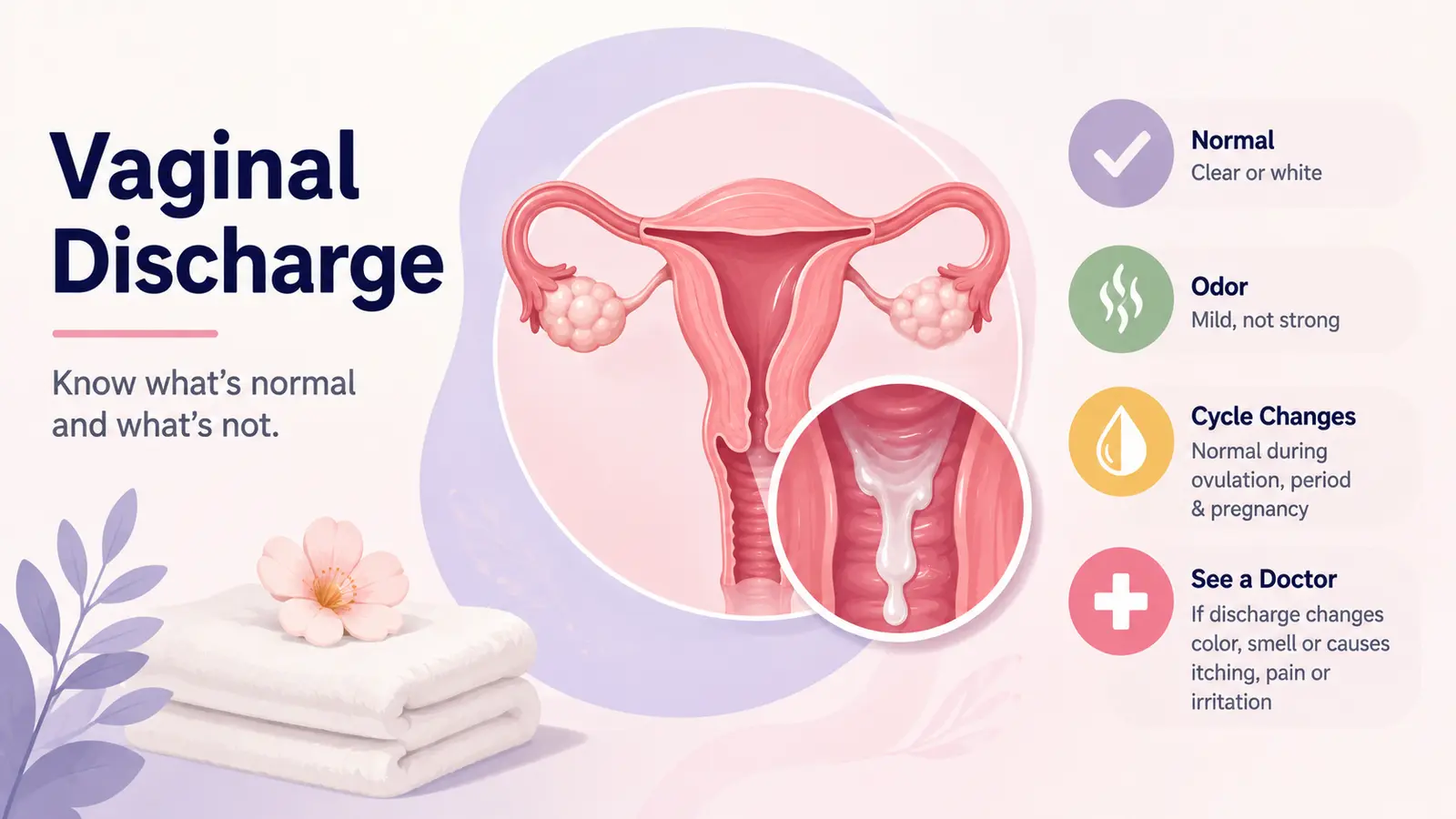
Vaginal discharge is a normal fluid or mucus that comes from the vagina. It helps keep the vagina moist and supports its natural protective environment. The amount, consistency and appearance can naturally change throughout the menstrual cycle, around ovulation, during pregnancy and with other hormonal changes.
But what if vaginal discharge becomes yellow, green, gray, brown or unusually thick? What does a fishy smell mean? Can discharge indicate an STI or pregnancy?
This guide explains what normal vaginal discharge looks like, what different colors may mean, common causes, pregnancy-related changes, infections, STI-related discharge and when you should see a healthcare professional.
Quick answer: Clear, white or milky vaginal discharge is usually normal. A sudden change in color, smell, texture or amount—especially with itching, burning, pain or bleeding—may need medical evaluation.
Table of Contents
- What Is Vaginal Discharge?
- What Does Normal Vaginal Discharge Look Like?
- Is It Normal to Have Vaginal Discharge Every Day?
- What Does Vaginal Discharge Color Mean?
- Vaginal Discharge Before Your Period
- Vaginal Discharge During Ovulation
- Vaginal Discharge During Pregnancy
- Common Causes of Abnormal Vaginal Discharge
- Thick White Vaginal Discharge
- Yellow or Green Vaginal Discharge
- Gray Vaginal Discharge
- Brown Vaginal Discharge
- What Does a Fishy Vaginal Odor Mean?
- Can an STI Cause Vaginal Discharge?
- Can a Yeast Infection Cause Vaginal Discharge?
- Can Sexual Activity Affect Vaginal Discharge?
- How Is Abnormal Vaginal Discharge Diagnosed?
- Should You Treat Vaginal Discharge Yourself?
- Should You Use a Vaginal Douche?
- How to Keep the Vaginal Area Healthy
- When Should You See a Doctor?
- Vaginal Discharge During Pregnancy: When to Get Help
- Normal vs Abnormal Vaginal Discharge
- Frequently Asked Questions
- The Bottom Line
What Is Vaginal Discharge?
Vaginal discharge is fluid or mucus released from the vagina and cervix.
It can contain mucus, vaginal cells and microorganisms that naturally live in the vaginal environment. These secretions help maintain moisture and the vagina’s normal environment.
Having vaginal discharge does not mean that your vagina is dirty or unhealthy.
Some amount of discharge is normal for most people with a vagina, particularly during the reproductive years.
The amount and appearance can change because of:
- Menstrual-cycle hormones
- Ovulation
- Pregnancy
- Sexual activity or arousal
- Hormonal contraception
- Breastfeeding and other hormonal changes
The NHS notes that discharge can become heavier during pregnancy, with sexual activity and when using birth control, while it may become clearer and wetter around ovulation.
What Does Normal Vaginal Discharge Look Like?
There is no single appearance that is normal for everyone.
Normal vaginal discharge is commonly:
- Clear
- White
- Milky white
- Thin or watery
- Sticky
- Creamy
- Slippery or wet
It may become clearer, wetter and more noticeable around ovulation.
A mild natural vaginal odor can also be normal.
The most useful thing is to understand what is normal for your own body.
A sudden change is generally more important than comparing your discharge with someone else’s.
Is It Normal to Have Vaginal Discharge Every Day?
Yes.
Some people naturally have noticeable vaginal discharge every day, while others have very little.
There is no universal amount that everyone should produce.
The NHS explains that the amount of vaginal discharge varies and can increase during ovulation, pregnancy, sexual activity and when using birth control.
So, having vaginal discharge every day does not automatically mean that you have an infection.
However, a sudden unexplained increase—particularly with an unusual smell, color, itching, burning or pain—should be evaluated.
What Does Vaginal Discharge Color Mean?
Color can provide useful clues, but color alone cannot diagnose an infection.
| Discharge | What it may mean |
|---|---|
| Clear or white | Often normal |
| Clear and slippery | Common around ovulation |
| Thick white + itching | Possible yeast infection |
| Thin white/gray + fishy odor | Possible bacterial vaginosis |
| Yellow or green | May indicate an infection |
| Frothy yellow-green | Can occur with trichomoniasis |
| Brown | Often related to old blood |
| Bloody or red | May be related to menstruation, but unexplained bleeding needs evaluation |
The NHS lists fishy-smelling discharge as a possible sign of bacterial vaginosis, thick white discharge as a possible sign of thrush, green/yellow or frothy discharge as a possible sign of trichomoniasis, and discharge with pelvic pain or bleeding as potentially associated with chlamydia or gonorrhea.
Don’t diagnose yourself based only on discharge color. Different conditions can produce similar symptoms.
Clear or White Vaginal Discharge
Clear or white discharge is usually normal.
It can be:
- Watery
- Sticky
- Creamy
- Slippery
- Slightly thick
Clear, slippery discharge is especially common around ovulation because hormonal changes affect cervical mucus.
White discharge becomes more concerning when it is accompanied by:
- Significant itching
- Burning
- Swelling
- Pain
- Strong unpleasant odor
- A major change from your usual discharge
Vaginal Discharge Before Your Period
Vaginal discharge can change as your period approaches.
Hormonal fluctuations throughout the menstrual cycle affect cervical mucus, meaning discharge may become:
- Thicker
- Creamier
- Stickier
- Less noticeable
Some people may also notice a small amount of brown discharge around their period.
Brown discharge is often associated with older blood, but repeated or unexplained bleeding should be evaluated.
Vaginal Discharge During Ovulation
Around ovulation, discharge often becomes:
- Clearer
- Wetter
- More slippery
- Stretchier
This happens because hormonal changes affect cervical mucus.
MedlinePlus notes that ovulation can increase normal vaginal secretions.
This type of discharge is usually normal when there are no other concerning symptoms.
Vaginal Discharge During Pregnancy
More vaginal discharge can be normal during pregnancy.
The NHS says healthy pregnancy discharge is usually thin, clear or milky white and should not smell unpleasant. Increased discharge is common during pregnancy.
However, contact your healthcare professional if pregnancy-related discharge:
- Smells unpleasant
- Becomes green or yellow
- Causes itching
- Causes soreness
- Causes pain when urinating
Vaginal bleeding during pregnancy should be assessed promptly.
For more information, see the NHS guide on vaginal discharge during pregnancy.
Common Causes of Abnormal Vaginal Discharge
Abnormal discharge can have several causes.
1. Bacterial Vaginosis
Bacterial vaginosis, commonly called BV, occurs when the balance of bacteria in the vagina changes.
WHO describes BV as a very common cause of vaginal discharge. It can cause unusual discharge, a fishy or musty odor, itching or irritation and burning during urination.
BV is not simply a result of poor hygiene.
WHO also identifies vaginal cleansing and douching as factors associated with increased BV risk.
Read more from WHO: Bacterial Vaginosis.
2. Yeast Infection
A vaginal yeast infection occurs when Candida grows excessively.
It can cause:
- Thick white discharge
- Itching
- Redness
- Swelling
- Burning or discomfort
MedlinePlus describes yeast infections as a common cause of vaginitis and notes that thick white discharge and itching can occur.
Read more from MedlinePlus: Vaginitis.
3. Trichomoniasis
Trichomoniasis is a sexually transmitted infection caused by the parasite Trichomonas vaginalis.
It can cause:
- Unusual discharge
- Yellowish or greenish discharge
- Bad odor
- Itching
- Burning
- Soreness
- Pain or burning while urinating
Some people have no symptoms.
This is one reason STI testing can be important when exposure is possible.
4. Chlamydia and Gonorrhea
Chlamydia and gonorrhea can sometimes cause abnormal vaginal discharge.
However, many infections may have few or no noticeable symptoms.
The NHS specifically lists vaginal discharge accompanied by pelvic pain or bleeding as a possible sign of chlamydia or gonorrhea.
If you’ve had unprotected sex or have a new sexual partner and your discharge has changed, discuss STI testing with a healthcare professional.
You can also read our related article:
What Should You Do If You Have an STI?
What Does Thick White Vaginal Discharge Mean?
Thick white discharge can sometimes be completely normal.
However, thick, curd-like or cottage-cheese-like discharge combined with itching, redness or swelling can occur with a vaginal yeast infection.
Don’t assume every episode of white discharge is a yeast infection.
If symptoms are severe, keep returning, or don’t improve with appropriate treatment, speak with a healthcare professional.
What Does Yellow or Green Vaginal Discharge Mean?
Yellow or green discharge can occur with infections, particularly when accompanied by:
- Bad odor
- Itching
- Burning
- Pain when urinating
- Pelvic pain
- Pain during sex
Green or yellow discharge can occur with trichomoniasis, but other infections can cause similar changes.
Testing is more reliable than trying to diagnose the cause from color alone.
What Does Gray Vaginal Discharge Mean?
Thin white or gray discharge accompanied by a strong fishy odor is commonly associated with bacterial vaginosis.
BV involves an imbalance in the vaginal bacterial environment.
It isn’t simply a hygiene problem.
In fact, excessive vaginal cleansing and douching may increase the risk of BV.
What Does Brown Vaginal Discharge Mean?
Brown discharge often occurs when older blood mixes with vaginal discharge.
It may appear:
- At the beginning of a period
- At the end of a period
- After a period
- Occasionally between periods
However, repeated or unexplained brown discharge should be evaluated, particularly if it occurs with pain, unusual odor or other symptoms.
What Does a Fishy Vaginal Smell Mean?
A strong fishy odor is commonly associated with bacterial vaginosis.
A mild natural vaginal odor, however, is not necessarily a problem.
You should pay attention if the odor is:
- New
- Strong
- Unpleasant
- Persistent
- Accompanied by unusual discharge
- Accompanied by itching or burning
Don’t try to cover the smell with perfumes, deodorants or vaginal sprays.
Finding the underlying cause is more important.
Can an STI Cause Vaginal Discharge?
Yes.
Some sexually transmitted infections can cause changes in vaginal discharge.
These include:
- Trichomoniasis
- Chlamydia
- Gonorrhea
However, vaginal discharge does not automatically mean you have an STI.
Bacterial vaginosis, yeast infections, hormonal changes and irritation can also cause discharge changes.
If you have had a sexual exposure that could carry STI risk, talk to a healthcare professional about testing.
This is particularly important because some STIs can occur without obvious symptoms.
Can Sexual Activity Affect Vaginal Discharge?
Yes.
Sexual activity and sexual arousal can temporarily increase vaginal secretions. MedlinePlus identifies sexual excitement as one factor that can increase normal vaginal discharge.
Therefore, discharge after sex isn’t automatically a sign of infection.
However, if you notice new:
- Strong odor
- Yellow or green discharge
- Gray discharge
- Itching
- Burning
- Pelvic pain
- Bleeding
you should consider getting medical advice.
For readers who are concerned about STI exposure, our guide on oral sex, STI risks and protection may also be useful.
How Is Abnormal Vaginal Discharge Diagnosed?
Different conditions can produce similar symptoms, so a healthcare professional may need to examine you rather than relying only on appearance.
Depending on your symptoms, they may:
- Ask about your menstrual cycle
- Ask about your symptoms
- Ask about sexual history
- Examine the vulva and vagina
- Examine the discharge
- Take a vaginal-fluid sample
- Perform laboratory testing
- Test for STIs when appropriate
MedlinePlus explains that diagnosis may involve a pelvic examination and examination of a sample of vaginal fluid under a microscope.
For more information, see MedlinePlus: Vaginal Diseases.
Should You Treat Vaginal Discharge Yourself?
Be careful with self-treatment.
It’s common to assume that unusual discharge is a yeast infection and immediately use an over-the-counter treatment.
But different conditions can cause similar symptoms.
For example:
- Yeast infection: often thick white discharge with itching
- Bacterial vaginosis: often thin white/gray discharge with a fishy odor
- Trichomoniasis: may cause unusual yellow/green discharge and irritation
These conditions require different treatments.
If this is your first episode, symptoms are severe, symptoms keep returning, or treatment doesn’t work, speak with a healthcare professional.
Should You Use a Vaginal Douche?
No.
The vagina doesn’t need to be cleaned internally.
Douching can disturb the natural vaginal environment and may increase the risk of bacterial vaginosis. WHO specifically identifies vaginal cleansing and douching as risk factors for BV.
The NHS recommends gently washing the skin around the vagina with warm water and mild, non-perfumed soap while avoiding scented products and douching.
Simple rule:
Clean the outside. Don’t douche the inside.
How to Keep the Vaginal Area Healthy
You don’t need complicated products to maintain vaginal health.
Do:
- Wash the external genital area gently.
- Use warm water and mild, unscented products if needed.
- Keep the area dry.
- Practice safer sex.
- Get STI testing when appropriate.
- Pay attention to changes from your normal discharge.
Avoid:
- Vaginal douching
- Perfumed vaginal sprays
- Scented wipes
- Strong soaps
- Products designed to “clean” the inside of the vagina
The NHS specifically recommends avoiding perfumed soaps, gels, deodorants, scented wipes and vaginal douching.
When Should You See a Doctor?
You should consider seeing a healthcare professional if your vaginal discharge:
- Suddenly changes color
- Develops a strong or unpleasant odor
- Becomes unusually thick or chunky
- Becomes green, yellow or gray
- Increases significantly without an obvious reason
- Is accompanied by itching
- Causes burning
- Causes swelling or soreness
- Occurs with pelvic pain
- Causes pain when urinating
- Occurs with bleeding between periods
- Occurs after sex with unexplained bleeding
The NHS recommends medical assessment when discharge changes in color, smell or texture, or when symptoms such as itching, soreness, bleeding, painful urination or pelvic pain occur.
Vaginal Discharge During Pregnancy: When to Get Help
More discharge during pregnancy is usually normal.
Healthy pregnancy discharge is generally thin, clear or milky white and shouldn’t smell unpleasant.
Contact your maternity healthcare provider if the discharge:
- Becomes green or yellow
- Smells unpleasant
- Causes itching or soreness
- Causes pain when urinating
Any vaginal bleeding during pregnancy should be assessed promptly.
Vaginal Discharge: Normal vs Abnormal
| Feature | Often normal | May need evaluation |
|---|---|---|
| Color | Clear, white or milky | Green, gray, yellow or unexplained bloody discharge |
| Smell | Mild/natural | Strong, fishy or foul |
| Texture | Watery, sticky, creamy or slippery | Very chunky, frothy or unusual |
| Amount | Varies throughout cycle | Sudden unexplained increase |
| Itching | Usually absent | Possible warning sign |
| Burning | Usually absent | Possible infection or irritation |
| Pelvic pain | Usually absent | Needs medical evaluation |
| Bleeding | Period-related | Between periods or after sex |
These characteristics are clues, not a diagnosis.
Does Vaginal Discharge Mean You’re Pregnant?
Not necessarily.
Pregnancy can cause increased vaginal discharge, but discharge alone cannot reliably tell you whether you’re pregnant.
Normal hormonal changes during the menstrual cycle can also change discharge.
If pregnancy is possible, a pregnancy test is a more reliable way to find out.
If you’re specifically worried about pregnancy after sexual activity, you can also read our article:
Can You Get Pregnant From Precum?
Does White Discharge Mean Pregnancy?
No, not by itself.
White or milky discharge can be normal whether or not someone is pregnant.
Pregnancy may increase discharge, but discharge alone cannot confirm pregnancy.
If pregnancy is possible, use an appropriate pregnancy test instead of relying on discharge as a pregnancy sign.
Does Vaginal Discharge Mean You Have an STI?
No.
Vaginal discharge is normal and can also be caused by non-STI conditions such as bacterial vaginosis and yeast infections.
However, STIs such as trichomoniasis, chlamydia and gonorrhea can cause abnormal discharge.
Testing is the best way to determine whether an STI is present.
Frequently Asked Questions
What is vaginal discharge?
Vaginal discharge is fluid or mucus released from the vagina and cervix. It helps maintain moisture and the natural vaginal environment.
Is vaginal discharge normal?
Yes. Clear, white or milky discharge without a strong unpleasant odor is generally normal.
Is it normal to have vaginal discharge every day?
Yes. Some people naturally have discharge every day, and the amount can change throughout the menstrual cycle.
What color is normal vaginal discharge?
Normal discharge is usually clear, white or milky white. Its consistency can range from watery to sticky or creamy.
What does yellow vaginal discharge mean?
Yellow discharge can have several causes. If it’s new or occurs with odor, itching, burning or pain, medical evaluation may be appropriate.
What does green vaginal discharge mean?
Green discharge can occur with infections, including trichomoniasis. Testing is needed to determine the actual cause.
What does gray vaginal discharge mean?
Thin gray or white discharge accompanied by a strong fishy odor is commonly associated with bacterial vaginosis.
What does thick white discharge mean?
Thick white discharge can be normal, but thick curd-like discharge accompanied by itching, redness or swelling can occur with a yeast infection.
What causes a fishy vaginal smell?
A strong fishy smell, particularly with thin white or gray discharge, can be a sign of bacterial vaginosis.
Can vaginal discharge mean you’re pregnant?
Pregnancy can increase vaginal discharge, but discharge alone cannot confirm pregnancy.
Can an STI cause vaginal discharge?
Yes. Trichomoniasis, chlamydia and gonorrhea can cause abnormal vaginal discharge, although some infections may have few or no symptoms.
Does vaginal discharge mean you have an infection?
No. Vaginal discharge is often completely normal. A sudden change in color, smell, texture or amount—especially with itching or pain—is more concerning.
Should I douche to stop vaginal discharge?
No. Douching can disturb the natural vaginal environment and may increase the risk of bacterial vaginosis.
When should I see a doctor about vaginal discharge?
See a healthcare professional if your discharge changes significantly, develops a strong odor, becomes green/yellow/gray, or occurs with itching, burning, pelvic pain, painful urination or unexplained bleeding.
The Bottom Line
Vaginal discharge is usually a normal part of vaginal health.
Clear, white or milky discharge with no strong unpleasant odor is commonly normal, and its amount and consistency can change throughout the menstrual cycle.
A new change in color, smell, texture or amount, particularly when accompanied by itching, burning, pain or bleeding, can indicate an infection or another condition.
Common causes include bacterial vaginosis, yeast infections, trichomoniasis and other STIs, although hormonal changes and irritation can also affect discharge.
Don’t douche or use heavily scented products to eliminate normal discharge. Instead, learn what is normal for your body and seek medical advice when something changes significantly.
Advertisement · Continue Reading Below

No comments yet — be the first to comment.
Leave a comment
Comments are reviewed before they appear.