PMS: Symptoms, Causes and Treatment
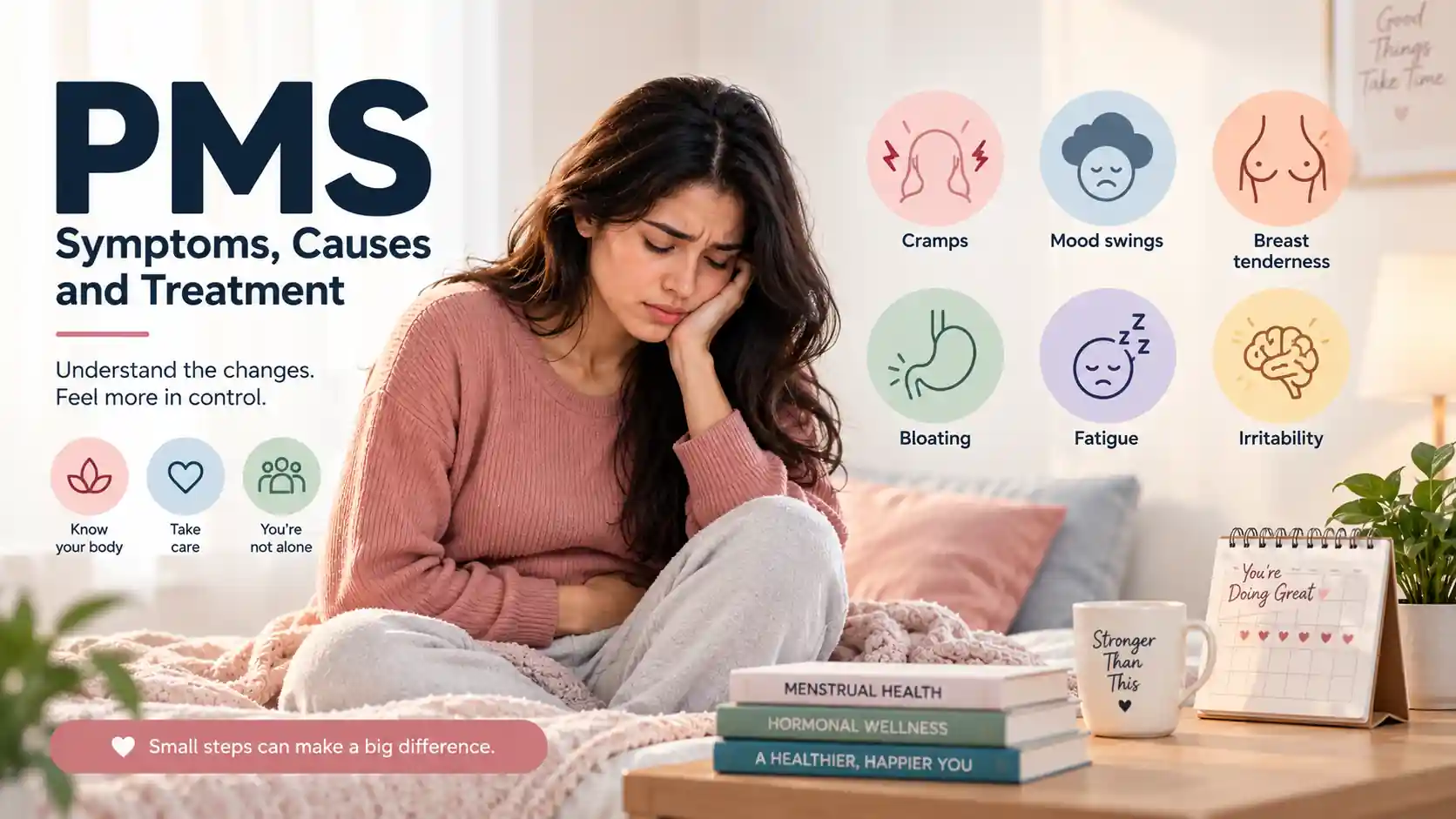
Premenstrual syndrome (PMS) refers to a group of physical and emotional symptoms that can happen before a period. Symptoms vary from person to person and may include mood changes, bloating, breast tenderness, headaches, tiredness, cramps, changes in appetite and difficulty sleeping. For some people, PMS symptoms are mild. For others, they can interfere with work, […]
Contents
Premenstrual syndrome (PMS) refers to a group of physical and emotional symptoms that can happen before a period. Symptoms vary from person to person and may include mood changes, bloating, breast tenderness, headaches, tiredness, cramps, changes in appetite and difficulty sleeping.
For some people, PMS symptoms are mild. For others, they can interfere with work, school, relationships or everyday activities.
Understanding PMS symptoms, causes and treatment options can make it easier to recognize patterns and know when it may be time to speak with a healthcare professional.
According to the World Health Organization (WHO), menstrual health includes having accurate information about menstruation and being able to access appropriate care when menstrual symptoms or disorders affect health and daily life.
What is PMS?
PMS stands for premenstrual syndrome.
It describes a recurring combination of physical, emotional or behavioral symptoms that occur before a menstrual period.
Common PMS symptoms include:
- Mood swings
- Irritability
- Anxiety or feeling more emotional
- Tiredness
- Trouble sleeping
- Bloating
- Abdominal cramps
- Breast tenderness
- Headaches
- Changes in appetite
- Food cravings
- Acne or skin changes
- Difficulty concentrating
Not everyone experiences PMS in the same way, and symptoms can change from one menstrual cycle to another. The NHS also notes that PMS symptoms can vary between people and from month to month.
What are the symptoms of PMS?
PMS symptoms can generally be divided into physical symptoms and emotional or behavioral symptoms.
Physical PMS symptoms
Physical symptoms may include:
- Bloating
- Abdominal discomfort or cramps
- Breast tenderness
- Headaches
- Backache
- Muscle or joint aches
- Tiredness
- Changes in appetite
- Food cravings
- Acne
- Sleep changes
The symptoms can be different for each person. Some people may experience only one or two symptoms, while others may notice several symptoms before their period.
Emotional and behavioral symptoms
PMS can also affect mood and behavior.
You may notice:
- Irritability
- Mood swings
- Anxiety
- Feeling more emotional
- Low mood
- Difficulty concentrating
- Changes in sleep
- Reduced interest in usual activities
The relationship between the menstrual cycle and mental health is also recognized in WHO’s current menstrual-health guidance. WHO notes that some people experience anxiety, sadness, irritability or other mood changes before or during menstruation.
When does PMS start?
PMS usually occurs during the days or weeks before your period.
For some people, symptoms may begin one to two weeks before menstruation and improve after the period begins. The exact timing and symptoms vary.
One useful way to understand whether your symptoms are related to your menstrual cycle is to track them over several cycles.
You can record:
- The first day of your period
- When symptoms begin
- Which symptoms you experience
- How severe each symptom is
- When symptoms improve
- Whether symptoms affect work, school or relationships
A symptom diary can give you and your healthcare professional a clearer picture of whether your symptoms follow a recurring menstrual pattern. The NHS recommends keeping a symptom diary for at least two menstrual cycles when seeking help for PMS.
What causes PMS?
The exact cause of PMS is not completely understood.
Hormonal changes during the menstrual cycle appear to play an important role, but people can respond differently to these changes.
The NHS notes that PMS may be related to changes in hormone levels during the menstrual cycle and that some people may be more sensitive to these changes than others.
PMS is therefore not simply about having “too many hormones.” The way an individual’s body and brain respond to normal menstrual-cycle changes may be important.
How can you manage PMS?
Treatment depends on how severe your symptoms are and how much they affect your everyday life.
For mild symptoms, lifestyle changes may help.
Exercise regularly
Regular physical activity may help some people manage PMS symptoms.
This doesn’t necessarily mean intense workouts. Walking, cycling, swimming, yoga or other activities that you enjoy can be reasonable options.
Get enough sleep
Poor sleep can make fatigue, irritability and difficulty concentrating harder to manage.
Try to maintain a consistent sleep schedule and give yourself enough time to rest.
Eat a balanced diet
A balanced diet can support overall health during your menstrual cycle.
Some people find that smaller, more frequent meals are easier to manage when PMS affects appetite or digestion. The NHS includes a balanced diet among lifestyle measures that may help with PMS.
Manage stress
Stress does not necessarily cause PMS, but managing stress may make it easier to cope with symptoms.
Some people find activities such as:
- Meditation
- Yoga
- Breathing exercises
- Walking
- Journaling
- Relaxation exercises
helpful.
Track your symptoms
Tracking your symptoms is one of the most useful practical steps.
It can help you identify:
- When symptoms start
- Which symptoms are recurring
- Whether symptoms improve after your period begins
- Whether symptoms are becoming more severe
- Whether treatment or lifestyle changes are helping
Can medicines help PMS?
Depending on your symptoms, a healthcare professional may recommend medication.
Treatment can include medicines for specific symptoms as well as treatments aimed at reducing recurring PMS symptoms.
The NHS lists possible treatments such as hormonal medicines, cognitive behavioral therapy (CBT) and antidepressants for some people with PMS.
Pain-relieving medicines may also be used for certain symptoms such as cramps or headaches.
However, don’t start prescription medicines or regularly take supplements based only on an online article. A doctor or pharmacist can help determine which option is appropriate for you, particularly if you take other medicines or have another medical condition.
Do vitamins and supplements help PMS?
You may see supplements such as calcium, vitamin B6, vitamin D or magnesium recommended for PMS.
However, evidence for supplements is not equally strong for every product or every person.
The NHS specifically notes that there is limited evidence for some complementary therapies and supplements and recommends speaking with a GP or pharmacist before taking regular supplements, particularly if you already take medicines.
So, avoid assuming that a supplement is automatically safe or effective simply because it is marketed for PMS.
PMS vs PMDD: What’s the difference?
PMDD stands for premenstrual dysphoric disorder.
PMDD is a more severe premenstrual condition in which symptoms can have a substantial effect on everyday life.
PMS and PMDD can share symptoms such as:
- Mood changes
- Irritability
- Anxiety
- Breast tenderness
- Bloating
- Fatigue
- Sleep problems
However, PMDD symptoms are generally much more severe and can significantly interfere with relationships, work, school or other daily activities.
If you regularly experience severe emotional symptoms before your period, don’t simply assume that you have “bad PMS.” A healthcare professional can assess your symptoms and help determine whether PMDD or another condition may be involved.
When should you see a doctor about PMS?
Consider speaking with a healthcare professional if:
- PMS symptoms are affecting your daily life
- Symptoms are becoming increasingly severe
- Lifestyle changes aren’t helping
- You regularly experience severe mood changes
- Symptoms interfere with work, school or relationships
- Your periods have changed significantly
- You have unusually heavy or painful bleeding
- Symptoms occur outside the premenstrual period
- You are unsure whether your symptoms are caused by PMS
WHO emphasizes that menstrual symptoms that are very painful, heavy, unpredictable or associated with significant mood changes and disruption to normal activities deserve medical evaluation. Such symptoms can sometimes be associated with conditions including endometriosis, adenomyosis, fibroids, bleeding disorders, PCOS, PMS or PMDD.
What if PMS symptoms are very severe?
Severe symptoms shouldn’t simply be dismissed as something you have to live with.
In particular, severe depression, anxiety, hopelessness or thoughts of suicide require prompt medical attention.
If you are having thoughts of harming yourself or feel that you may not be safe, seek urgent medical or emergency mental-health support in your country.
PMDD can include severe emotional symptoms, including suicidal thoughts, and the NHS advises people experiencing these symptoms to seek urgent help.
Can PMS be prevented?
There is no single method that completely prevents PMS for everyone.
However, identifying your personal symptom pattern can make management easier.
A practical approach is to:
- Track your symptoms for several menstrual cycles.
- Identify which symptoms affect you most.
- Maintain regular physical activity.
- Prioritize adequate sleep.
- Eat a balanced diet.
- Find ways to manage stress.
- Discuss persistent or severe symptoms with a healthcare professional.
Treatment can then be tailored to the symptoms that are actually affecting you.
PMS and menstrual health
PMS is one part of the broader topic of menstrual health.
Menstrual health isn’t only about managing bleeding. WHO defines menstrual health more broadly, including access to accurate information, appropriate menstrual products and facilities, freedom from stigma, and timely diagnosis and care when menstrual problems occur.
For readers in India, the National Health Mission under India’s Ministry of Health & Family Welfare also has a national menstrual-health framework covering menstrual hygiene, access to products, education and adolescent health.
National Health Mission — Menstrual Hygiene Policy
Frequently asked questions about PMS
What does PMS mean?
PMS means premenstrual syndrome. It refers to physical, emotional and behavioral symptoms that occur before a menstrual period.
What are the most common PMS symptoms?
Common symptoms include mood changes, irritability, bloating, cramps, breast tenderness, headaches, tiredness, sleep changes and changes in appetite.
Why do I feel emotional before my period?
Changes associated with the menstrual cycle may affect mood, and some people are more sensitive to these changes. Anxiety, irritability, sadness and other mood changes can occur before or during menstruation.
How long does PMS last?
The timing varies between people. Symptoms generally occur before the period and improve once menstruation begins.
Is PMS normal?
PMS symptoms are common, but symptoms that are severe or interfere with everyday life should not simply be ignored. A healthcare professional can help determine whether PMS, PMDD or another condition may be responsible.
Is PMS the same as PMDD?
No. PMDD is a more severe premenstrual disorder that can significantly affect daily functioning and emotional well-being.
When should I see a doctor for PMS?
See a healthcare professional if your symptoms affect your everyday life, are becoming severe, don’t improve with lifestyle measures, or are accompanied by unusually painful, heavy or irregular periods.
Related sexual and reproductive health articles
If you’re learning about sexual and reproductive health, you may also find these useful:
- First-time sex: First Time Sex: What to Expect, How to Prepare, and What You Should Know
- STIs: What Should You Do If You Have an STI? Treatment & Next Steps
These are the only existing internal links I’d add to this PMS article. The first-time-sex article is relevant to broader reproductive/sexual-health education, while the STI article is useful as part of the site’s wider sexual-health cluster. I would not force an internal link to the G-spot article because the topical relationship is weak.
Authoritative external sources
For a medical/health article, I recommend keeping the external sources highly authoritative rather than linking to random health blogs.
WHO
WHO’s current menstrual-health fact sheet covers menstrual symptoms, access to care, menstrual education and conditions that may require medical evaluation.
National Health Mission, Government of India
National Health Mission — Menstrual Hygiene Policy
The Government of India’s National Health Mission describes its national menstrual-hygiene policy and adolescent menstrual-health initiatives.
NHS
NHS — PMS (Premenstrual Syndrome)
The NHS provides practical information about PMS symptoms, lifestyle measures, treatment and when to seek medical advice.
NHS — PMDD
NHS — PMDD (Premenstrual Dysphoric Disorder)
Useful for the PMS-vs-PMDD section and severe emotional symptoms.
U.S. National Library of Medicine
MedlinePlus — Premenstrual Syndrome
MedlinePlus provides a U.S. National Library of Medicine overview of PMS, symptoms, causes and PMDD.
Medical disclaimer
This article is for general educational purposes and is not a substitute for medical diagnosis or treatment. PMS symptoms vary from person to person. If your symptoms are severe, persistent, unusual, or interfere with your daily life, speak with a qualified healthcare professional. Seek urgent help if you are experiencing a mental-health emergency or thoughts of self-harm.
Advertisement · Continue Reading Below

No comments yet — be the first to comment.
Leave a comment
Comments are reviewed before they appear.